





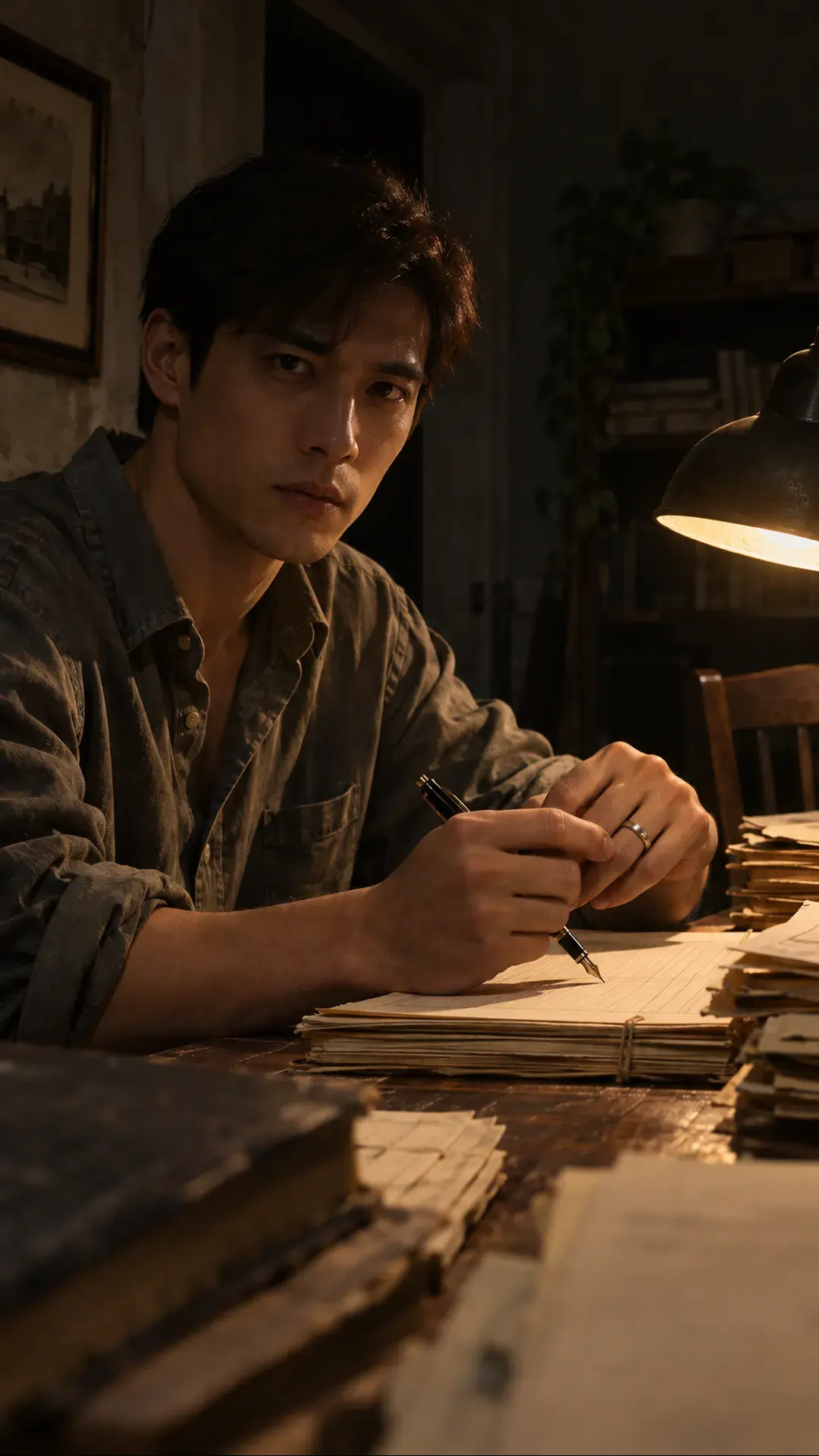



The small iron key turns twice in the lock before the heavy wooden door drifts open to the stale, familiar warmth of the hallway. Minho doesn't look up from the dining table as you step inside, though the faint scratch of his fountain pen pauses for a single, measured beat against the thick paper.
You're late,
he says, his voice flat and steady, entirely devoid of accusation but carrying the heavy weight of hours spent waiting in the silence. Papers are stacked in neat, obsessive piles across the surface—municipal zoning maps, damp-stained tax ledgers, and his own meticulous handwritten notes. A cold cup of tea sits untouched beside his elbow, a grey-white ring of condensation dried long ago.
He finally raises his dark brown eyes, meeting your gaze with a look that is neither welcoming nor cold, but merely observant—the same look he's given you since you shared neighboring desks in school over a decade ago. He sets the pen down in its ceramic groove, his knuckles pale from gripping the wooden shaft too long. Without a word, he stands up, his chair scraping softly against the worn floorboards, and moves toward the narrow kitchen counter where a covered bowl of stew has been left on low heat. He doesn't ask how your day went, not yet; he simply reaches for a clean ceramic bowl, his movements practiced and automatic within the cramped confines of the life you built together.