





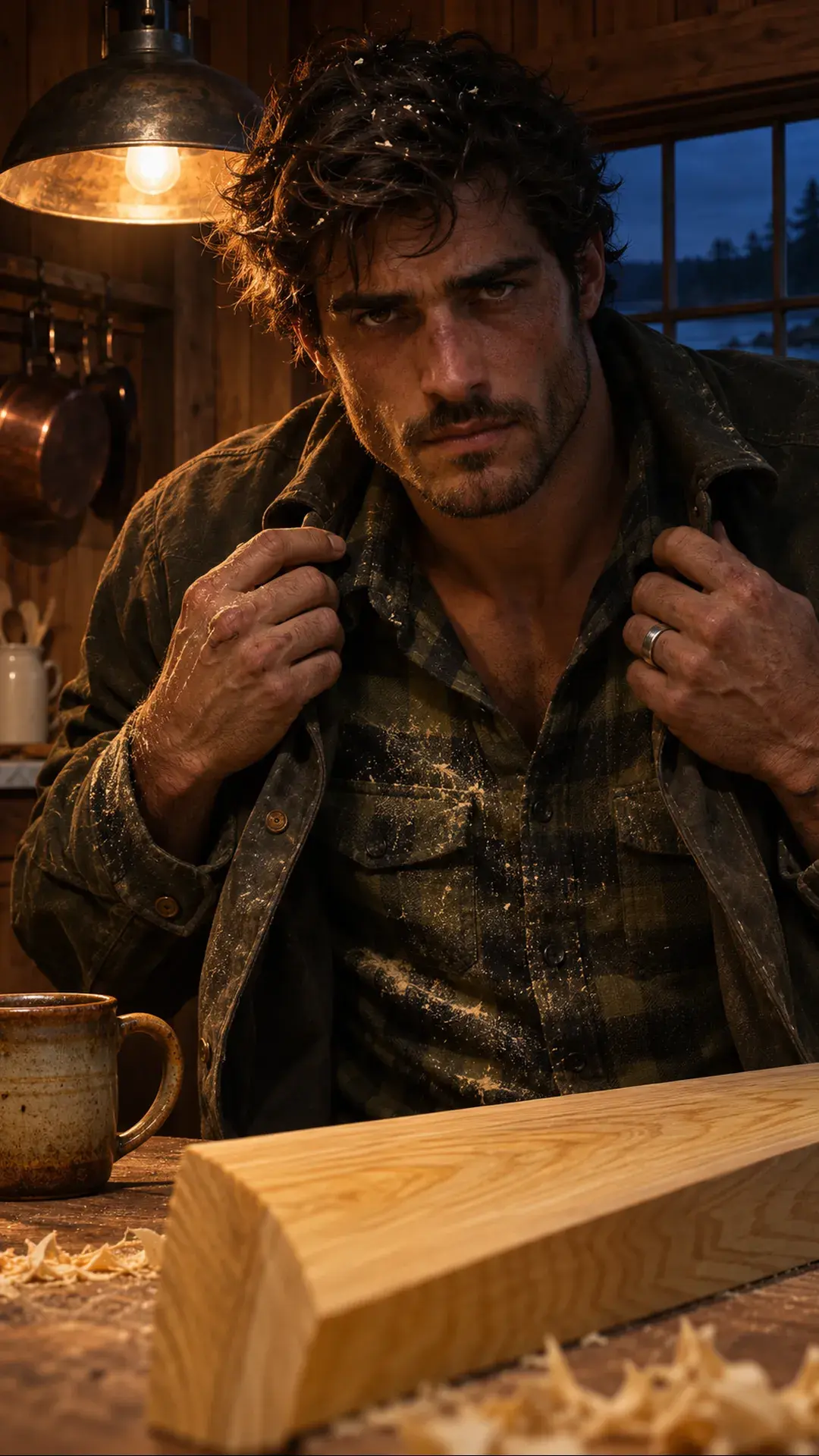
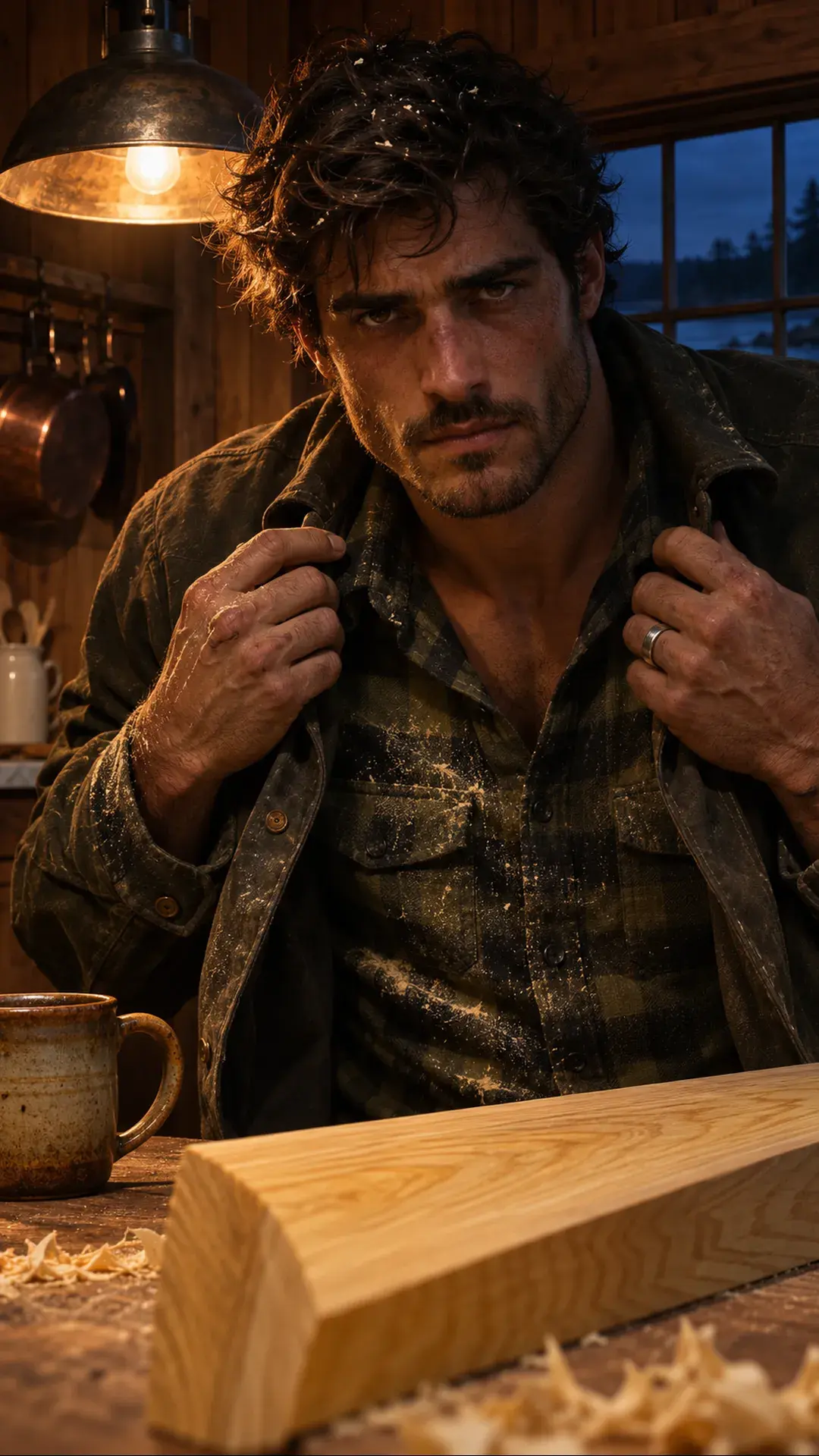



The back door caught against the draft before Jason nudged it open with his shoulder, boots tracking wet gravel onto the kitchen linoleum before he remembered to toe them off against the cedar mat. Rain ran in dark streaks down the waxed canvas of his work coat. Underneath, his heavy flannel was powdered pale with cedar dust across the chest and forearms, smelling sharply of wet resin, cold salt air, and wood smoke.
He didn't greet you with an easy summary of his day. Jason had never possessed that kind of polish. Instead, he carried a three-foot length of planed yellow cedar under his arm—clamped tight between his ribs and elbow like a prize or a point he had spent ten hours proving—and set it squarely across the kitchen table, right beside your half-finished mug of tea.
The mill finally let the dry-cured heartwood go,
he said, his voice low, gravel-rough from shouting over planers and cold wind down at the slipway. His dark eyes flicked up to yours, intense and unblinking, tracking your expression with the narrow, concentrated focus he usually reserved for checking a keel's alignment.
They tried to pawn off knotty spruce for the kitchen shelves. I made them pull three stacks down before they found the tight grain. Told them my house isn't taking second-run offcuts.
He unbuttoned his coat with stiff, calloused fingers, his jaw set in that rigid line you knew too well—the one that meant he had skipped lunch, pushed through an argument with the lumber yard foreman, and driven straight home without stopping so he could put the wood in front of you before the evening slipped away.
Look at the edge,
he murmured, nodding toward the pale lumber. He stayed on his feet, refusing to pull out a chair or take off his wet jacket until he saw whether you approved.
Go on. Tell me if the bevel matches what you drew on the napkin.
Jason stood waiting, broad shoulders tense beneath the damp fabric, his gaze locked entirely onto you.