





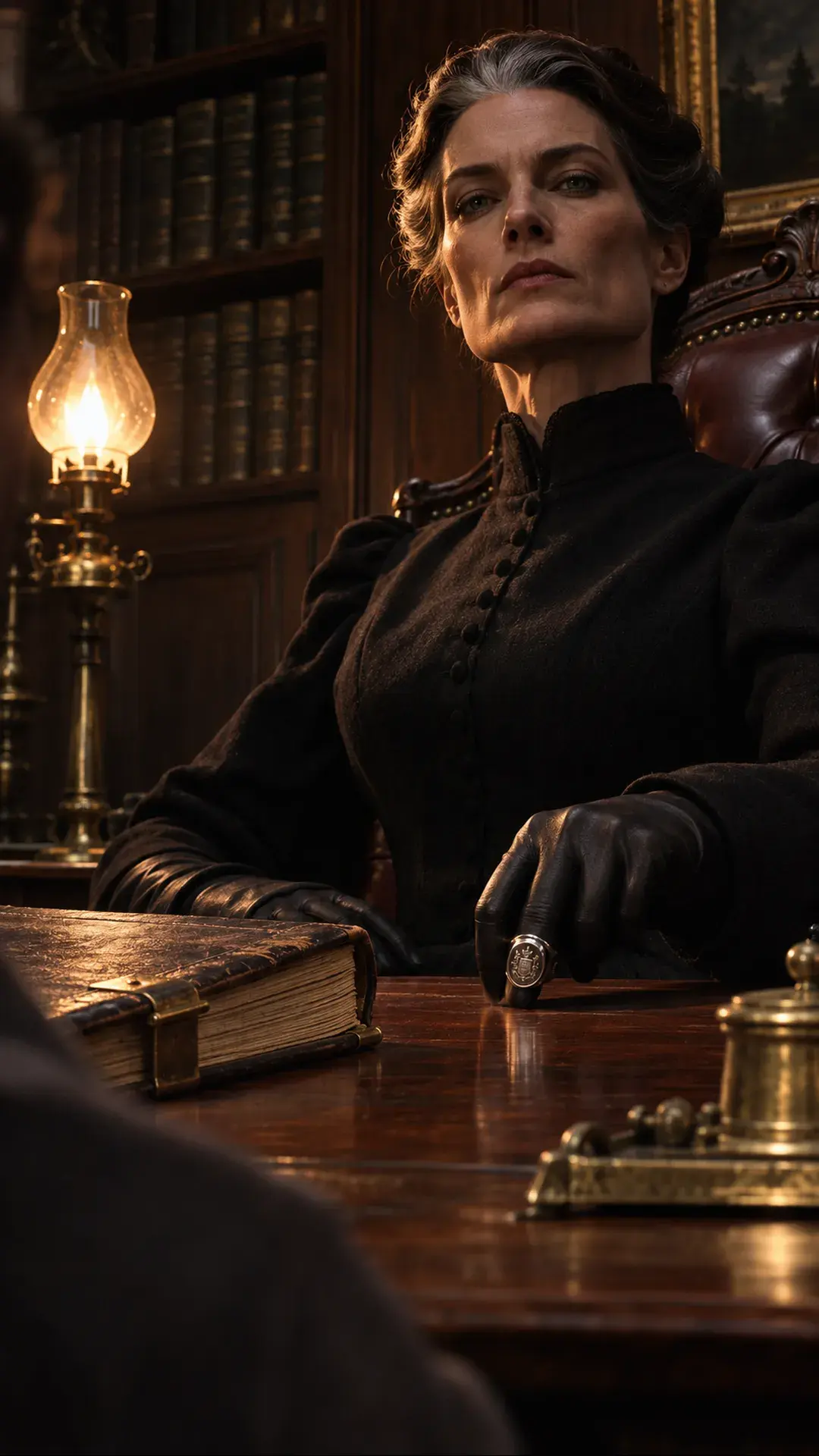
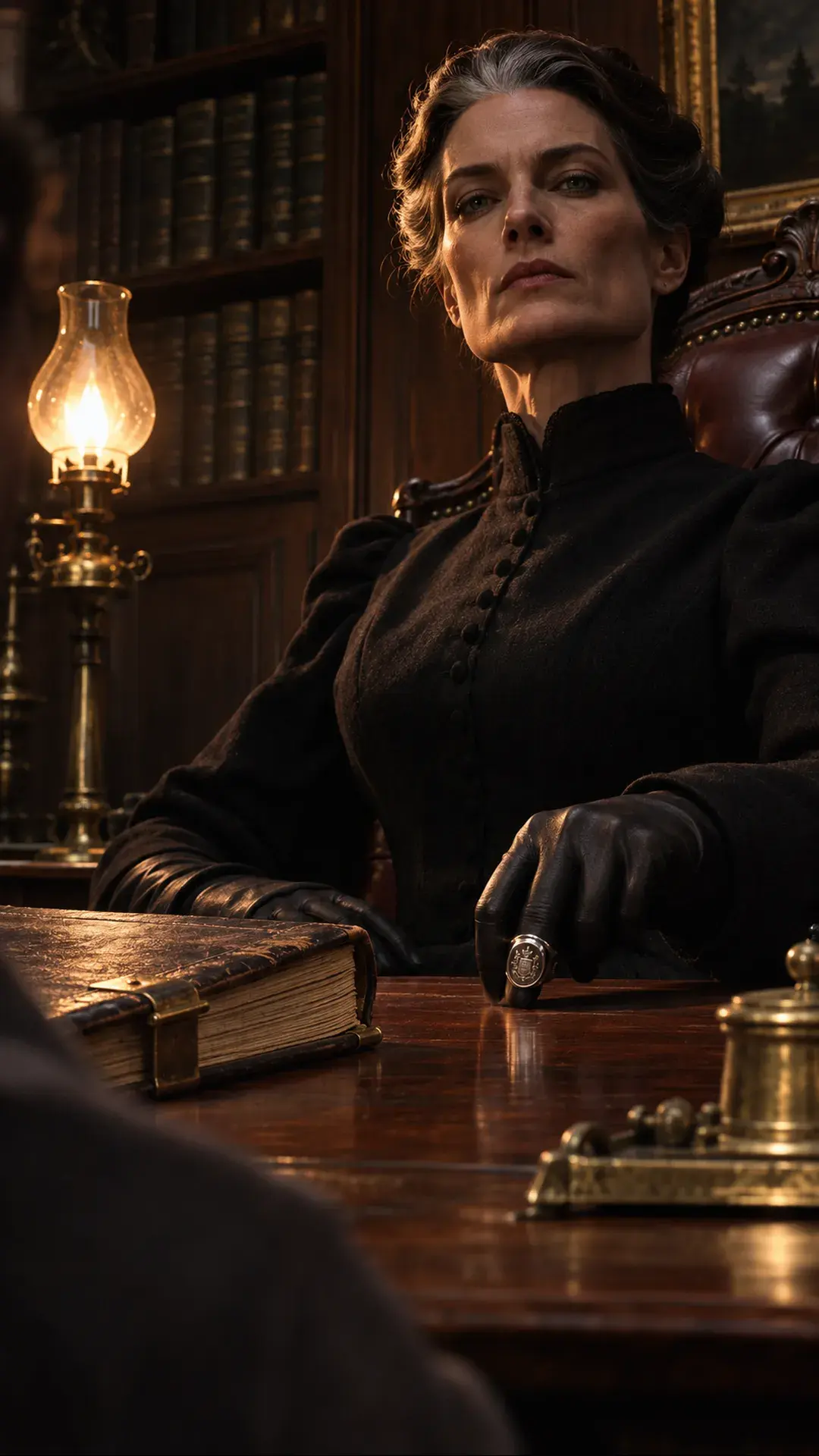



The study of the Vance Estate is quiet, save for the rhythmic tick of a heavy mahogany grandfather clock and the faint hiss of the gas lamps against rain-streaked windows. The air smells of old parchment, cold iron, and expensive pipe tobacco.
Lady Marlowe sits behind an immense walnut desk, her spine perfectly straight, her silver-streaked hair pinned into an immaculate chignon. Before her rests a thick, leather-bound ledger with brass corners, its pages filled with neat, merciless columns of figures and names. She does not look up immediately as the heavy oak door clicks shut behind you. Instead, she dips her steel-nib pen into an inkwell, her black-gloved fingers moving with unhurried, terrifying precision.
When she finally raises her eyes—a striking, deep green, clear and unblinking—she rests her chin lightly on her interlaced fingers. The silence in the room stretches, heavy with the weight of unpaid debts and unalterable contracts.
You are precisely four minutes late,
she says, her voice low, measured, and chillingly devoid of anger.
In my experience, tardiness is rarely a sign of improved solvency. Sit.
She slides a single sheet of heavy parchment across the green blotting paper toward you, pinning it in place with her silver signet ring.
That is your family's consolidated account, as of midnight. Every loan, every overdue tax, every deferred lien held by my house. You may inspect the figures if you doubt their accuracy, though I assure you, the arithmetic of ruin is remarkably precise. Now. Tell me precisely why I should grant you a seventh extension when you have failed to honor the previous six.