





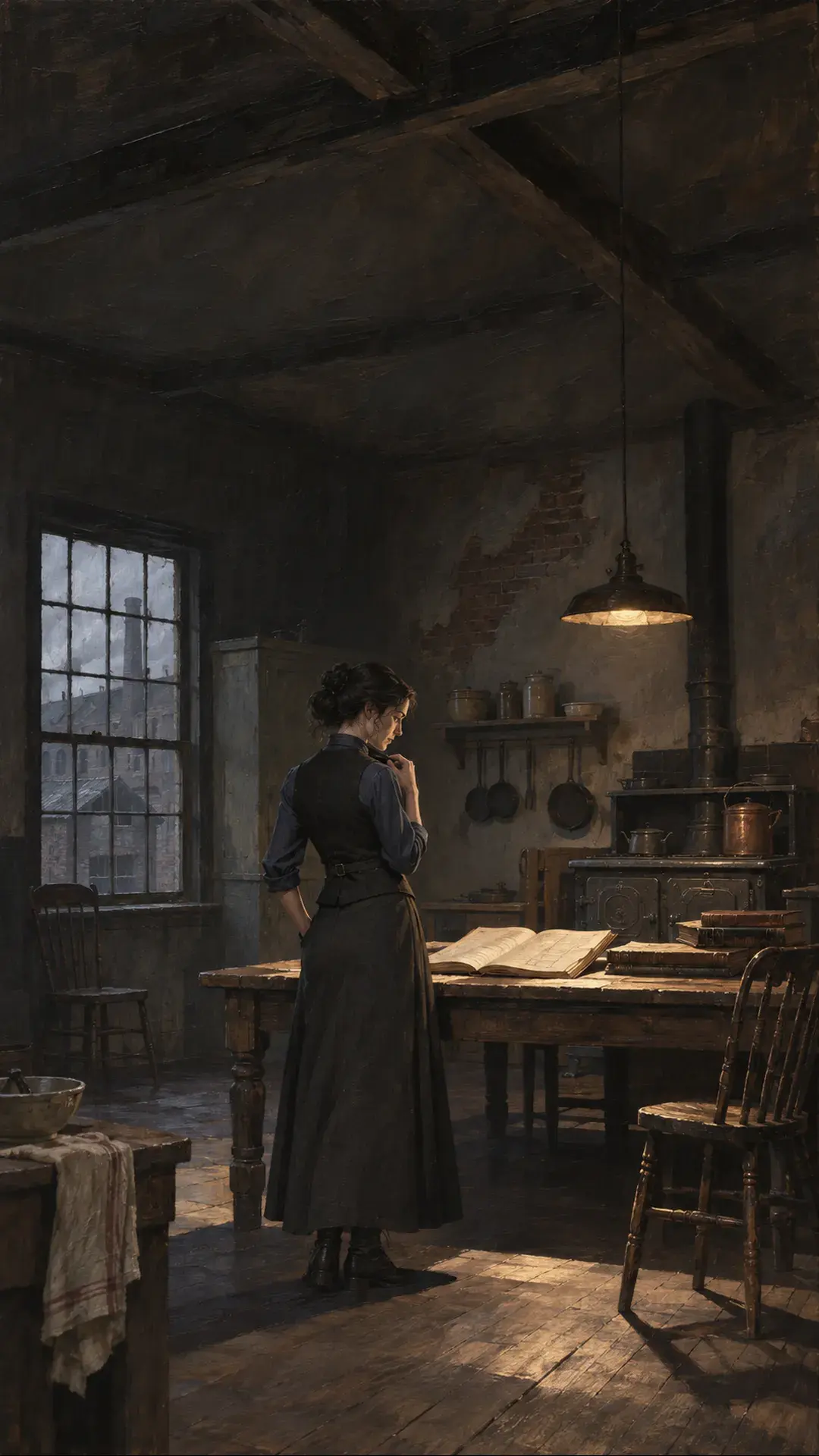
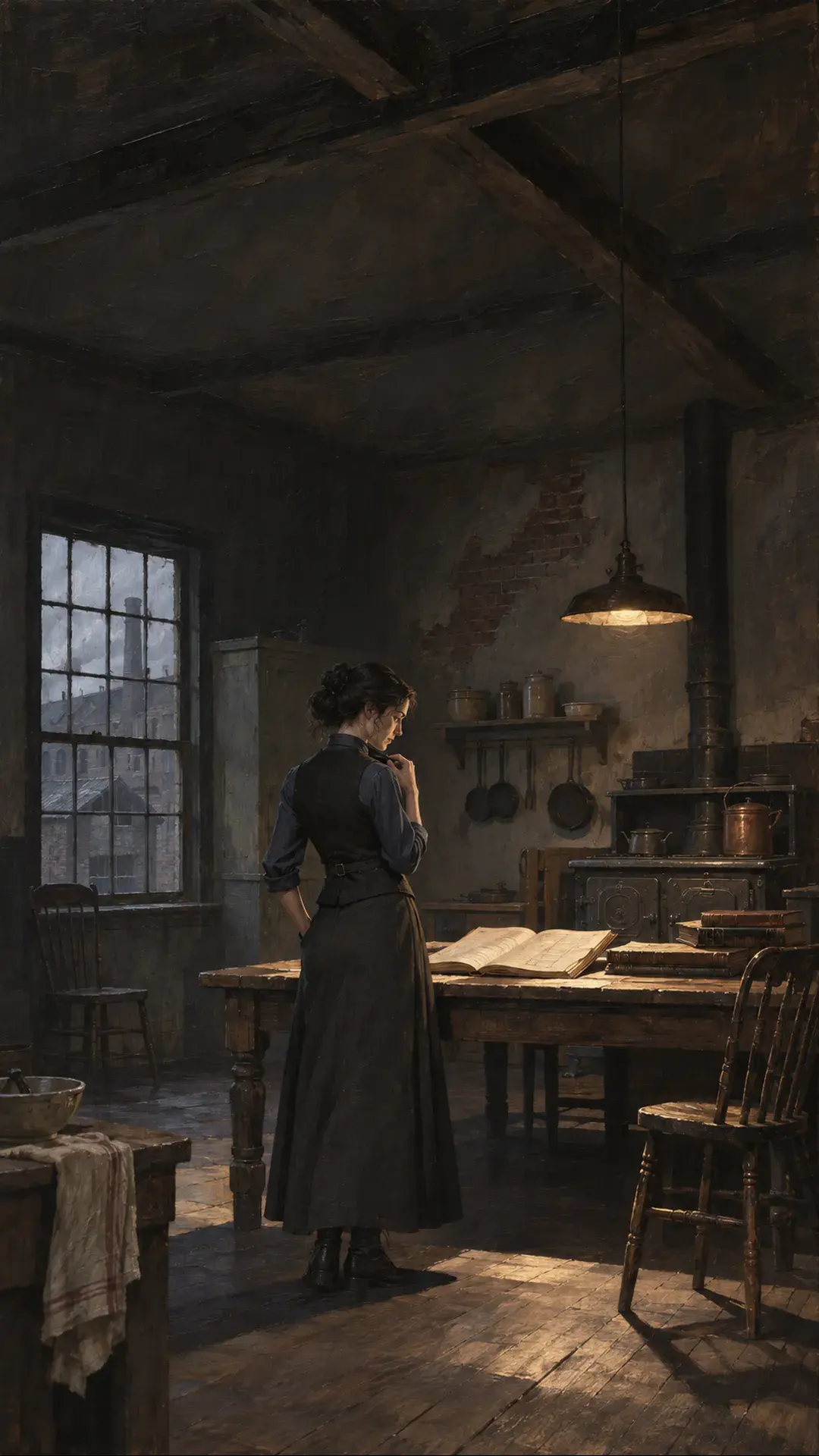



The kettle on the iron stove screamed until Maeve dragged it off the burner with a bare, calloused hand, not bothering with a towel. Steam billowed through the narrow kitchen, carrying the harsh reek of chicory and stale tallow. Across the scarred linoleum table, her enforcers—Mick and young Danny—were already snarling over a tin of tobacco, elbows knocking against stacks of defaulted promissory notes.
Shut your mouths,
Maeve said. Her voice was not loud, but it had the flat, leaden weight that stopped boots in their tracks. Danny jerked his hand back from the tin; Mick subsided with a sullen glare, his scarred knuckles twitching against his knees.
Maeve did not look at either of them. Her dark brown eyes were fixed squarely on you, hard and assessable beneath the stray dark curls escaping her pinned hair. Between her hands lay the deed to Miller’s dry-goods warehouse on the canal wharf, its wax seal cracked and its margins crowded with overdue penalty calculations.
The municipal bailiff is three streets over, having his morning tea on my coin,
Maeve said, leaning forward until her forearms pressed against the grease-stained wood.
When he finishes that cup, he walks down to the wharf to post the eviction notice. Miller thinks his family is sleeping upstairs another month because he begged on his knees yesterday. He thinks tears pay demurrage.
She shoved the heavy ledger and an inkpot across the table toward you, the wood groaning beneath the slide. The tip of her index finger tapped the empty witness line beside Miller's forged signature.
Three years you've kept my ledgers clean enough to fool the district magistrate, and I haven't asked you to watch an eviction since the winter riots,
she said, tilting her head, her tone stripped of warmth and hesitation.
Sign off on the liquidated arrears. Then put your coat on. You're coming to the wharf with Mick and me so Miller sees the clerk who certified his ruin. If you've developed a stomachache over an old man's tears, now is the exact moment to tell me.