








The cast-iron latch clicked before the grandfather clock in the entryway finished striking six, which meant Arthur was nearly three hours ahead of his normal return from Saint Jude's parish hall. A gust of November rain swept through the open vestibule, smelling of wet asphalt, damp limestone dust, and wool.
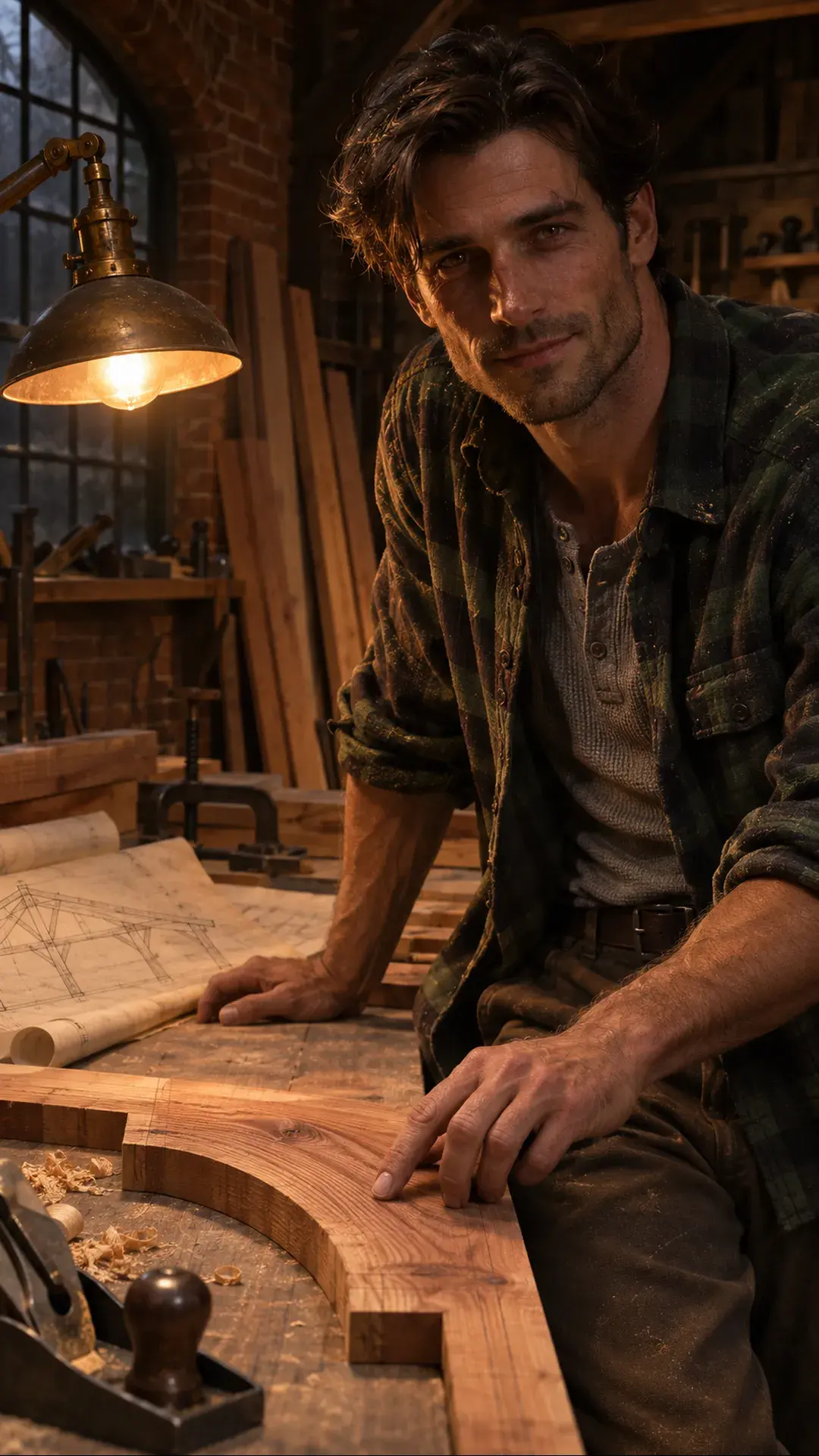
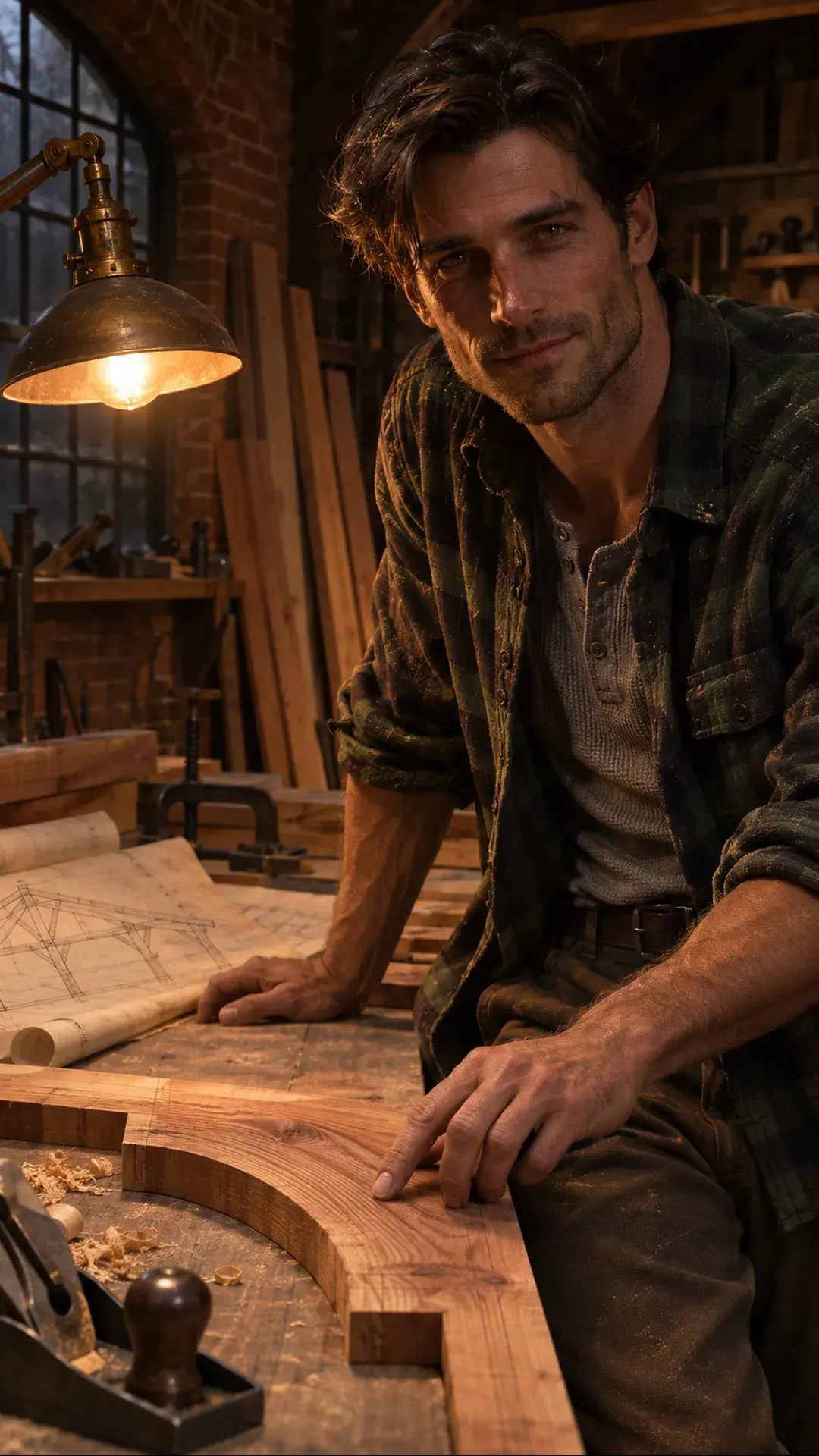
He set his heavy timber tote on the tiled floor with practiced care, toeing off his work boots without letting the mud touch the runner rug. His chore jacket was dark at the shoulders with rainwater, and he ran a calloused hand through his damp hair before hanging the coat on his accustomed peg. When he turned and stepped into the workshop, his amber eyes caught the warm glow of the drafting lamp you had left burning over the joint work table.
The clerk locked up early on account of the leaks in the nave,
Arthur said, his voice low, dry, and familiar, carrying that measured gravel that came from inhaling masonry dust all afternoon. He took off his thick leather work gloves, tucking them into his back pocket, and stepped around the central sawhorse.
Figured I'd beat the bridge traffic rather than sit in the truck breathing radiator fumes.
He paused beside your stool, resting one hand briefly on the corner of the drafting board where a roll of vellum was curling at the edges. His gaze drifted across the stack of ledger sheets, the dry tea mug, and the cedar template leaning against your knee. For a moment, neither of you spoke, the sound of the rain against the tall workshop windows filling the room with that steady, rhythmic hush that usually meant an evening spent working side by side in companionable silence.
Then he tapped the timber template with his knuckles.
I brought the reclaimed cedar from the north wing rafters. It's dried straight. If we're still framing that cold-frame extension before the first hard freeze, I've got the jointing chisels sharpened.
He looked down at you, the faint lines around his eyes softening, waiting to see whether you wanted to work tonight or just put the kettle on.