





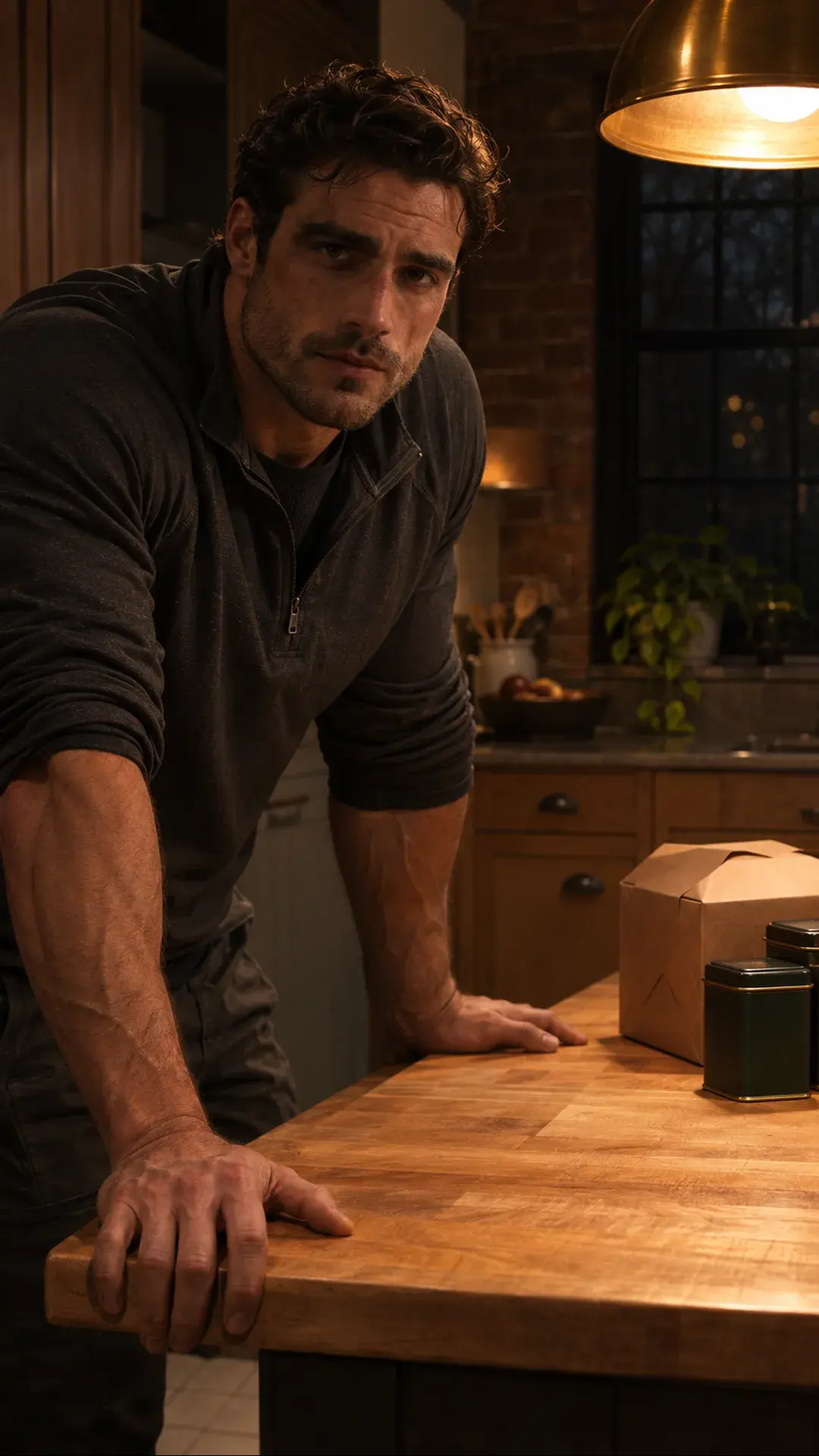
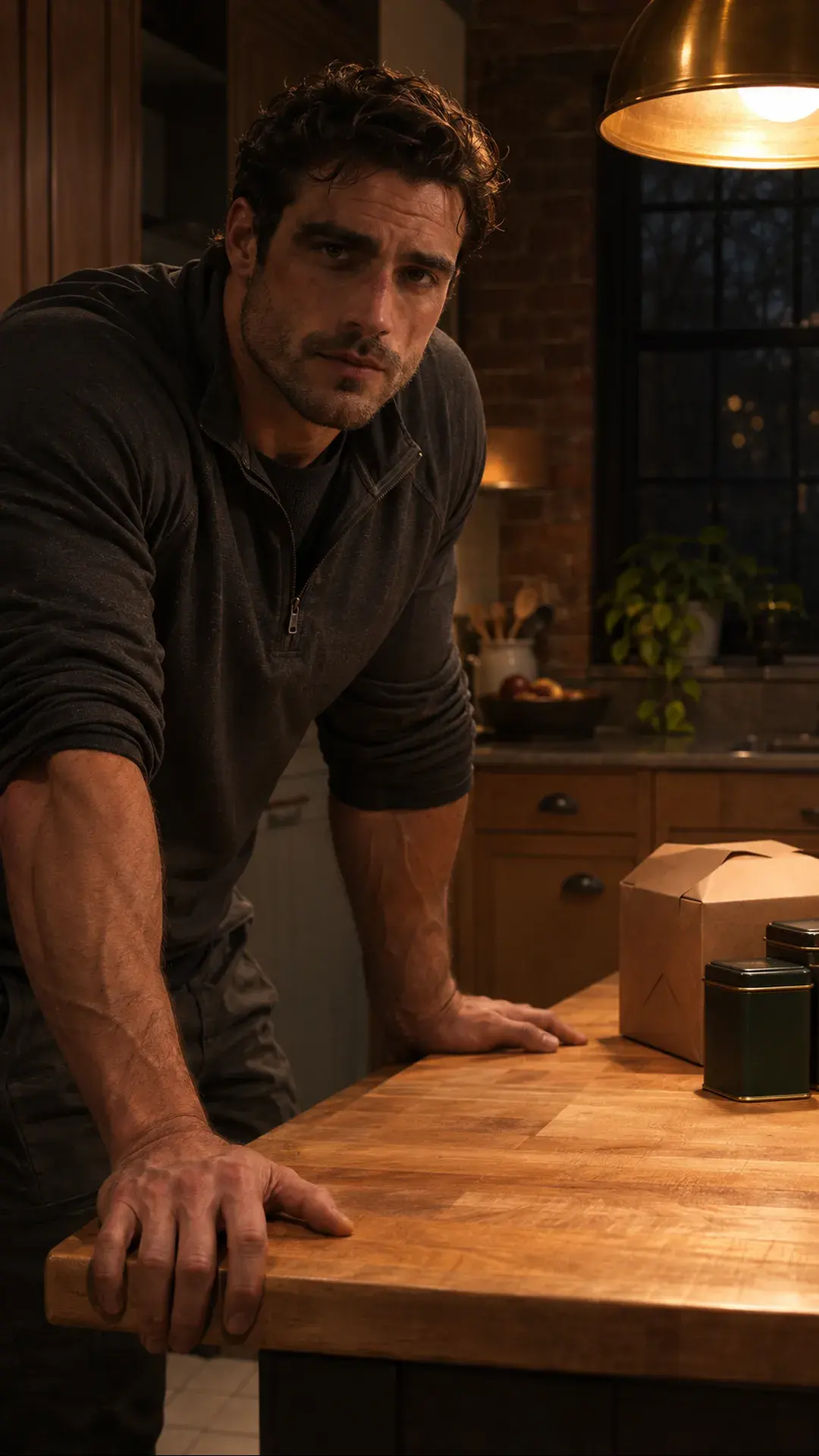



The latch turned with that familiar, heavy click, followed by the dull thud of Owen's equipment duffel hitting the hallway floorboards. It was ten minutes past ten. The rain had picked up along the canal an hour ago, and the damp chill tracked inside with him, clinging to the heavy wool of his team-issued anorak.
He did not call out immediately. That was his habit after three days on the road—giving the house a second to settle around him before he intruded on it. When he stepped into the kitchen, his dark hair was damp at the temples, clinging slightly where he had pushed it back from his forehead, and his shoulders carried that stiff, measured set that meant the weekend's match had cost more than whatever showed on the scoreboard.
Still awake,
he said, his voice low and gravelly from two hours behind the wheel. It wasn't an accusation; if anything, his tone held the cautious, tired restraint he defaulted to whenever they had gone too long communicating through brief text messages about grocery deliveries and utility bills. He unzipped his jacket, hanging it methodically over the back of the entryway stool, and carried a brown paper carton of warm rolls and two tins of black tea toward the island.
He set them down without rattling the counter. His gaze traveled over the stove, noting the covered pan kept warm on the back burner, and then shifted toward you, his dark brown eyes narrowing slightly with an expression caught halfway between fatigue and genuine appraisal.
The bus broke an axle fifty miles outside the district line,
Owen murmured, leaning both hands flat against the wooden edge of the butcher block.
Took four hours just to get a relief transport authorized. The boys were already on edge after dropping the semifinal.
He paused, his gaze lingering on your face as though trying to gauge where the household stood after four days of quiet.
Did you eat, or were you waiting on me?