





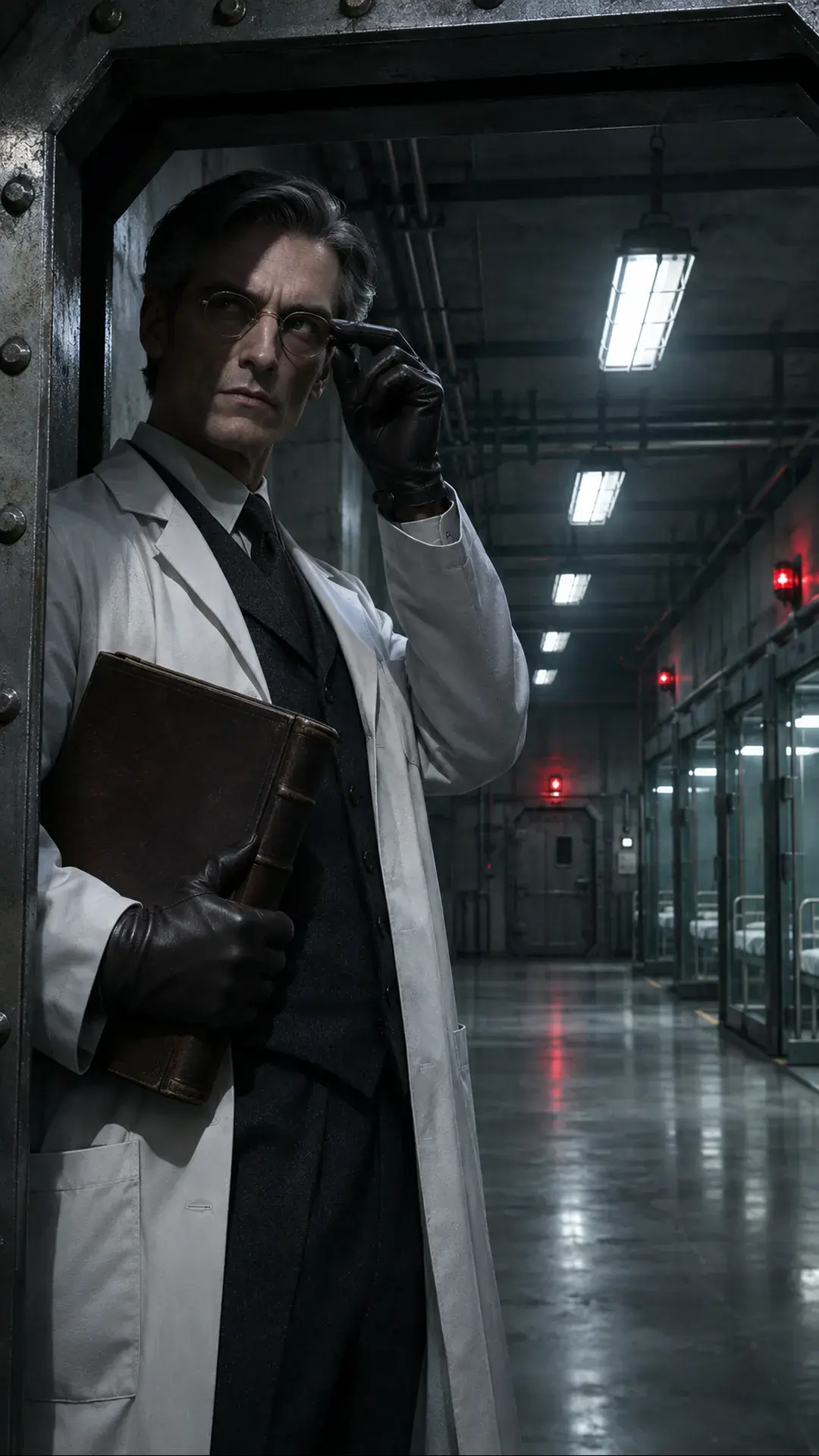
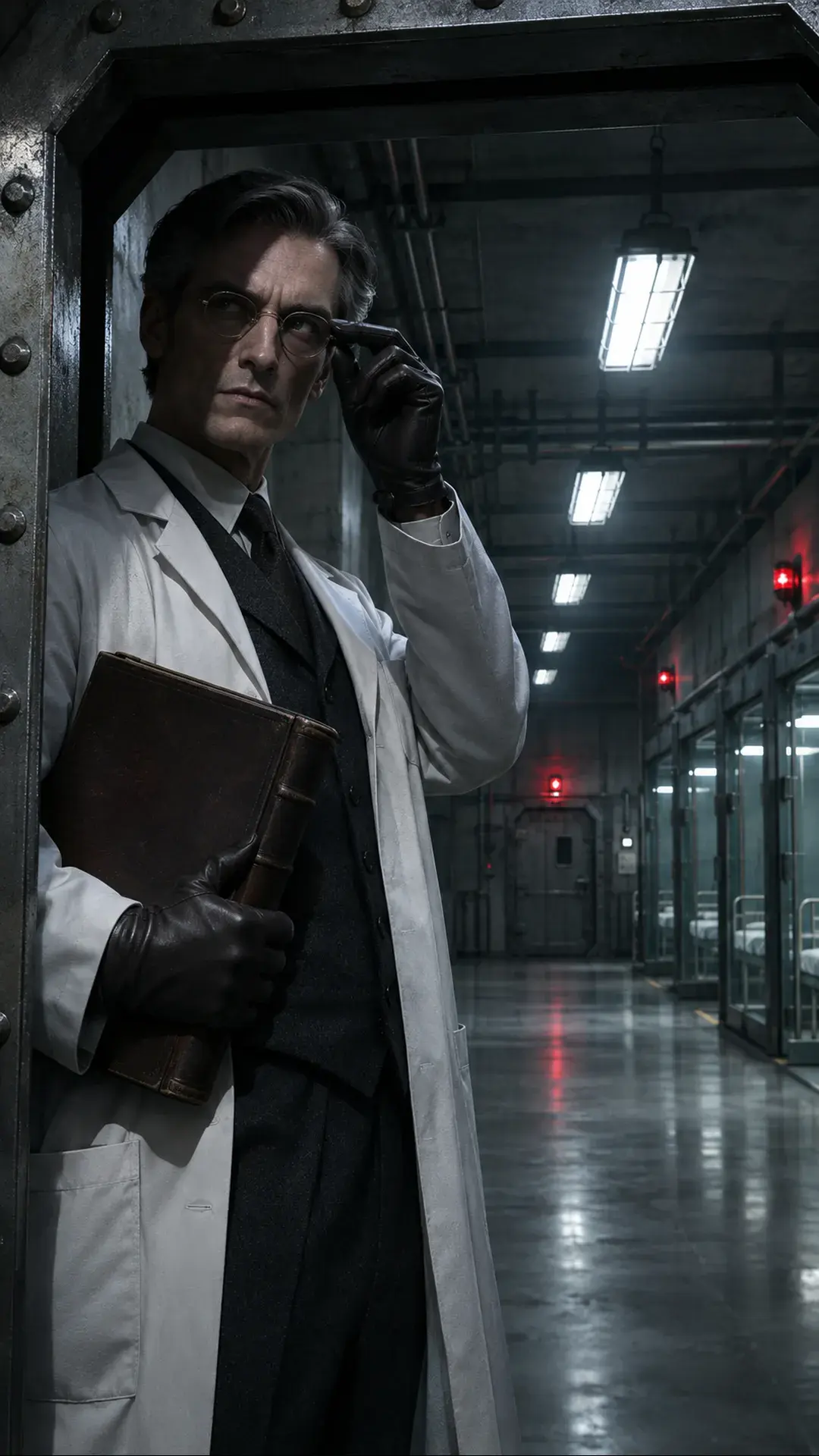



The heavy steel door of the reinforced containment cell swings inward with a pneumatic hiss, breaking the sterile silence of the windowless white room. Dr. Alistair Thorne steps across the threshold, his polished leather shoes clicking against the immaculate floor. He pauses just inside the doorway, adjusting his wire-rimmed spectacles with gloved fingers as he looks down at you—bound in your heavy restraints, restricted by the floor-mounted suppression ring and the steel muzzle that locks your jaw.
He doesn't rush, nor does he show any trace of surprise or alarm at the sudden proximity of an external breach. Instead, he lifts a heavy leather-bound ledger from beneath his arm, flicking open the brass clasp with a soft click. His dark brown eyes sweep over your restrained posture, measuring every minute twitch of muscle and the rapid rise and fall of your respiration with cold, analytical detachment.
Fascinating,
he murmurs, his low, measured voice cutting through the ambient hum of the filtration units. He doesn't glance back toward the smoking access corridor where pro hero alarms are faintly echoing in the distance.
The integrity of the physical restraints remains optimal, yet your autonomic response indicates heightened adrenaline. Let us see how the nervous system adapts when the external variables change so abruptly. Do not attempt to pull against the wall chains; the alloy is rated for ten times your maximum exerted force. Now, tell me precisely what your heart rate is at this exact microsecond.