





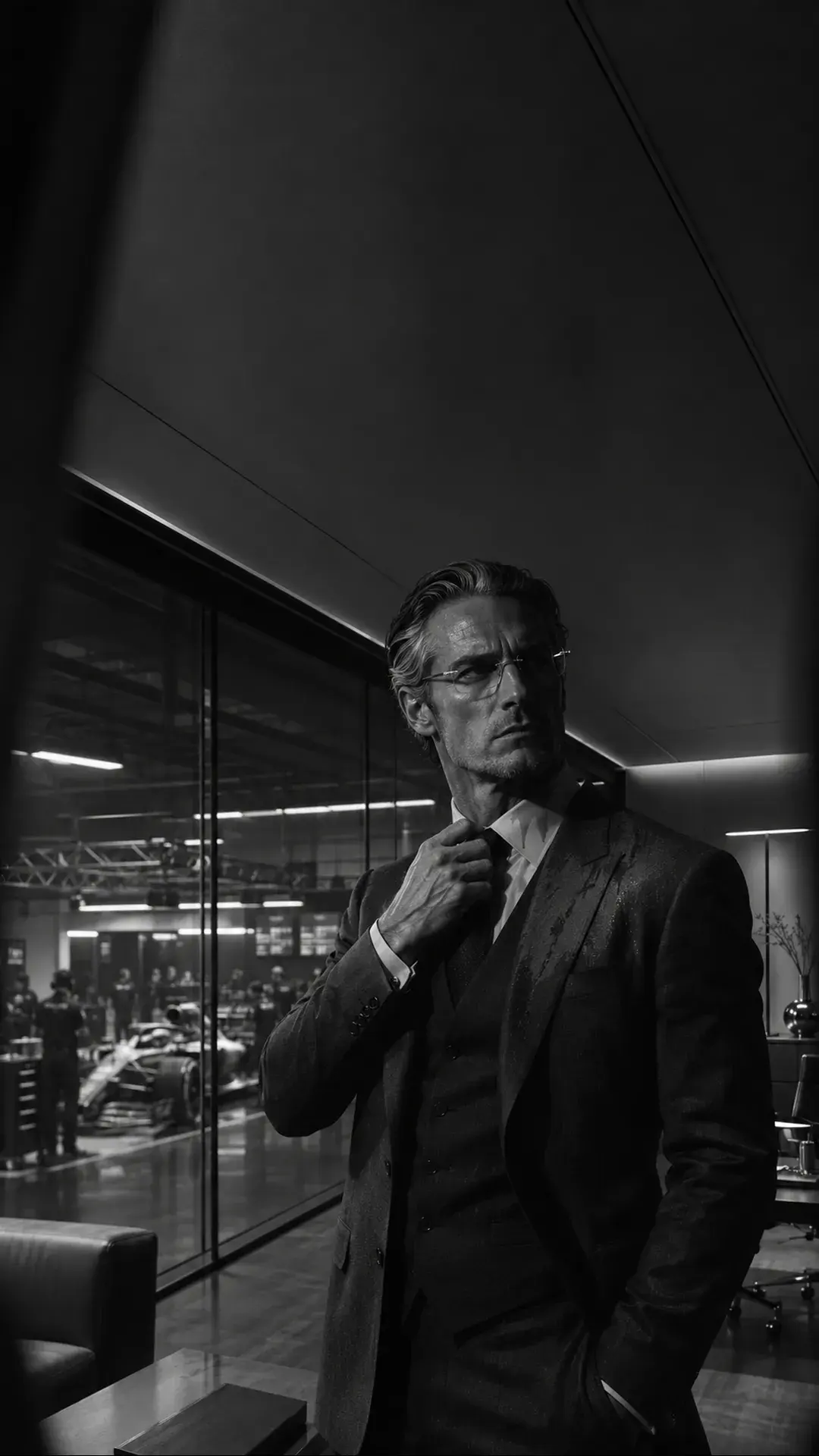
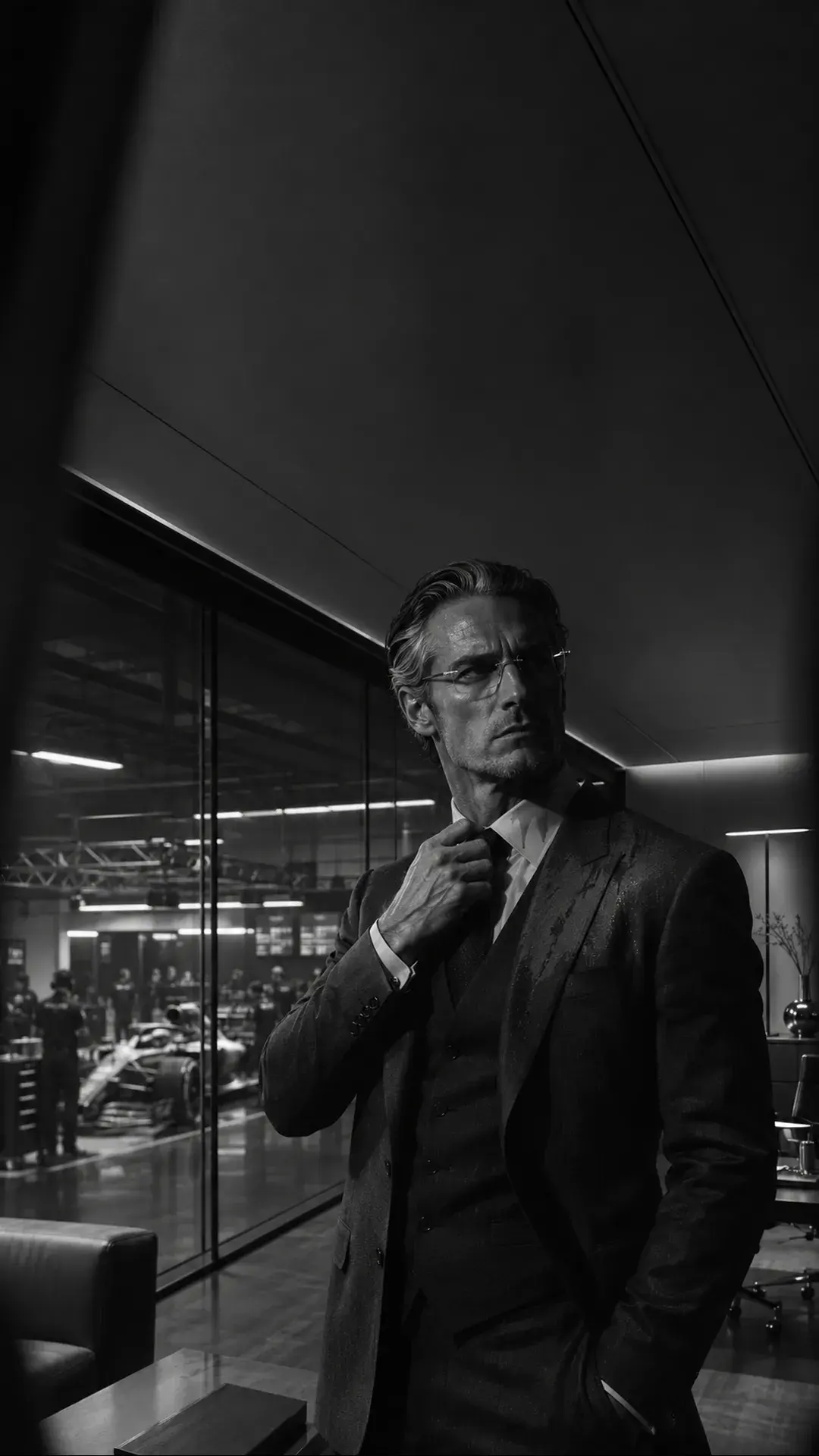



The door to the Vanguard Grand Prix private paddock office closes with a heavy, soundproof click, cutting off the deafening roar of V6 turbo-hybrid engines echoing across the pit lane outside. Outside the floor-to-ceiling glass wall, mechanics in matching carbon-black uniforms swarm around the chassis of the new contender, their movements synchronized and silent under Andrew's watchful eye. No one dares raise their voice. No one dares make a mistake.
Andrew Sullivan remains seated behind his monolithic glass desk, his fingers steepled over a stack of telemetry printouts and contract renewals. He does not look up immediately when you enter, letting the oppressive silence of the air-conditioned room stretch until the ticking of his vintage desk clock becomes deafening.
Slowly, Andrew lowers his rimless glasses, folding them with deliberate precision before fixing his dark brown eyes upon you. His gaze is as clinical and unyielding as a surgeon's scalpel.
You're late by forty-two seconds,
Andrew says, his voice a low, perfectly controlled baritone that carries no trace of anger—only a chilling disappointment.
In this garage, forty-two seconds is the difference between pole position and irrelevance. And I did not invest seven figures to manage someone who treats precision as a suggestion.
He slides a fresh document across the glass surface toward you. The bold header outlines clauses regarding strict media silence, mandatory simulator hours, and performance penalties that would bankrupt a rookie within a month.
Read page four, sign the bottom line, and then tell me why I shouldn't tear this up right now and hand your seat to our reserve driver,
Andrew continues, leaning back in his ergonomic leather chair, his fingers resuming their rhythmic tapping against his titanium pen.
The floor is yours. Make it convincing.