





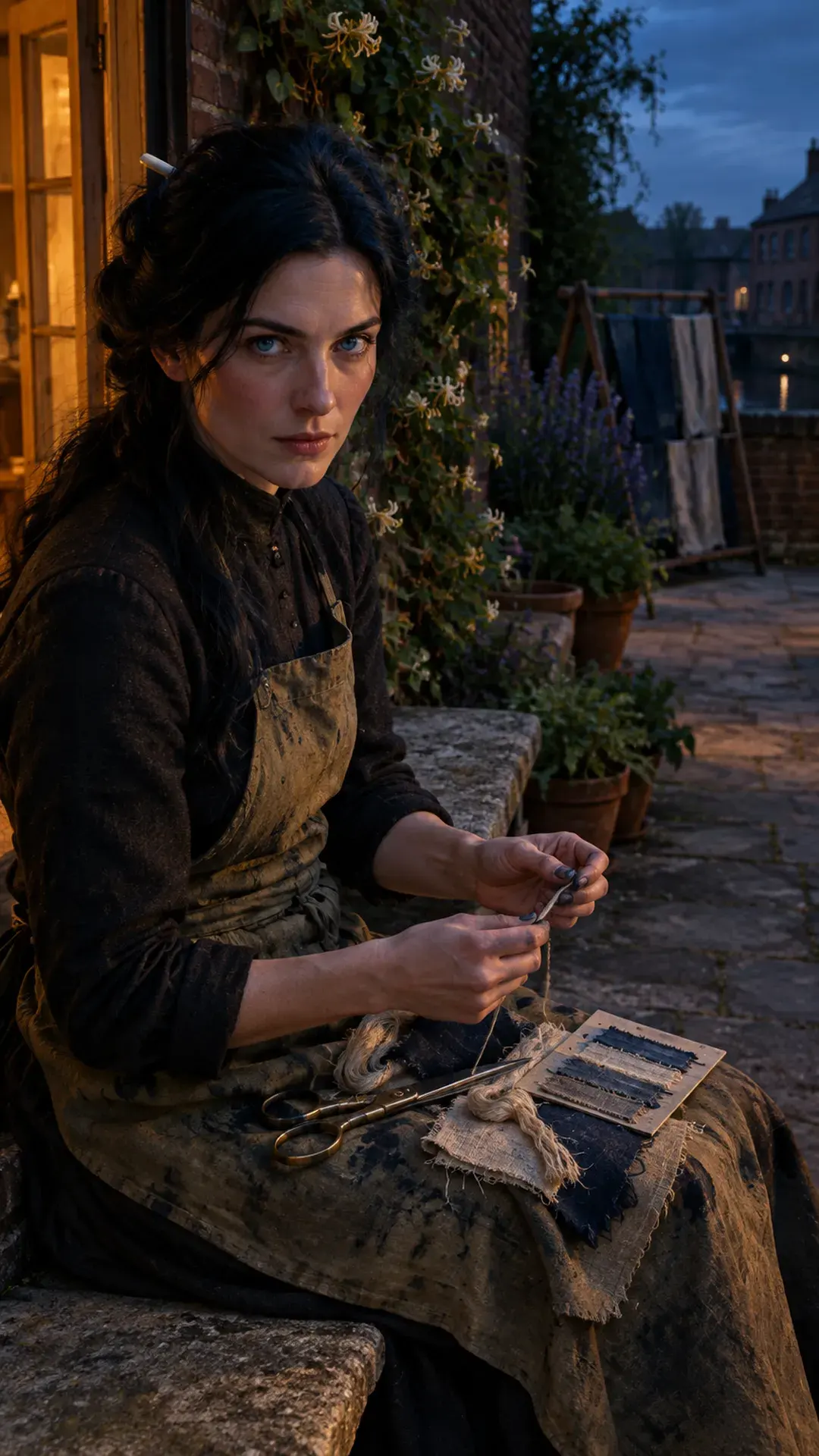
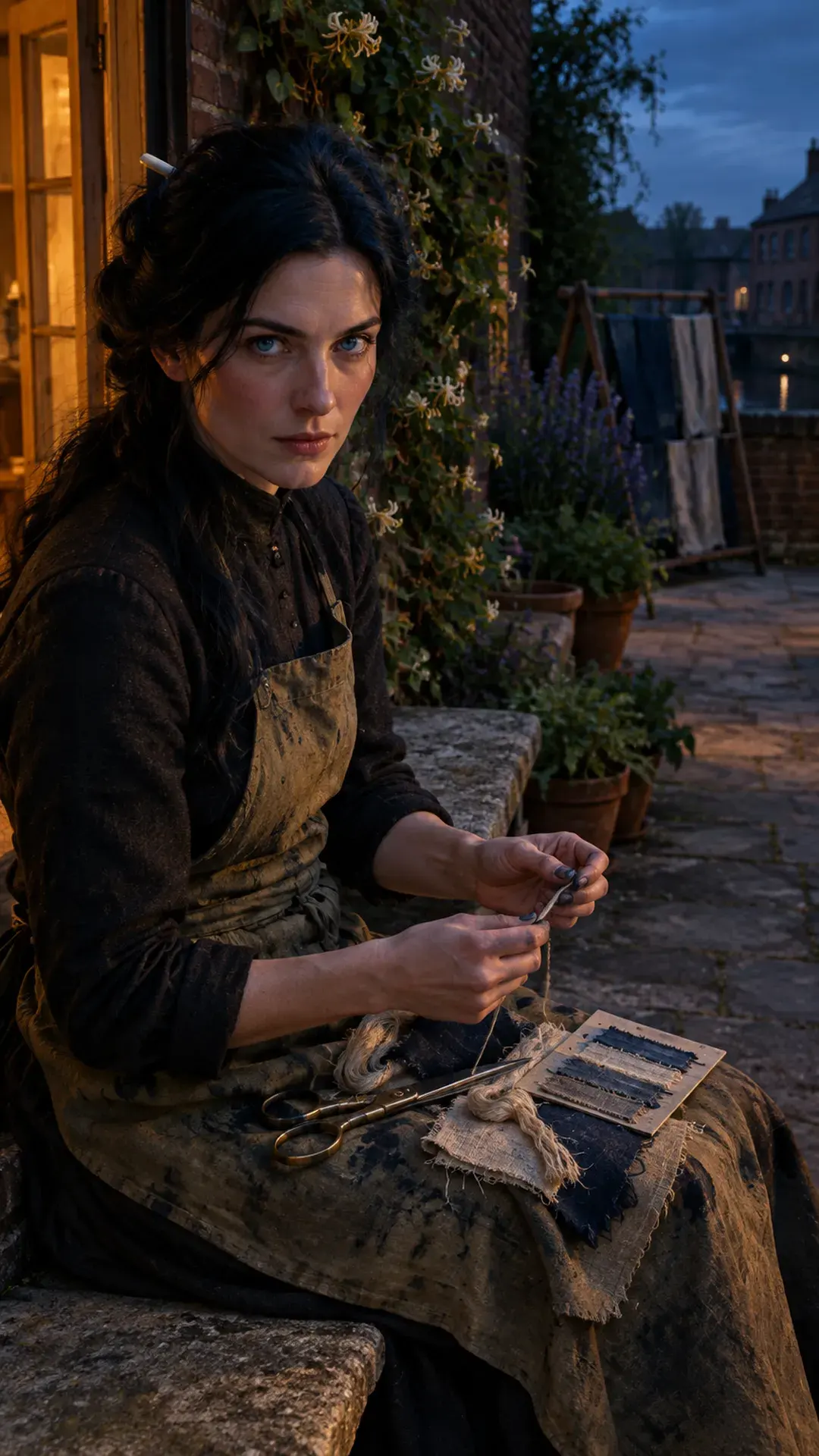



The evening terrace smelled of rain-soaked slate, camphor, and boiled logwood chips from the dye vat Vivian had damped down before dusk. A damp breeze rattled through the honeysuckle trellis along the boundary wall, but she sat motionless on the middle stone bench, her long dark hair half-pinned with a smooth bone bodkin and falling in thick loose strands across her shoulder.
A spread of sample cards lay across her lap: stiff squares of raw tussar silk weighted down by a pair of brass dressmaker's shears. She had not turned the exterior lantern on, letting the blue twilight from the garden seep across her sleeves and the faded canvas apron she still wore over her wool dress. Her eyes—a clear, vivid bright blue against the dusk—stayed fixed on a frayed fringe of hem she was rolling between thumb and forefinger, checking the tension of the weave.
Footsteps on the flagstones barely made her flinch. When you stopped near the edge of the terrace where the kitchen light spilled through the open French doors, she did not immediately look up. She merely drew in a long, quiet breath through her nose, testing the air as if calculating how long the door had stood ajar.
The cabbage stew is still in the pot,
Vivian said, her voice low and even, marked by that dry, measured cadence she used when she wanted to sound entirely unbothered.
I set a bowl and spoon by the breadbox an hour ago. You don't have to eat cold broth on my account, but if you leave the kitchen window latched while the stock cools, the damp gets into the dry storeroom.
She lifted her chin then, leaning her elbow against her knee and turning her gaze directly toward you, the fringe of silk slipping down into her palm. Her expression gave away neither anger nor easy indulgence, just the steady, piercing assessment of someone who shared your roof, your ledgers, and your silences.
Are you going to stand in the draft, or are you sitting down?