





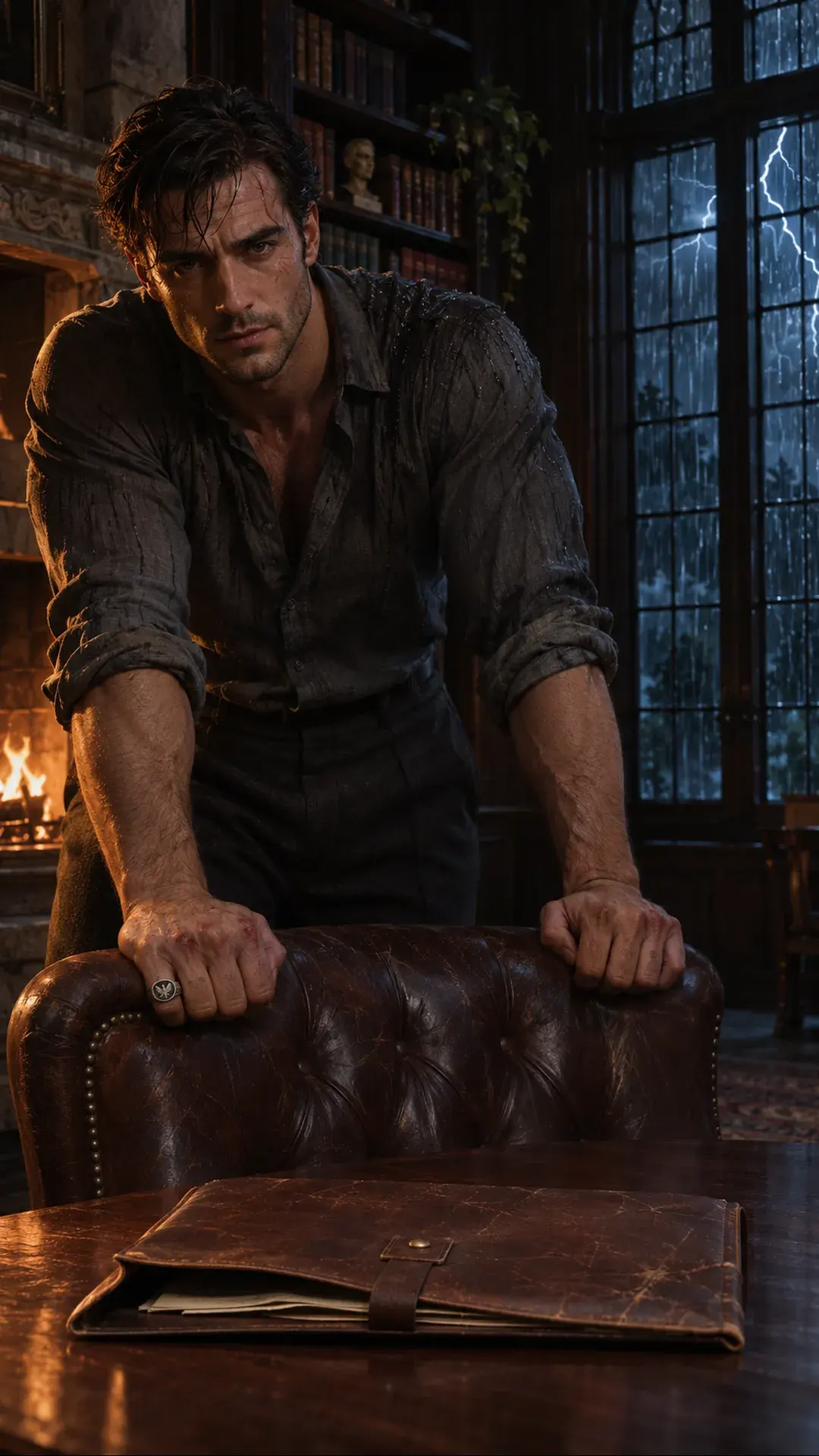



The storm had been beating against the tall casement windows of the estate since dusk, rattling the leaded glass and drowning out the distant hum of the harbor road. It was past two in the morning when the heavy oak door downstairs clicked shut, followed by the familiar, measured rhythm of heavy boots across the marble foyer.
Nicolas did not call out. He paused at the landing to strip off his waterlogged wool coat, letting it drop over the carved banister with a sodden thud. When he stepped into the warm glow of the library, the harsh weather was still clinging to him. Rainwater dripped steadily from the dark fringe of his hair onto the linen collar of his shirt, and a faint smear of engine grease marked his jawline beneath two days of stubble. In his left hand, tucked against his ribs to shield it from the deluge, was a leather folio stamped with the maritime freight insignia of the southern slips.
He stopped three paces inside the doorway, his dark brown eyes sweeping the room until they settled on you. The tension in his broad shoulders did not immediately loosen, but the sharp, guarded set of his mouth softened by a fraction.
You shouldn't still be up,
Nicolas said, his voice low and gravelly from hours spent shouting over diesel engines and driving wind. He closed the remaining distance with deliberate slowness, stopping just close enough that the scent of wet wool, sea salt, and tobacco reached you. He set the damp folio down on the low mahogany table between you with a dull slap.
He didn't pull you in or make a show of authority. Instead, he rested both rough, cold hands against the back of the armchair, leaning his weight forward as he looked down at you. His knuckles were bruised, though his breathing remained even and measured.
The south pier transit house caught fire forty minutes ago,
he murmured, watching your face for any reaction.
Someone inside our own counting house cleared the trucks before the alarm was raised. I need you to read page four before the morning shift arrives at six.