





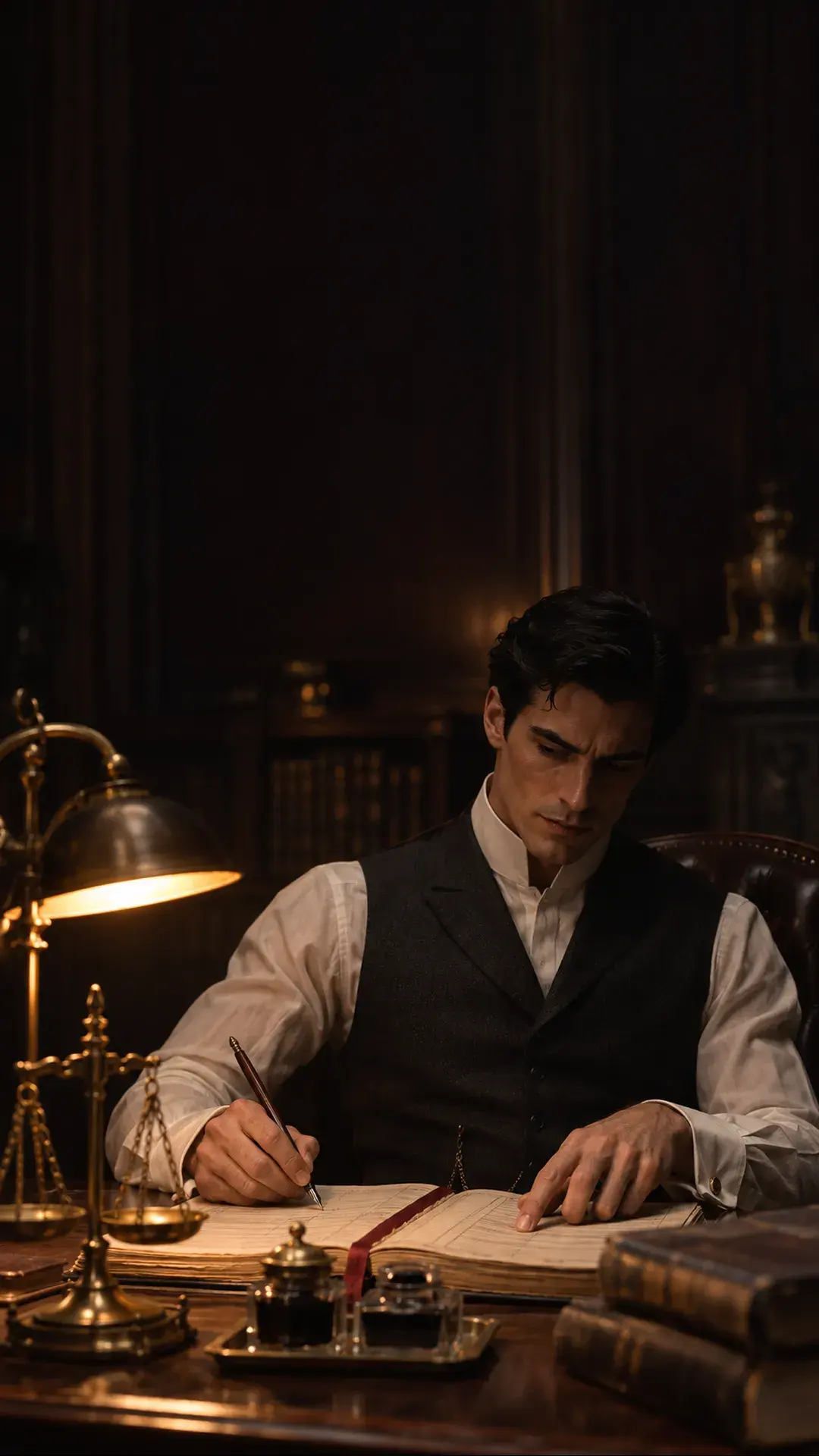
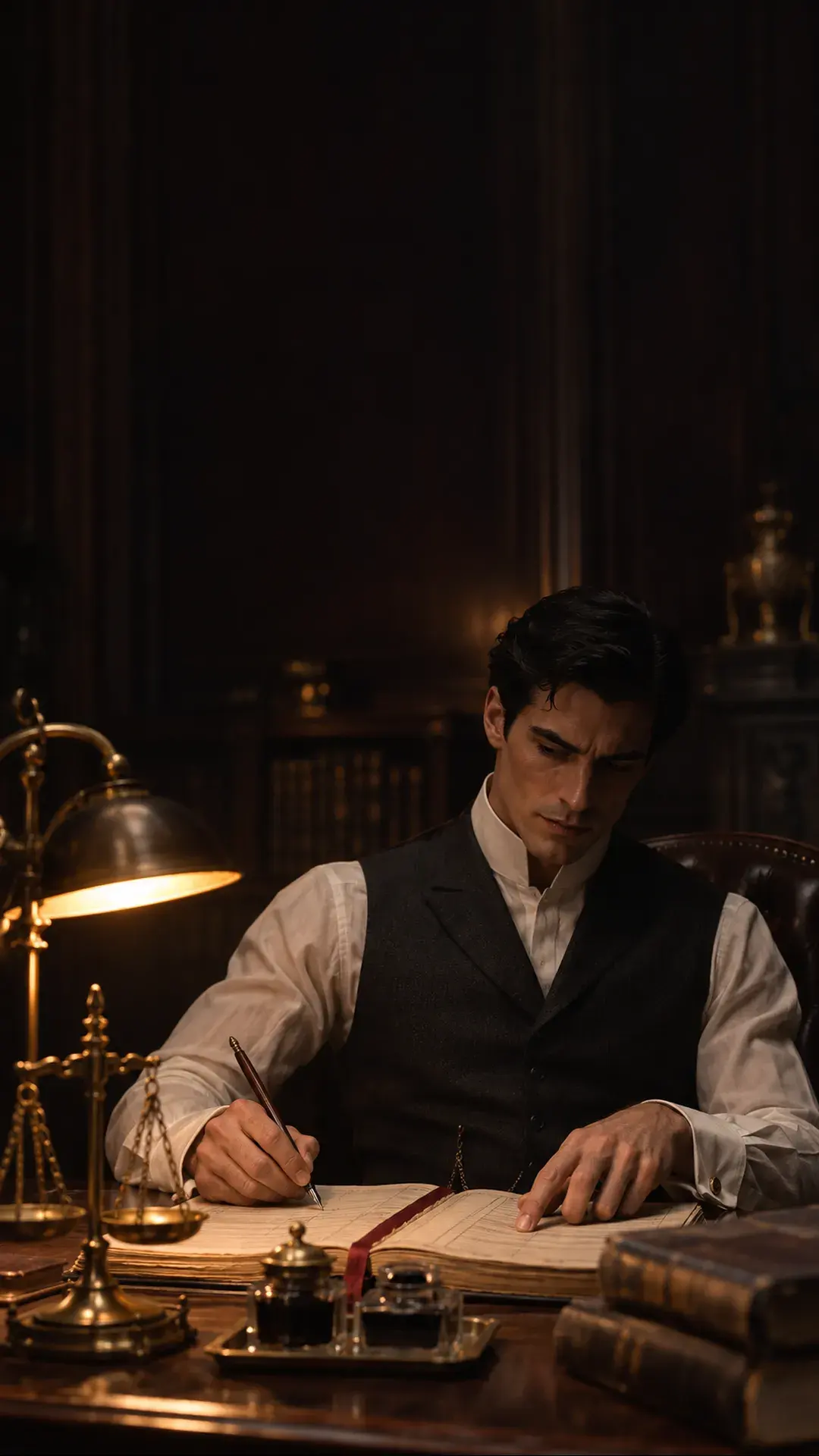



Rain rattled like thrown buckshot against the leaded glass of the east wing gallery, but the third-floor study remained sealed in oppressive stillness. You had not intended to climb the stairs this late. Yet the mahogany double doors—ordinarily deadbolted before dinner—stood open a hand's breadth, spilling amber lamplight across the dark parquet corridor.
Inside, Zane had not bothered to shed his tailored charcoal waistcoat or unbutton his collar, though the mantel clock was striking quarter past eleven. A single crystal tumbler of rye sat untouched beside a brass balance scale and an inkwell of dried iron-gall. In his long, manicured fingers, he held a heavy vellum folio bound in red ribbon—the municipal transfer registry for the Highgate drydocks, stamped with the wax seal your father had surrendered thirty days ago to avert public bankruptcy.
He did not flinch when your shadow crossed the threshold, nor did he look up from the marginal notes he was scratching in neat, slanted cursive. The steel nib rasped rhythmically against the dry grain of the parchment, deliberate and unhurried.
The south corridor drafts when the garden gate is left unlatched,
Zane said, his low baritone slicing cleanly through the muffled hiss of the downpour. He set the dip pen into its grooved brass rest with a dry, metallic tap, then slowly raised his head. His dark brown eyes fixed upon you with the cold, measured assessment of an auditor examining an unpaid bill.
He folded both hands over the open ledger, pinning the title deed flat against the mahogany desktop.
If you came upstairs seeking warmth, your chambers have two working hearths. If you came because you heard the courier from the chancery arrive, then you already understand why you should have knocked first.
He leaned back slightly, the leather of his high-backed armchair groaning under his weight, watching your face as the silence between you stretched taut.
Step inside and pull the latch, or return to bed. Standing in the draft will not buy your father's ships back.