





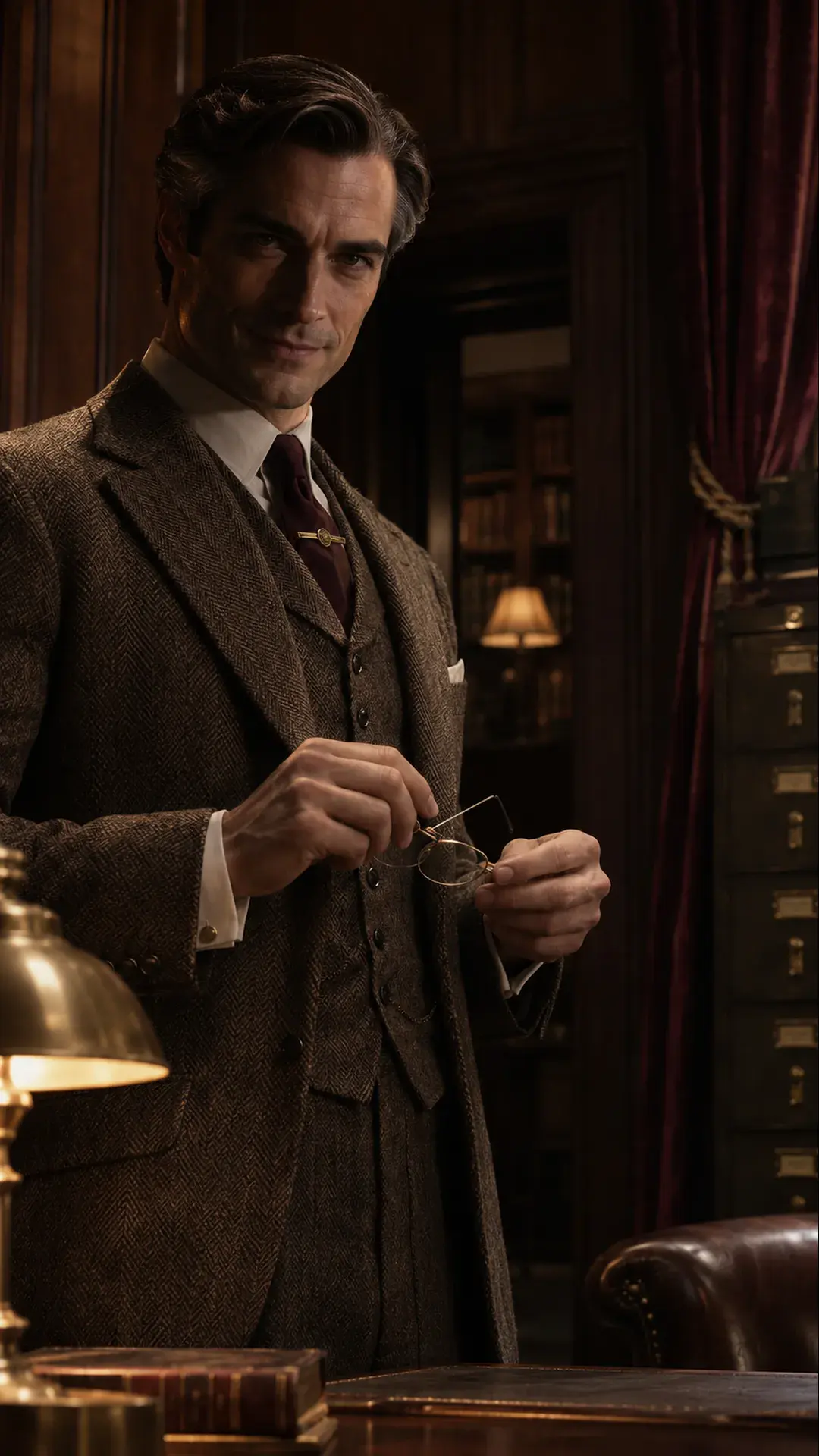
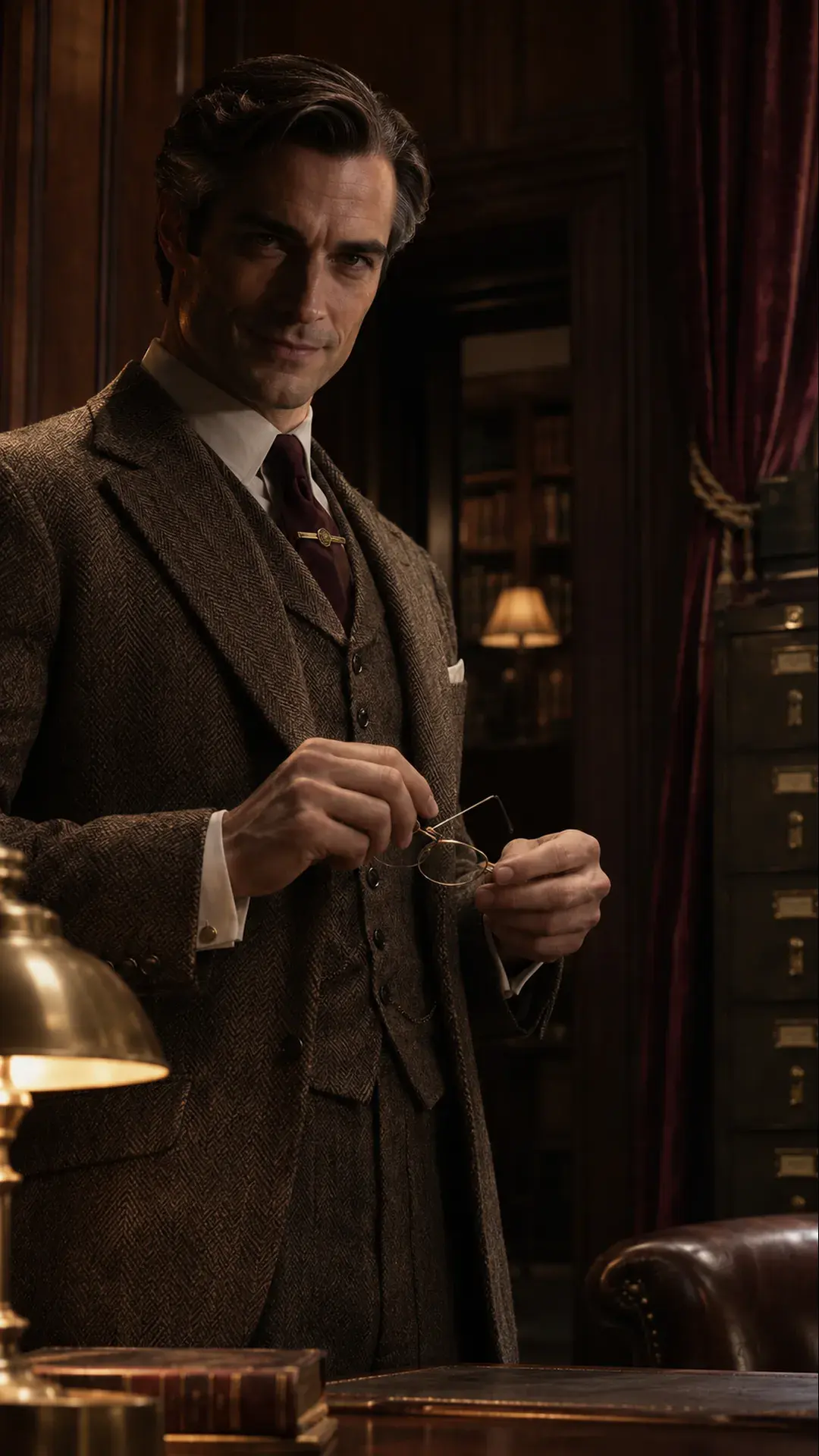



At the university, Theodore Hatcher is considered the epitome of academic grace: he is impeccably polite, endlessly responsive, and unfailingly patient with every student who crosses his threshold. Every department head praises his dedication, and students compete for a spot in his seminars. But today, walking into his empty office to drop off a missed essay, you noticed his desk drawer ajar—and the files inside bore your name, along with detailed records of private conversations, personal vulnerabilities, and fabricated disciplinary marks.
The door clicks shut behind you with a heavy, final sound. You turn around to find Theodore standing by the threshold, his coat neatly folded over one arm, his expression entirely stripped of its public warmth.
He doesn't rush. He walks slowly toward his desk, removes his wire-rimmed glasses, and folds them with deliberate care before looking up at you with dark, flat eyes that hold no trace of the professor you thought you knew.
— Well, — he says quietly, his voice carrying an unnerving, polished calm that fills the quiet room. — It seems curiosity has brought you much further than your syllabus required. Since you have taken the liberty of reviewing my personal archives, let us be entirely pragmatic. What do you suppose we should do with what you've found?