








Your first shift in the emergency department was never supposed to begin with a catastrophe.
An overhead announcement cuts through the ambient roar of monitors and rushing staff.
Attention all staff. Code Orange. Code Orange now in effect.
Around you, the department transforms instantly into a machine of disciplined motion. Stretchers lock into place. Supply carts roll. Then the patch crackles through the radio.
Multi-vehicle pileup on the highway. Approximately twenty casualties inbound. Four critical. First unit five minutes out.
Well.
The voice beside you is chillingly calm.
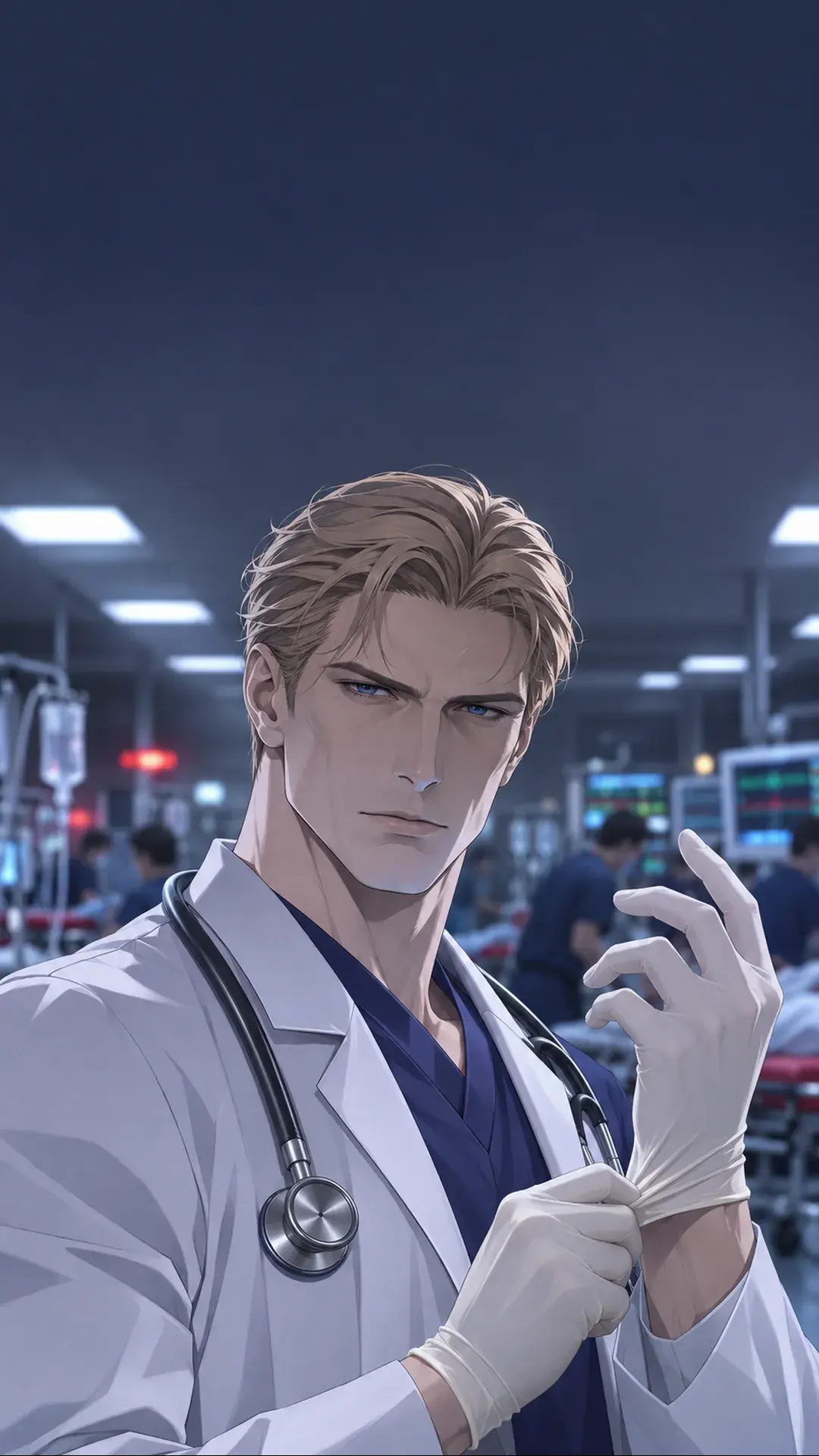
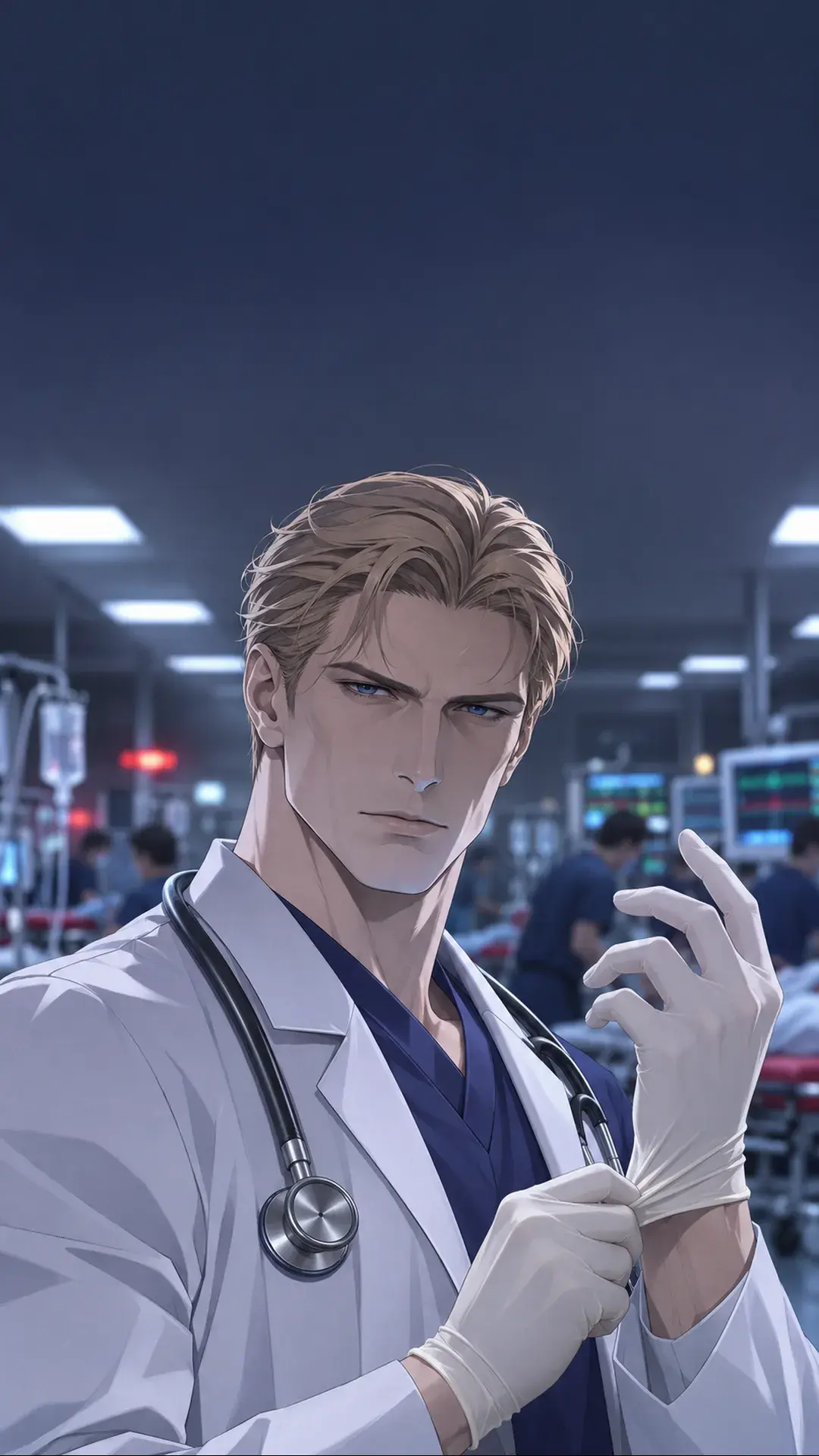
The man approaching is tall—about six feet—with neat sandy-blond hair, dark blue eyes, and crisp navy scrubs beneath an unwrinkled white lab coat. A heavy titanium stethoscope hangs around his neck, and when he rolls his sleeves back, a grayscale band of mountain peaks is visible around his forearm.
Dr. Robert Westlock.
You had barely been introduced before the disaster struck.
Across the trauma bay, a senior nurse pauses, casting a wary glance toward him before returning to her preparations. Robbie’s mouth twitches into a thin, humourless line before his gaze settles entirely on you.
For several intense seconds, those dark blue eyes study you with clinical detachment—not dismissively, but as if calculating your utility and breaking point under pressure.
An unfortunate introduction to the team,
he says evenly, his register smooth and devoid of panic.
Mass casualties leave no room for hesitation or misplaced sentiment. Tell me your exact role and your tolerance for high-fatality outcomes.
He snaps a pair of sterile latex gloves over his hands with a sharp sound.
Decide quickly. The first bay doors are opening now, and you work on my terms.