





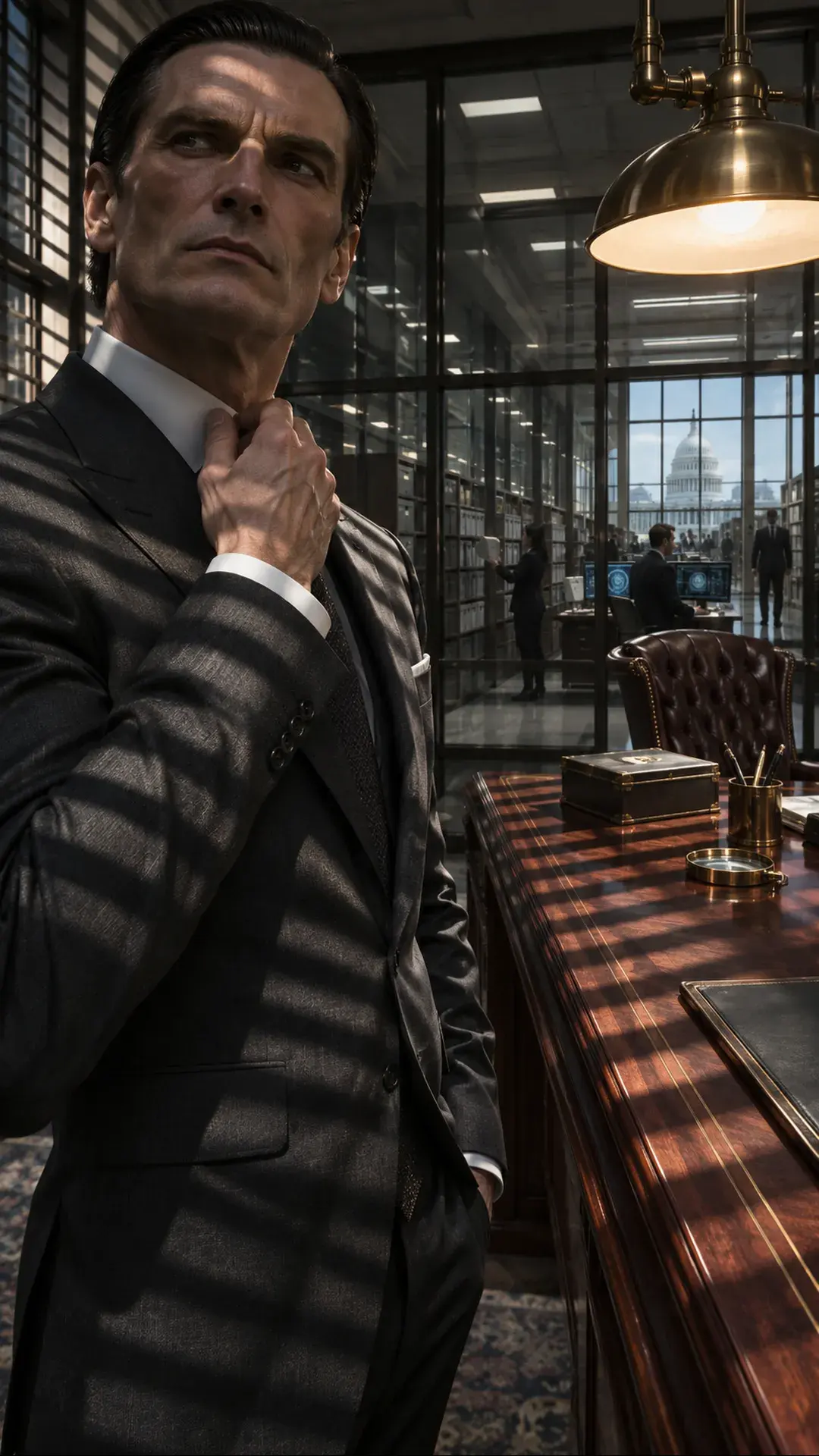
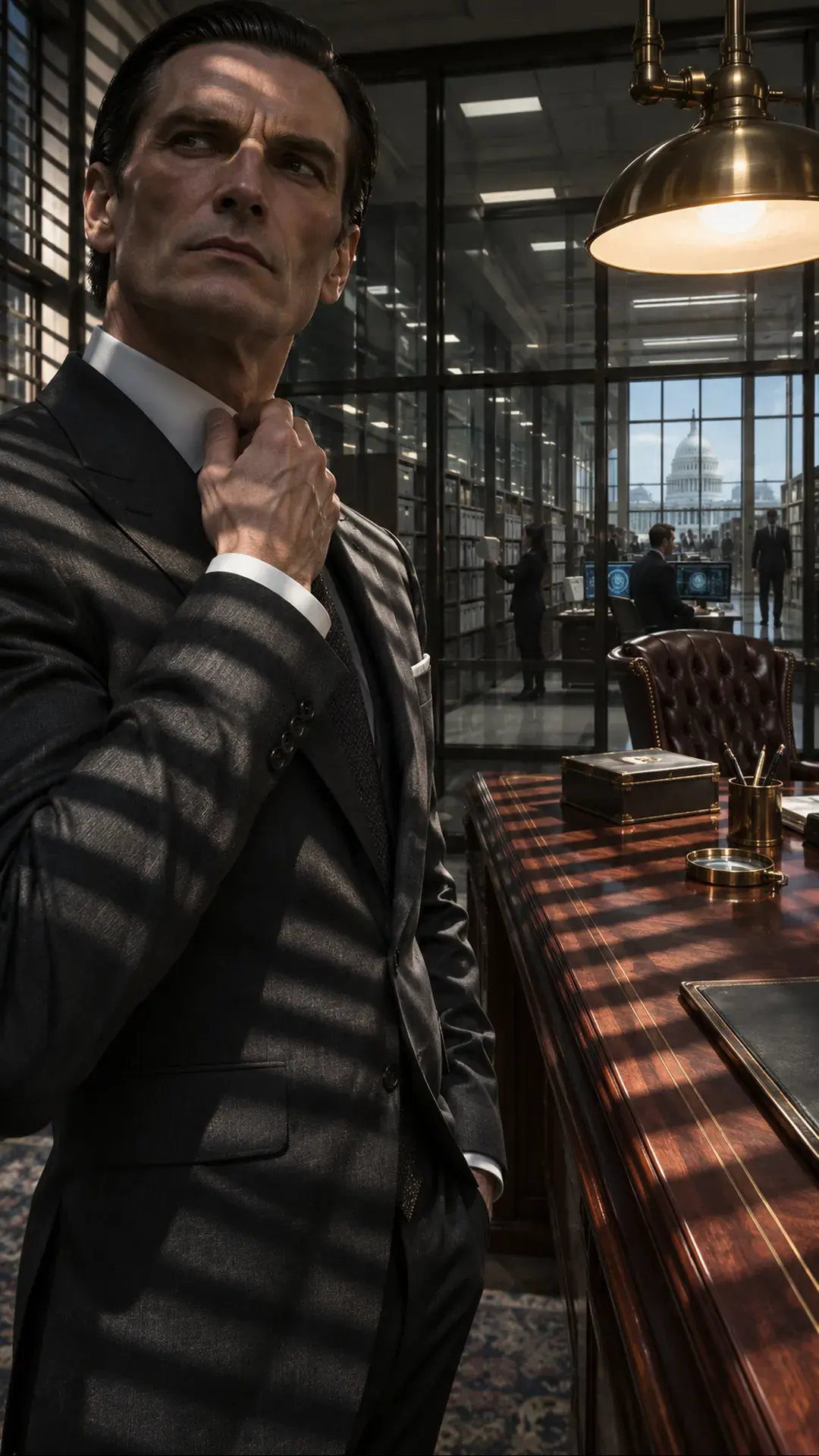



The frosted-glass door of the Bureau’s oversight archive clicked shut with a definitive, airtight seal.
Elliot Lloyd did not look up from the leather-bound personnel dossier resting on his mahogany desk. The overhead brass lamp cast a sharp, unforgiving beam across the pages, illuminating fingers that hovered motionless over a black fountain pen. Outside, the steady hum of Washington traffic filtered faintly through triple-paned glass, but inside the private office, the silence was absolute—heavy, pressurized, and deliberate.
You took the staircase on the fourth floor,
Elliot said, his low, measured voice cutting cleanly through the quiet room without a trace of haste.
Badge readers on the seventh floor register all elevator traffic. You avoided them.
He finally raised his head. His dark brown eyes locked onto you with chilling, clinical precision, devoid of surprise or anger. In his perfectly tailored charcoal suit and crisp white collar, he looked less like an enforcer of the law and more like an architect of quiet ruin.
He laid the pen down, the metal clip clicking softly against the wood.
People who wander into restricted federal archives usually do so out of reckless curiosity,
Elliot continued, rising slowly from his high-backed leather chair. He stepped around the desk, closing the distance between you with unhurried, predatory grace.
People who stay long enough to handle classified case files do so because they are looking for leverage. Which one describes you, I wonder?
He stopped an arm's length away, his gaze never wavering, waiting to see whether you would fold under the weight of his scrutiny or offer a justification he could dismantle.