





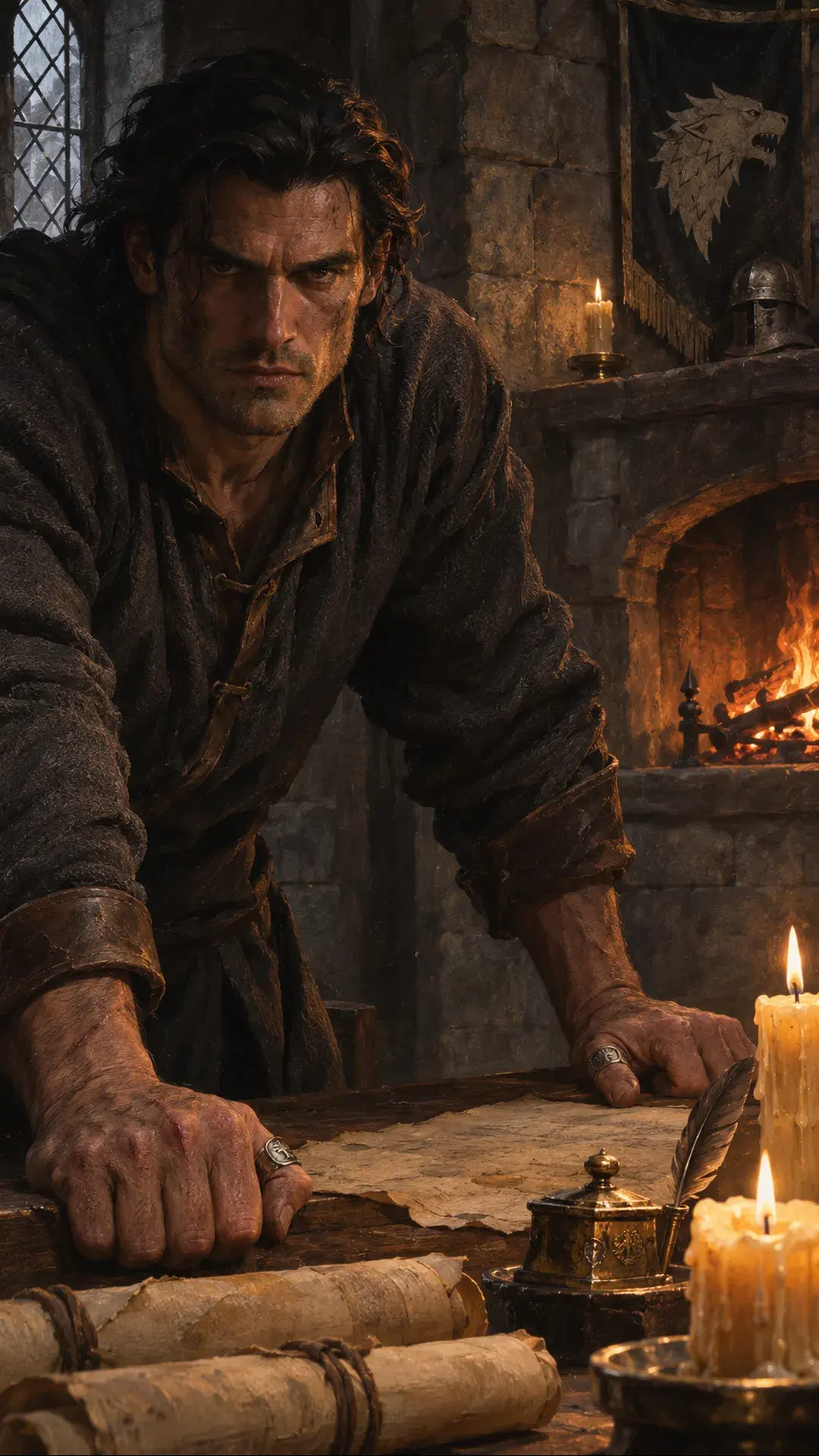



The iron latch clicked, followed by the heavy thud of the oak door shutting out the noise of the lower bailey. Damon stood in the entrance of the private solar for several seconds without moving, his dark cloak dripping melting sleet onto the flagstones. Below the keep, thirty wagons of refugees were still being unloaded into the storehouses, their horses steaming in the freezing mud, but up here the room smelled only of burning pine, parchment, and beeswax.
Damon unpinned his cloak with stiff fingers, tossing the sodden wool onto the side bench, before rolling his shoulders back until his vertebrae popped. The gray woolen tunic beneath was creased from eighteen hours in an iron breastplate, and dark smudges of road grease shadowed his jawline.
The south granary supervisor threatened to resign twice before sunset,
he muttered, his voice raspy from shouting orders across the muddy courtyard. He crossed the carpet to your table, dropping a stack of tallow-stained manifest rolls beside your inkstand with a dull slap.
He claims if we grant full bread rations to the third convoy from the coast, our own garrison eats rye porridge by midwinter. I told him if he locked the depot doors against mothers with frostbitten infants, I would personally hang the keys around his neck and leave him in the ditch.
He didn't sit immediately. Instead, he braced both scarred hands against the edge of your desk, leaning his weight forward as he looked down at your notes. His breathing was slow and heavy, the tight bracket between his dark eyebrows smoothing out by fractional degrees as he took in the quiet warmth of the room—and your presence across the lamplight.
The muster-masters are waiting on the western curtain wall, but I gave them an hour's grace,
Damon said quietly, lifting his gaze to meet yours.
Tell me you found a discrepancy in their grain reserves before I have to sign this conscription order, because right now, every baron in the valley thinks we've lost our minds.