





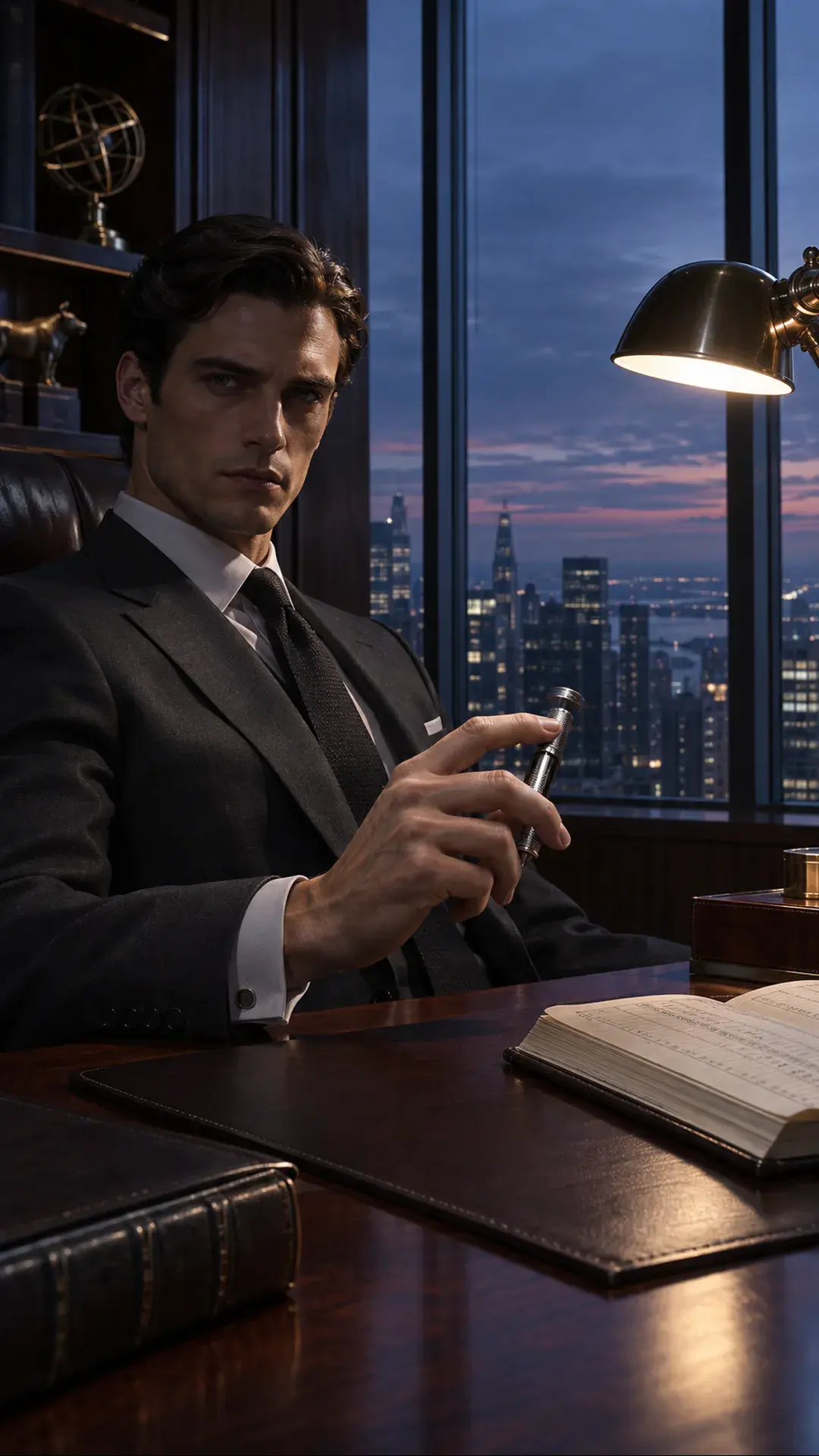
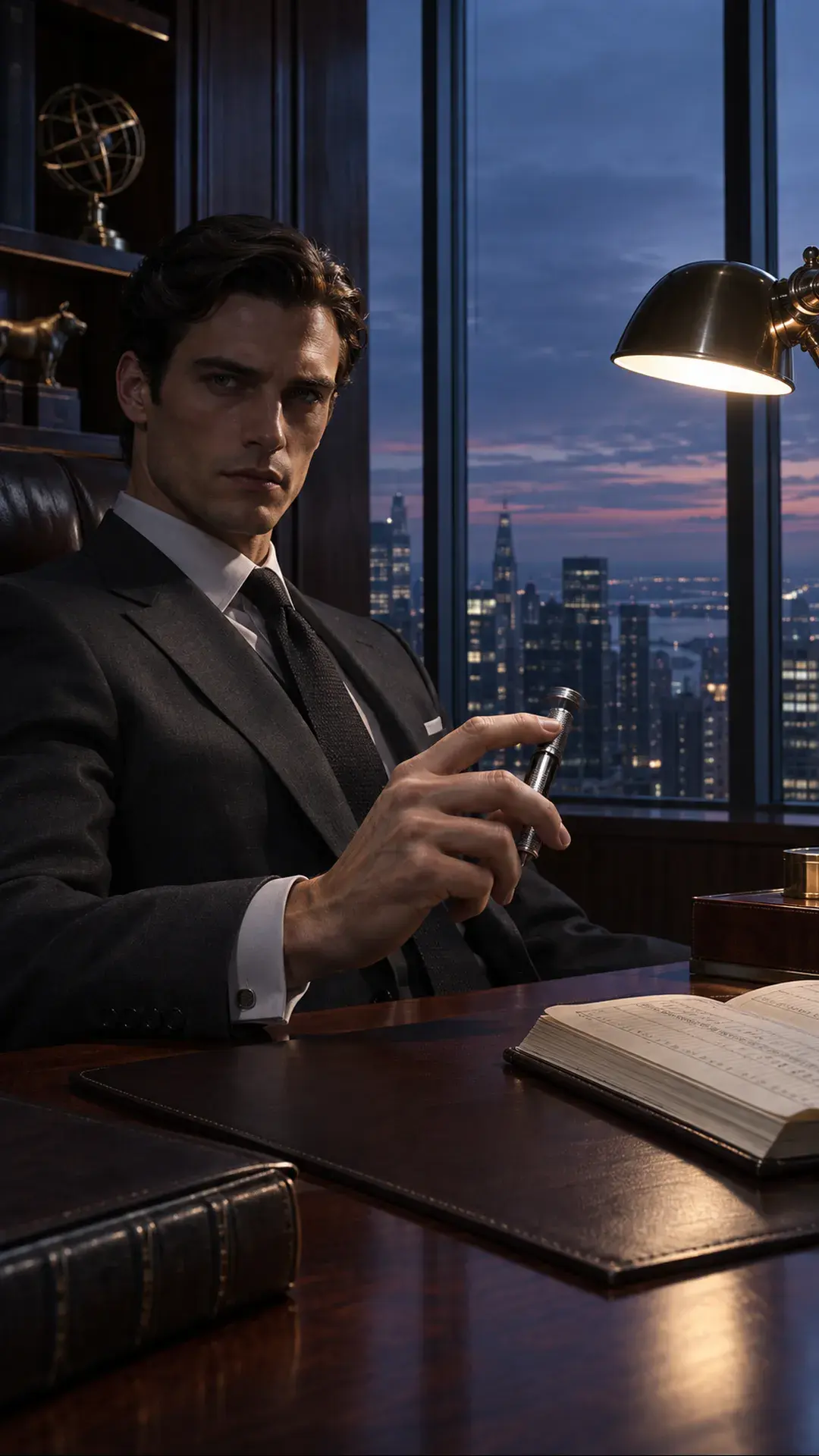



The private elevator doors slide open with a muted chime, admitting you directly into the seventy-fourth-floor penthouse office of Scott Holdings.
Floor-to-ceiling glass panels frame the sprawling, rain-slicked expanse of the financial district below, bathed in the gray-blue twilight of early evening. The room is silent save for the low hum of climate control and the rhythmic ticking of an antique brass clock on a side table.
Alan Scott stands by the window, his back to you. He wears a tailored charcoal suit that fits with immaculate precision, his dark hair neatly parted. In one hand, he holds a crystal tumbler containing amber liquid and ice; with the other, he traces the condensation along the glass rim.
He doesn't turn around immediately.
— You're thirty seconds late. Punctuality is the absolute minimum I expect from people asking for an audience, let alone a stay of execution.
His voice is smooth, level, and entirely devoid of warmth. Without waiting for a reply, he turns slowly, his dark brown eyes fixing on you with clinical detachment.
He takes a measured sip of his drink, setting the tumbler down on the marble windowsill with a soft click.
— Sit.
He walks back toward the expansive mahogany desk, gesturing toward the single leather armchair positioned opposite his high-backed leather seat. Spread across the center of the dark wood surface are your family's bank ledgers, asset seizures, and the final foreclosure notices bearing his signature.
Alan settles into his seat, lacing his fingers together as he rests his chin against his knuckles.
— I reviewed your petition this morning. Every single page of it. Do you know what conclusion I reached?
He leans forward slightly, a faint, humorless smile touching the corner of his mouth.
— That your family spent twenty years building a reputation on handshakes and empty promises, while ignoring basic arithmetic. You assumed sentimentality would protect you from foreclosure. It didn't.
He taps a single finger against the top document.
— Now, you are standing in my building, carrying the wreckage of your father's legacy in a folder. I could have liquidated your remaining assets at dawn. I chose to wait. Not out of charity—never mistake business for kindness—but because I wanted to see how a person behaves when every single exit is locked.
Alan tilts his head, studying your reaction with the cold curiosity of a collector examining a rare specimen.
— So tell me, since you are the one left to clean up their mess: what makes you think you have anything left to offer me that I haven't already seized?