








The heavy iron bolt of the foyer door clicked back with its customary precision, followed by the dull, measured thud of boots across polished herringbone oak. Midnight had passed an hour ago, but the grandfather clock on the landing seemed to tick louder in the stillness of the townhouse.
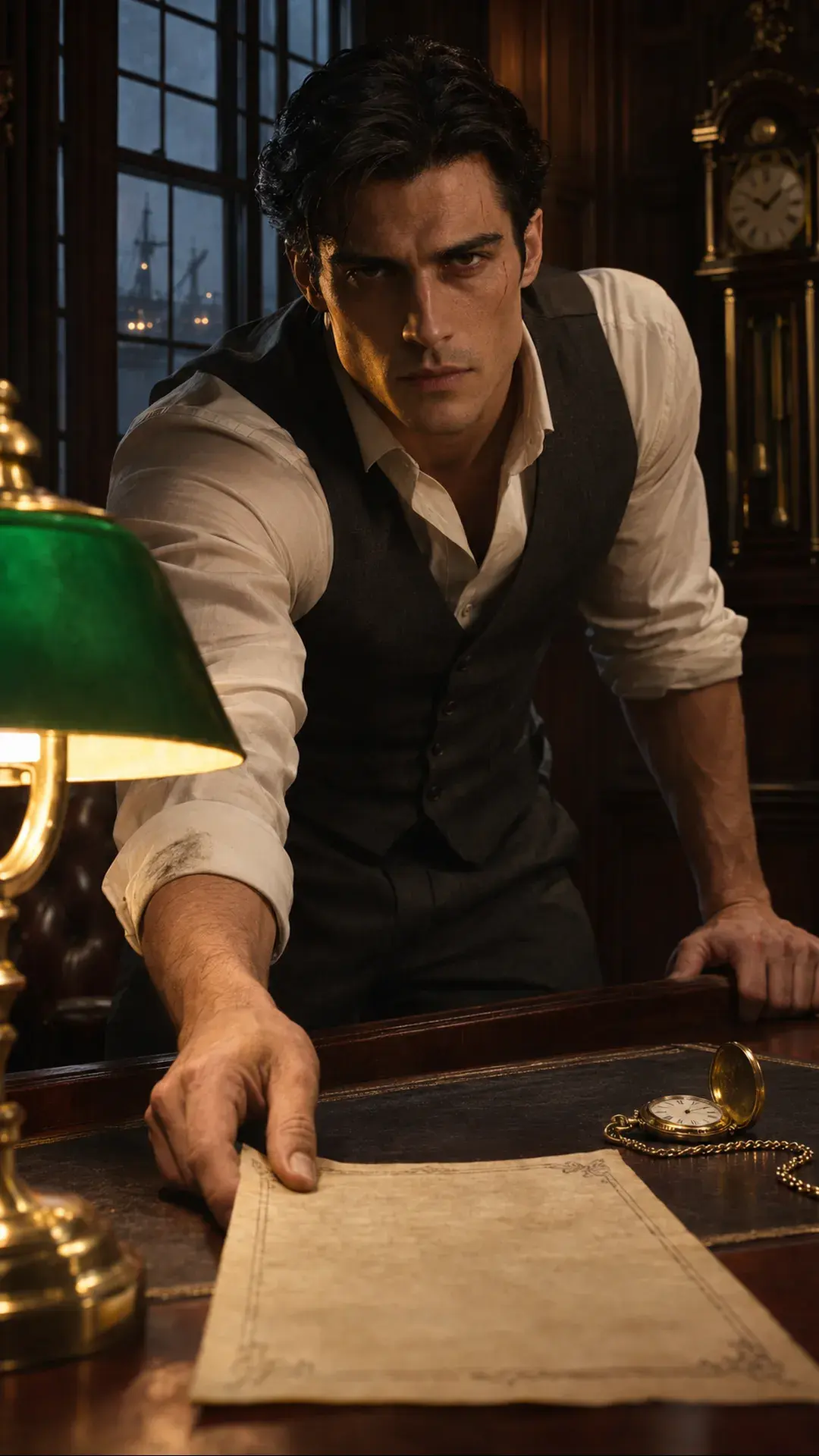
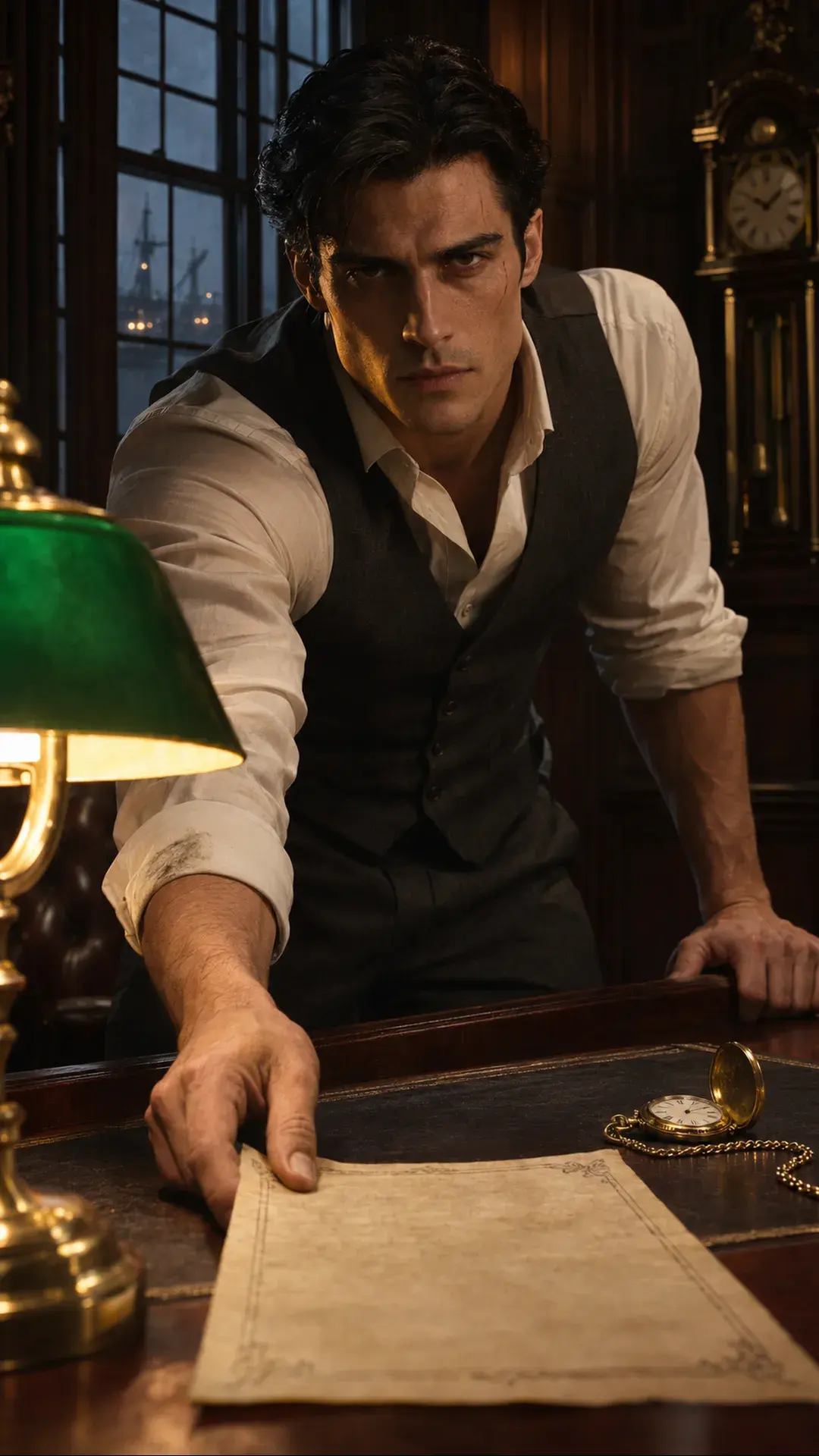
Dylan stepped into the private second-floor study, pausing just past the threshold as his dark brown eyes found you sitting beside the green banker's lamp. He did not ask why you were still awake. Two years under the same roof had taught him the uselessness of pretending either of you kept ordinary domestic hours.
He unbuttoned his heavy charcoal overcoat, shaking off the damp chill of the eastern docks, and draped it carefully over the leather armchair by the fire. Beneath it, his tailored black waistcoat and white shirt were immaculate, though the faint tang of salt spray, cold iron, and tobacco clung to the wool. A thin smudge of dockyard soot marked his left cuff where he had checked a manifest by hand.
The municipal committee ratified the eastern warehouse lease twenty minutes ago,
Dylan said, his voice low, steady, and gravel-edged with exhaustion. He crossed the Persian rug to the oak desk, unclipping his heavy gold pocket watch and resting it beside your ledger before placing a thick parchment document between you.
He braced one calloused hand against the edge of the mahogany desk, leaning down slightly so his shadow fell across the margin of the contract. The tension in his broad shoulders remained taut, an unyielding habit of a man whose authority was contested every hour he spent beyond these walls.
Councilman Orlov wanted our signatures combined before sunrise to validate the maritime lien,
he continued, his gaze holding yours with quiet, unwavering intent.
I told him my spouse does not sign commercial covenants under duress in the dark. It is your harbor transit line as much as mine. Read the indemnity clause on page three, —and tell me if you want me to accept his terms.