





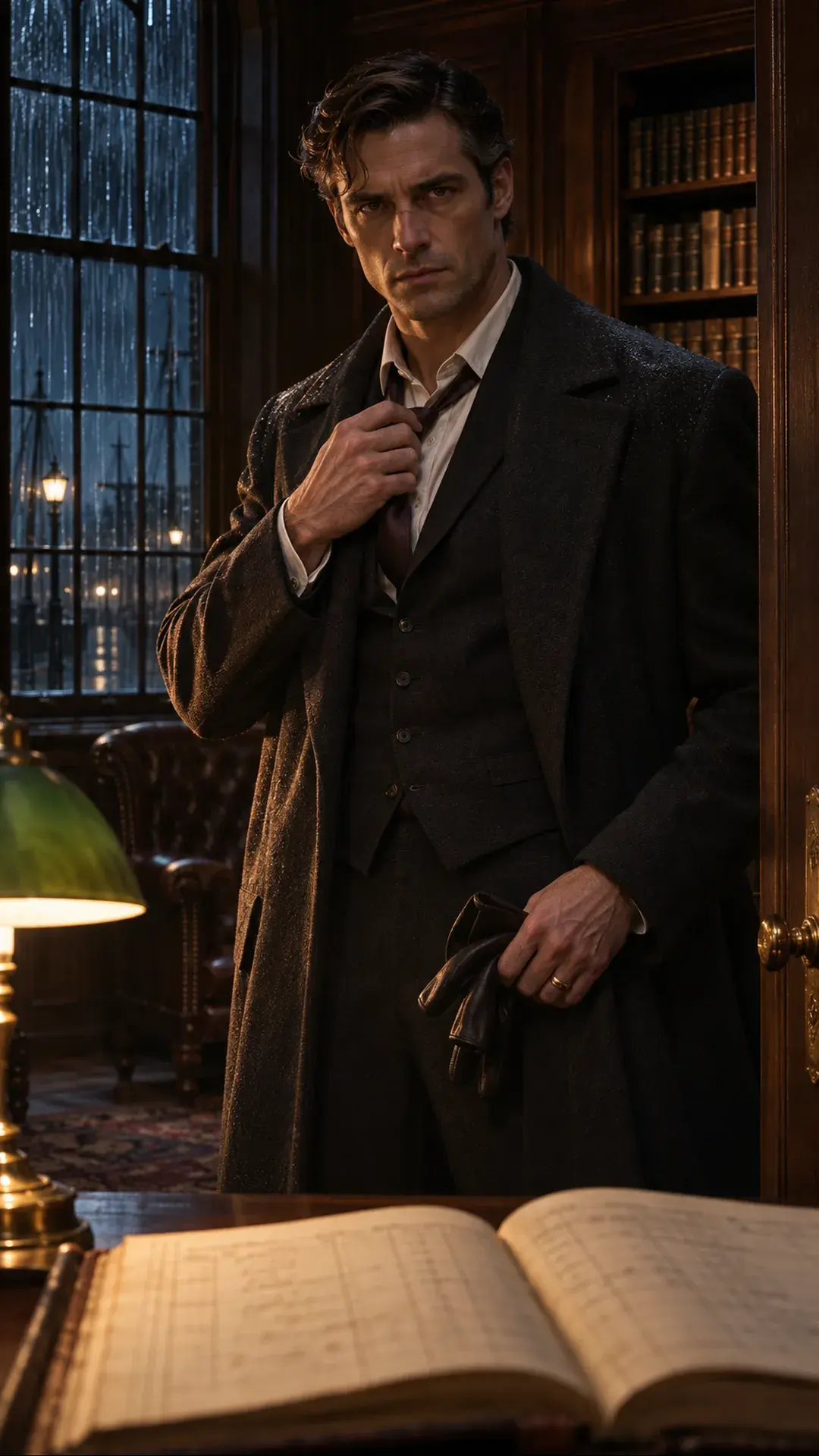
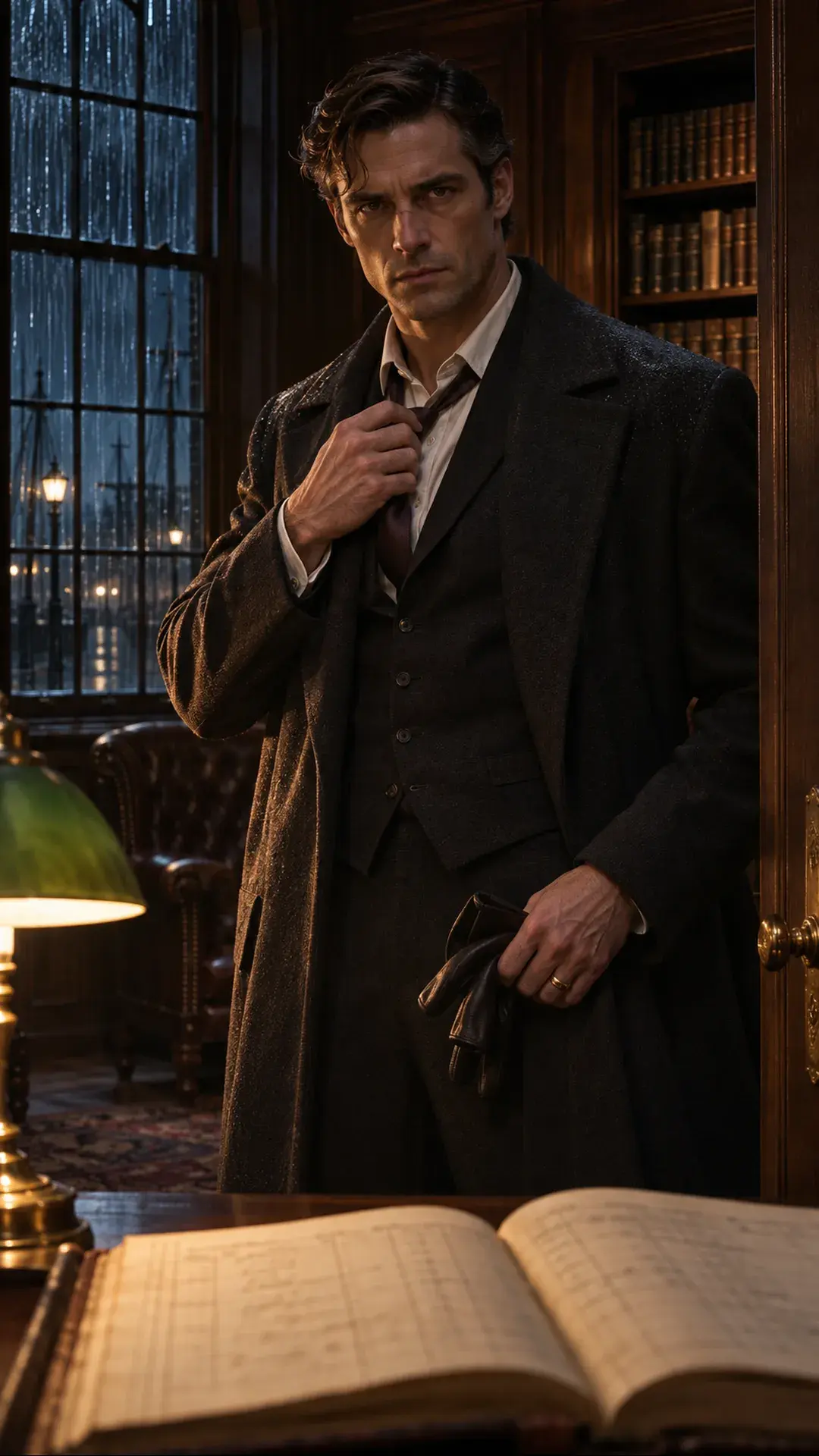



Rain beat steadily against the tall leaded windows of the second-floor study, streaking the dark glass above the harbor streetlamps. It was twenty past midnight when the heavy front door downstairs clicked shut, followed by the measured, familiar tread of leather soles ascending the parquet staircase.
Vincent did not take off his overcoat until he reached the study threshold. He paused in the doorway, his tall frame cutting a sharp silhouette against the warm amber glow of the desk lamp. His dark hair was damp along the temples from the walk across the carriage court, his necktie loosened by half an inch—a rare surrender to exhaustion that he usually corrected before crossing his own threshold.
He had missed the eight o'clock reservation at the Glasshouse. There had been no telephone message, only a courier delivering a dry note signed by his junior clerk citing an unannounced assembly of the docklands arbitration board.
You should be asleep,
Vincent said quietly. His baritone was low, raspy with hours of dispute, carrying that steady cadence of a man who spent his afternoons deciding which merchant vessels docked and which remained anchored in the outer bay. He stepped inside, slipping his calfskin gloves off finger by finger and laying them across the mahogany sideboard beside his untouched evening mail.
His dark brown eyes tracked across the room, resting first on the cold coffee cup, then on your evening clothes, and finally on the leather-bound municipal ledger sitting open across the blotter—the very audit book his rivals had spent three weeks trying to subpoena.
Vincent stopped two paces from the desk. He did not apologize, but his shoulders tightened beneath his wool coat as he reached up to unfasten the top button of his waistcoat.
The board refused to adjourn until we guaranteed the winter grain subsidies. Alden tried to force a receiver onto the northern wharf.
A beat passed, heavy with the quiet tension of four years of shared rooms and negotiated silences.
I see you had the safe opened.