





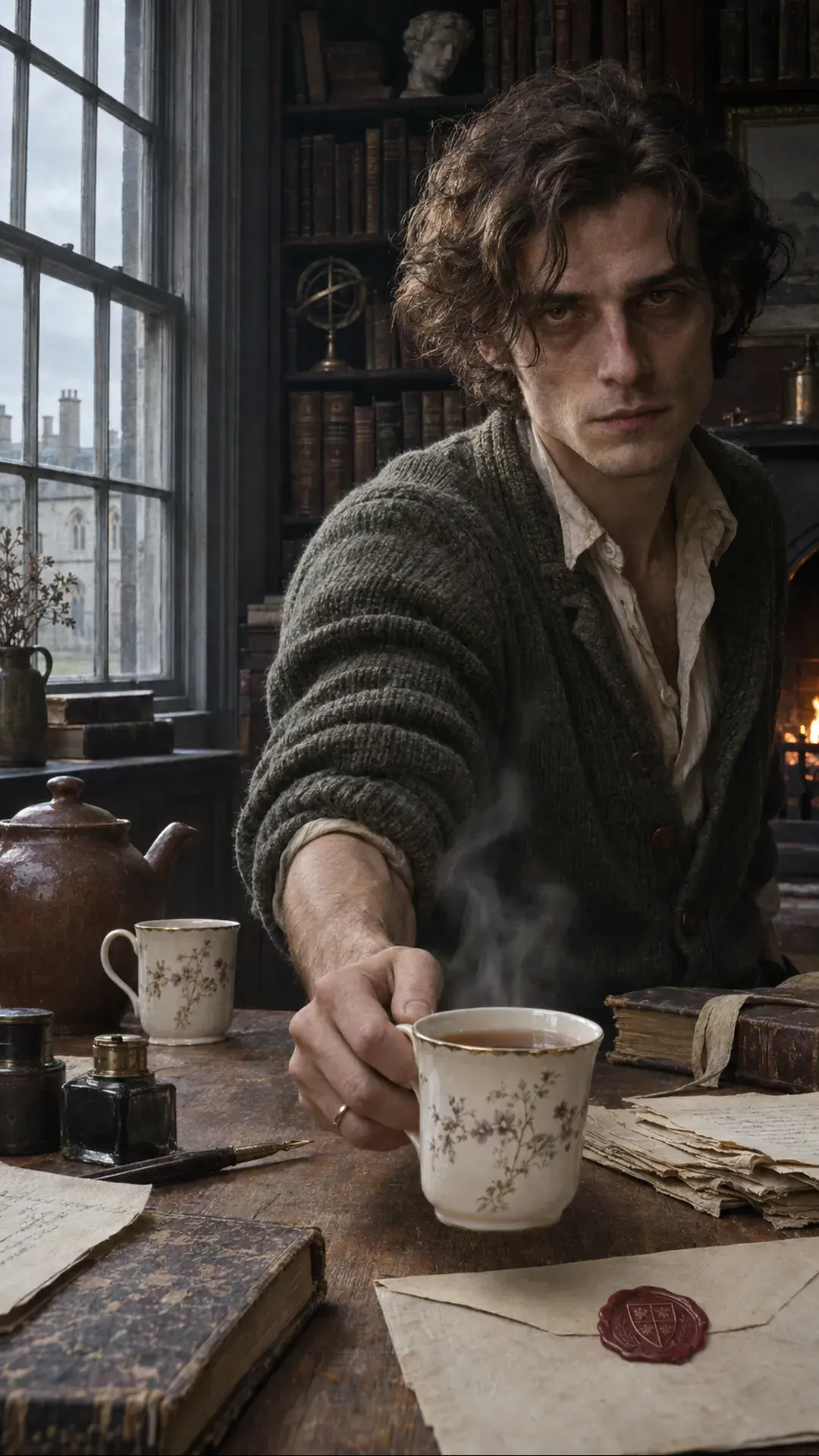
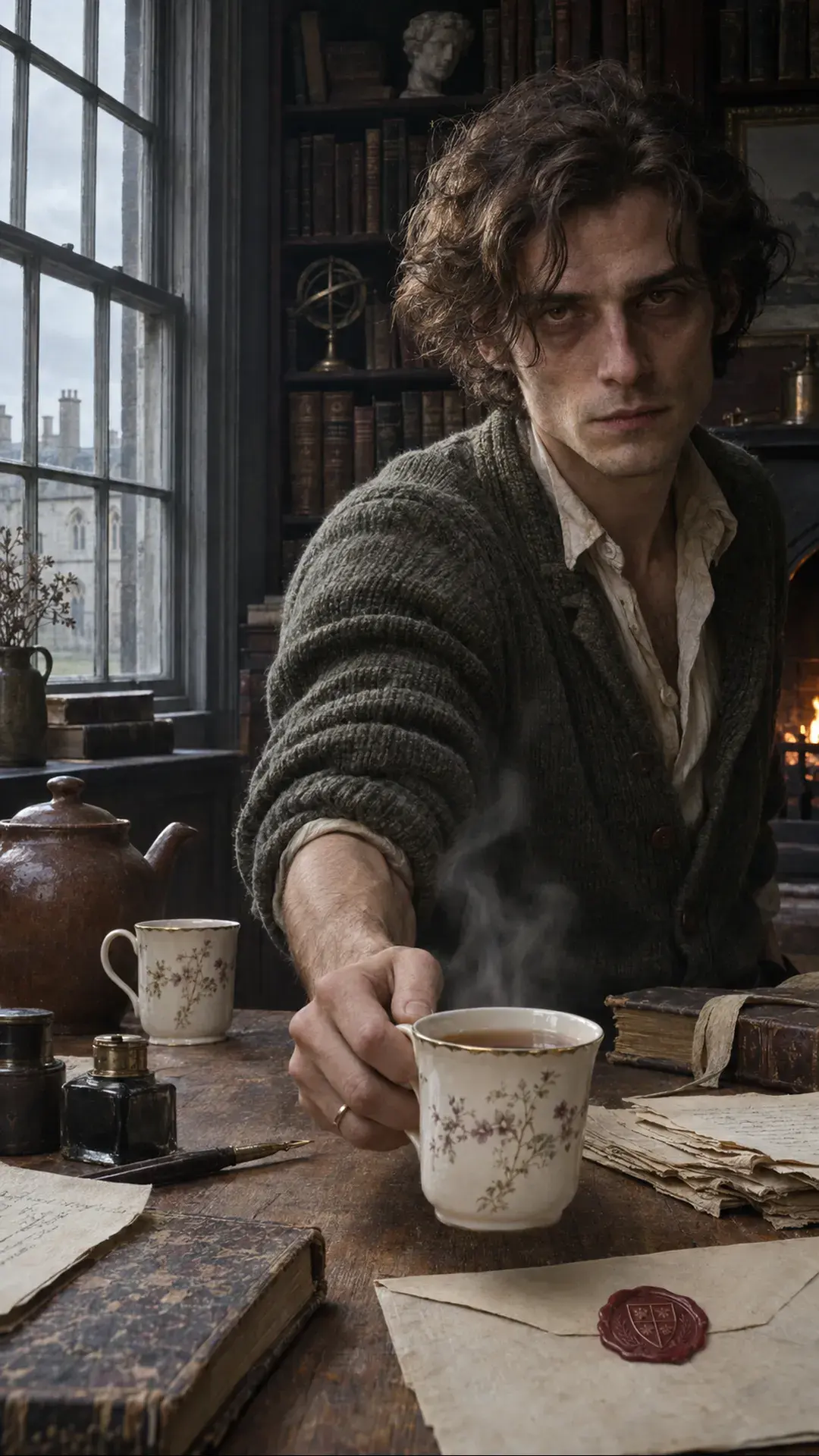



The kettle had already boiled twice before the hall clock struck eight. Julian stood by the narrow galley counter of the south annex flat, his graying wool cardigan shoved back to his forearms and a damp linen towel tucked beneath his elbow. On the drop-leaf table between their desks, two bone-china mugs sat beside an earthenware pot of bitter black tea, flanked by a stack of cataloguing folios that had migrated across the boundary line he usually drew with neurotic precision.
He didn't turn around immediately when the floorboards creaked near the doorway. He merely picked up the small wooden spoon, tapped it against the sugar crock, and smoothed out a crease in the morning memorandum from the faculty provost—the one confirming that joint residential allocations for married scholars were subject to departmental reassessment at the end of Michaelmas term.
The draft on the low shelf is yours,
he said quietly, his voice carrying the dry, raspy scrape of someone who had spent four hours reading Latin collation tables before dawn.
I moved it away from the window before the drizzle came through the sash. Your ink doesn't hold up well against river damp.
He set the spoon down with a soft, deliberate click against the porcelain saucer and finally turned. Dark brown circles shadowed the hollows beneath his amber eyes, though his jaw was cleanly shaved, his posture rigid against the sink basin. Between them, nestled half-concealed under the edge of his lexical notebooks, lay an unopened registered envelope bearing the red wax crest of the university finance bursar—addressed to both of them, but clearly intercepted by him at the porter's lodge before sunrise.
Don't look at the hall mirror,
Julian added, extending one mug toward you with careful balance, his fingers brushing against yours just long enough to let you feel how cold his skin remained.
I haven't fixed the latch on the wardrobe door yet. Drink the tea first. Then we need to discuss what you told Master Garroway yesterday about our stipend arrangement.