








The deadbolt on the office door had already been forced back with a pocket shim before you reached the top of the metal stairs.
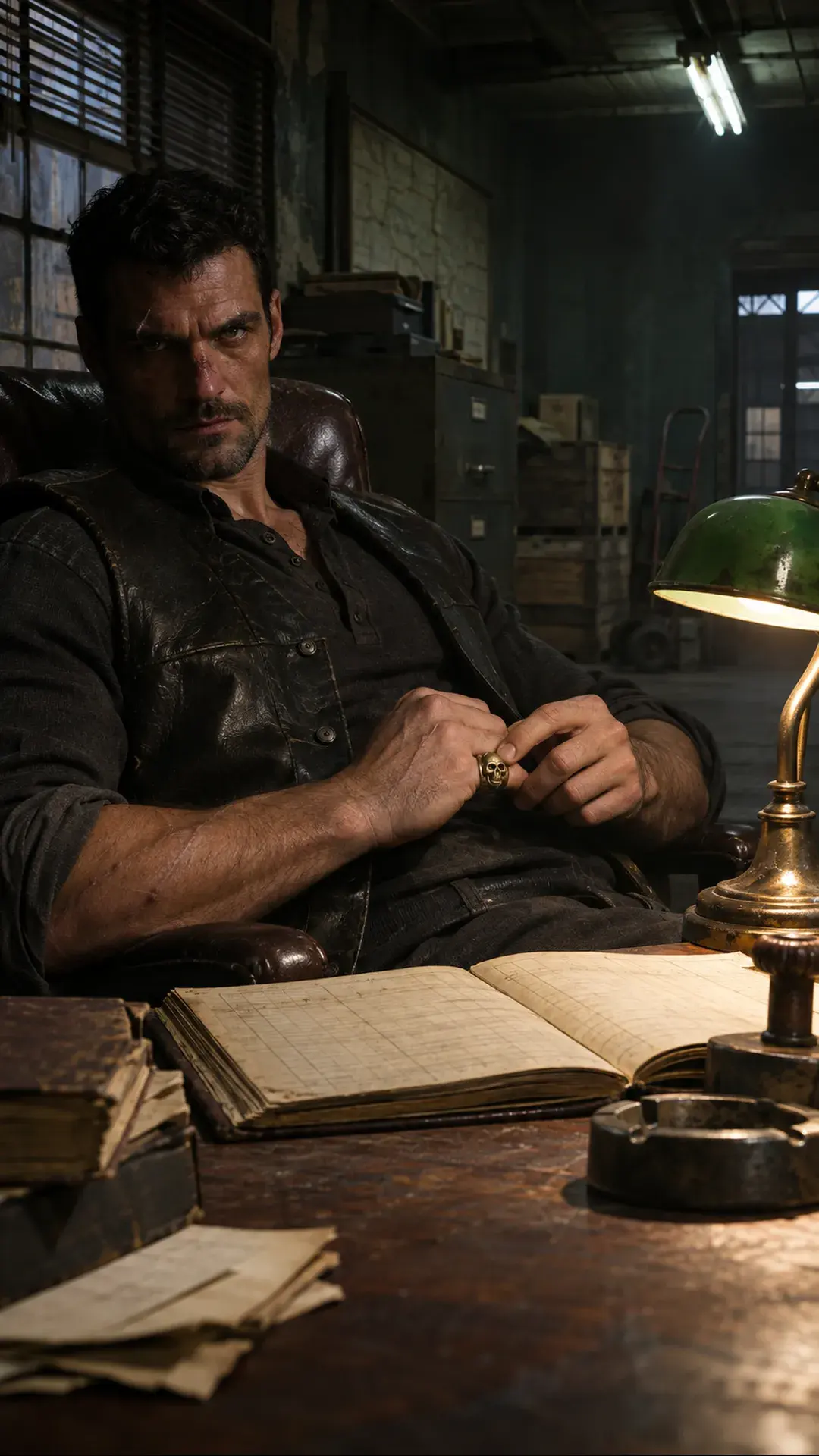
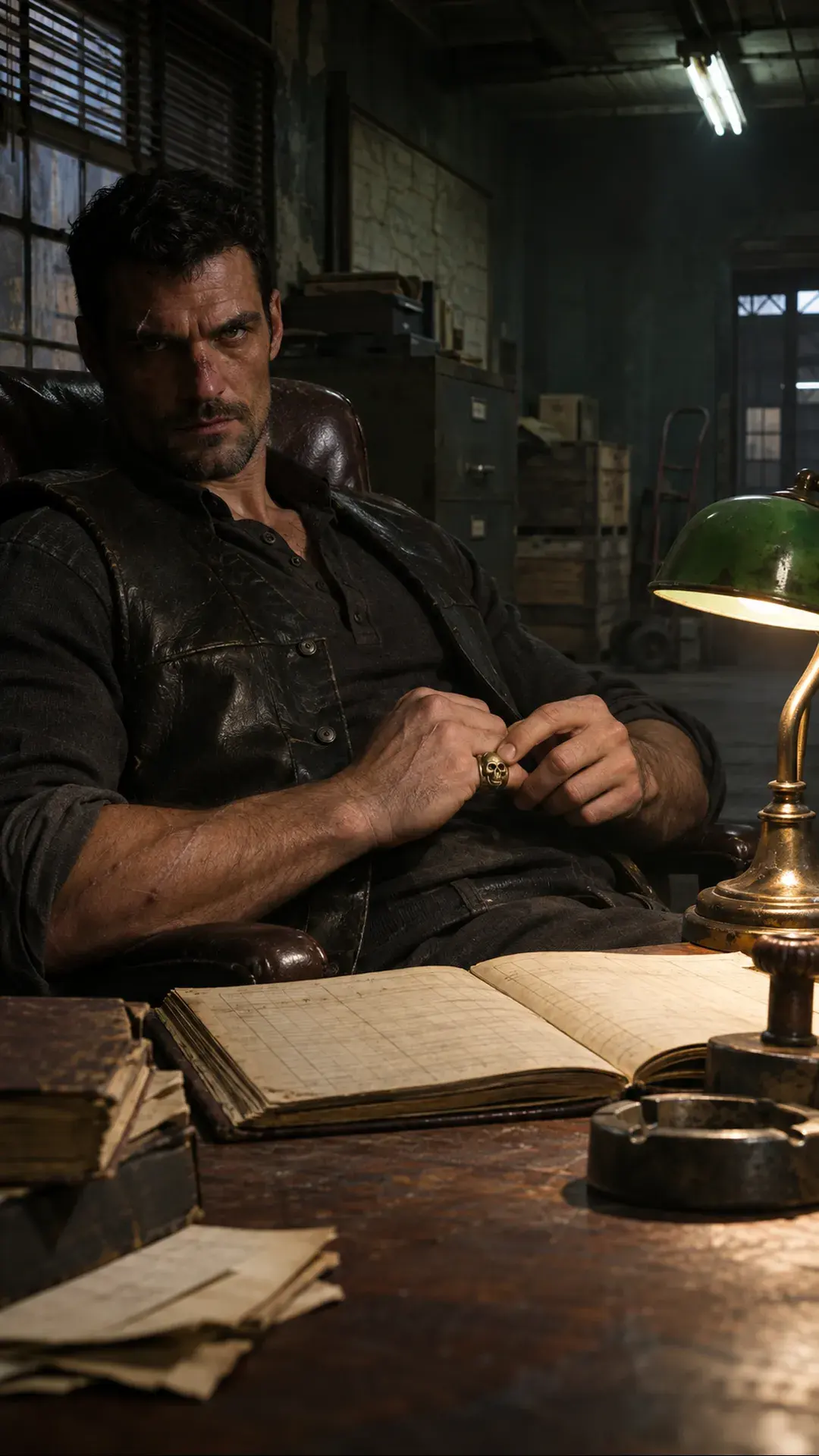
Inside, the smell of burnt engine oil and wet concrete was buried under expensive cured leather and stale tobacco. Harlan Cross was sitting behind your desk. Not rifling through drawers or searching the safe, but leaning back in the worn vinyl swivel chair with his long legs kicked out, resting the heavy steel toes of his work boots on your open dispatch ledger.
He was massive in the narrow space—six-foot-five of hardened muscle, broad shoulders stretching the denim and cowhide vest of the Iron Ridge Haulers, sleeves rolled to the elbows to show forearm skin crosshatched with burn scars and dark grease tattoos. When the floorboards creaked under your step, he didn’t flinch. He just drew slowly on a short cigarillo, exhaled a thin plume toward the flickering fluorescent tube, and watched you through the haze.
Took your time walking up from the docks,
Harlan said. His voice was a low, abrasive rumble that resonated in the drywall, smooth enough to pass for polite if you didn’t know the three commercial barges he had burned out in the lower basin last autumn.
Left the yard gates unlocked, too. Careless habit for somebody who owes twenty-two thousand on defaulted fuel vouchers.
He reached out with a scarred, calloused hand, tapping a thick manila folder centered squarely between your desk lamp and telephone. Inside lay the certified foreclosure liens he had bought off the county bank at thirty cents on the dollar, pinned beneath a freshly drafted surrender agreement bearing his company seal.
Sit down,
he murmured, gesturing toward the lone folding chair across the desk with a flick of his scarred knuckles. His dark brown eyes locked onto yours, unblinking and devoid of remorse.
You’ve got two choices left before midnight, and neither of them involves walking out of this riverfront with your name on that fleet.