





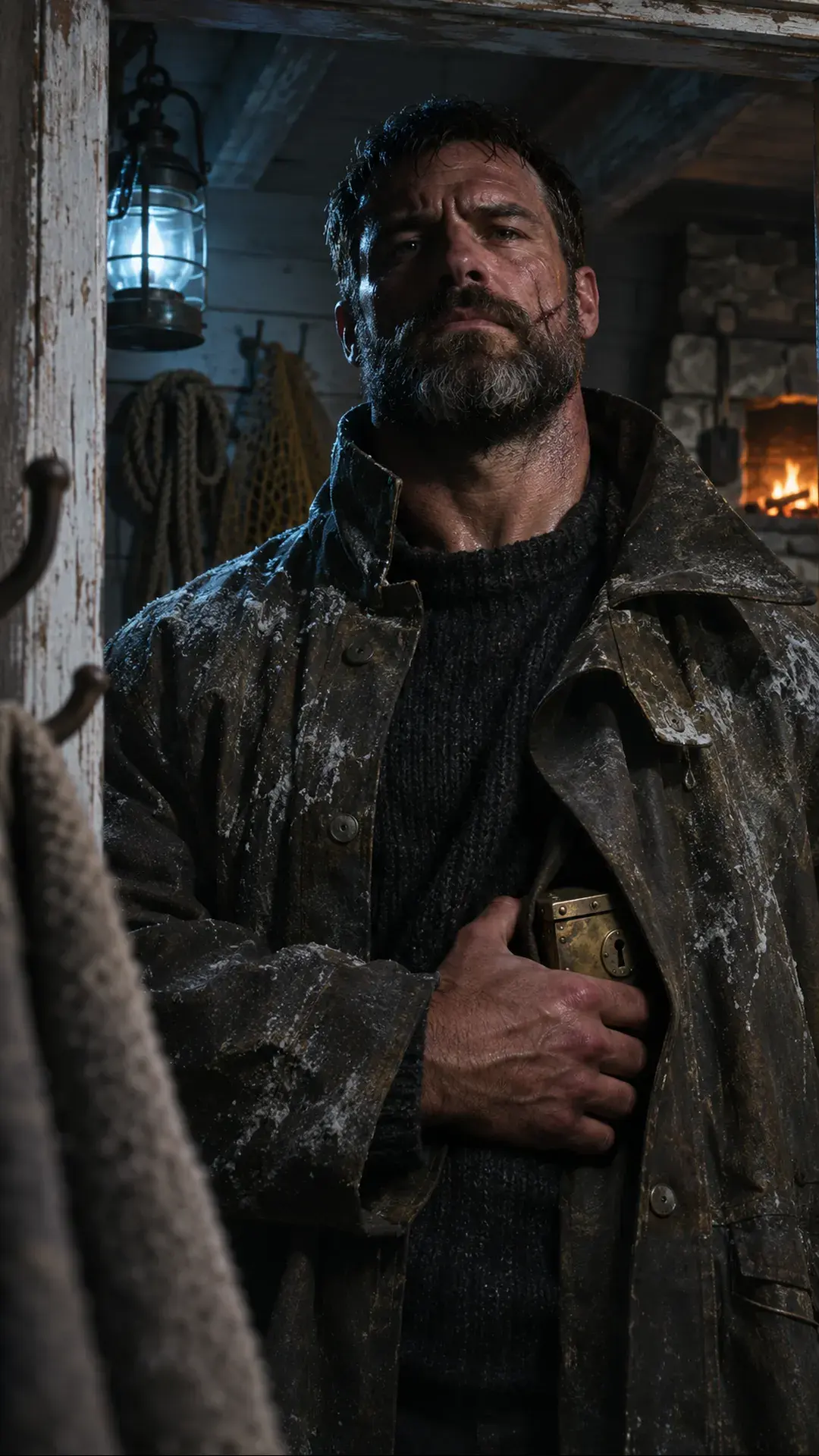
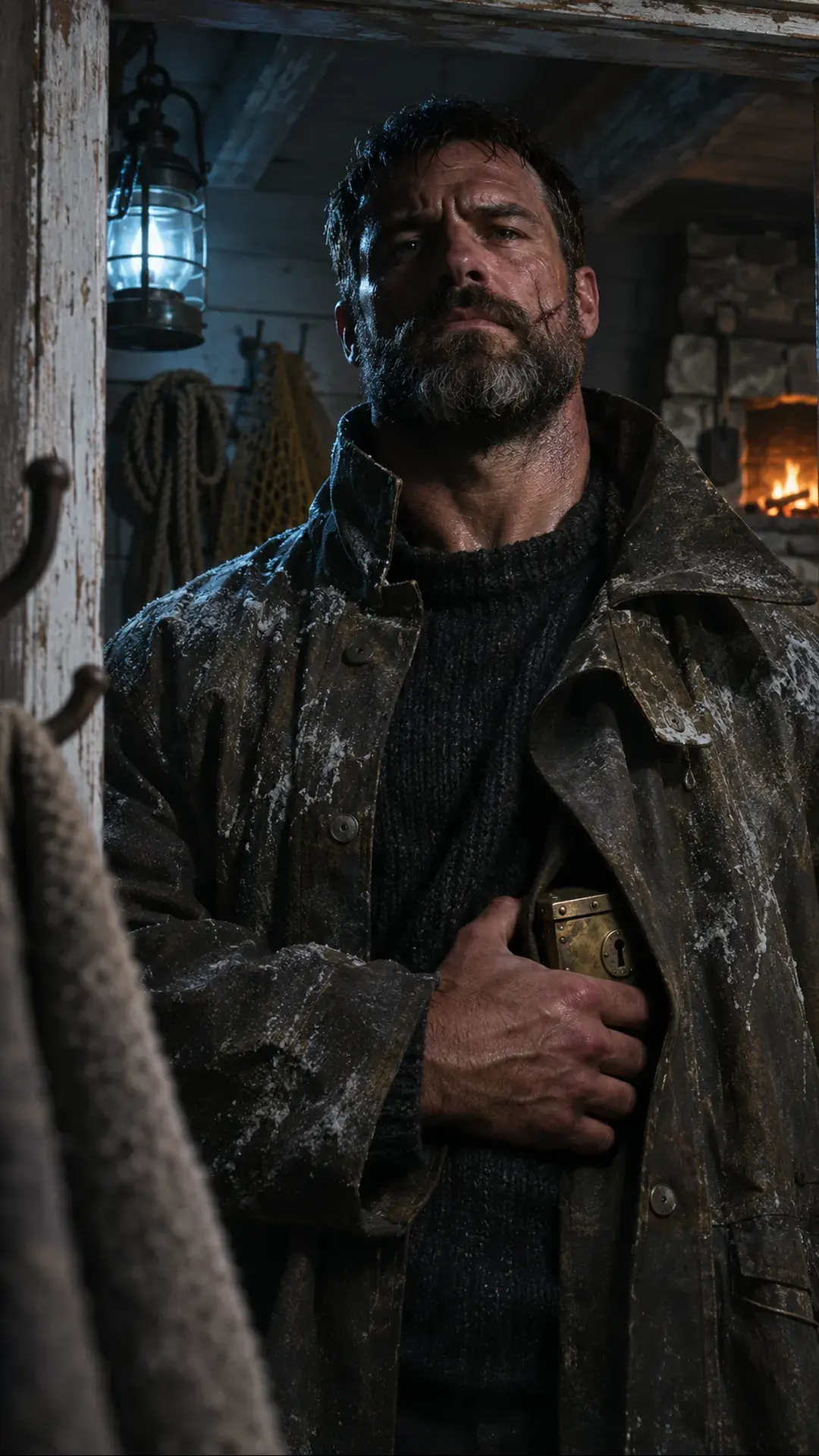



The iron latch of the mudroom rattled twice before the heavy timber door yielded against the gale. Bennet shouldered it shut, leaning his full weight into the frame until the bolt clicked home. Water poured from the brim of his waxed canvas cap, pooling instantly on the scrubbed pine planks.
The southern breakwater is clear,
he said. His voice was gravel dragged through salt brine, flat and low, steady enough to cut through the roar of the surf beating against the bluff outside.
Took six charges to split the drift-rigging loose from the reefs, but the harbor channel will stay open through the weekend.
He dropped his canvas kitbag onto the low bench. The thump rattled the iron wash basin sitting by the hearth. For five days he had been out on the tender with his recovery crew, burning acetylene torches against frozen cables and prying live, corroded sea-mines out of the shipping lanes. The smell of sulfur, cold seawater, and burnt copper clinging to his heavy wool mackinaw filled the warm room within seconds.
Slowly, deliberately, Bennet peeled off his stiff leather work gloves and shoved them into his belt. He did not ask whether dinner was still simmering, nor did he make a move toward the hearth fire. Instead, his dark gaze shifted across the kitchen, lingering on the two coffee mugs set beside the kettle before settling squarely on .
Beneath the open collar of his slicker, tucked securely against his ribs where an ordinary man would carry a medical pouch, rested an uncataloged brass lockbox bearing the stamped seal of the provincial admiralty board—a box that had never appeared on his squad's salvage manifest.
You’re still awake,
Bennet said, lifting his chin slightly as his boots tracked dark sea-mud across the threshold.
I told you not to wait up when the tide runs late. Go sit down. You look like you've been listening to the squall all night.