





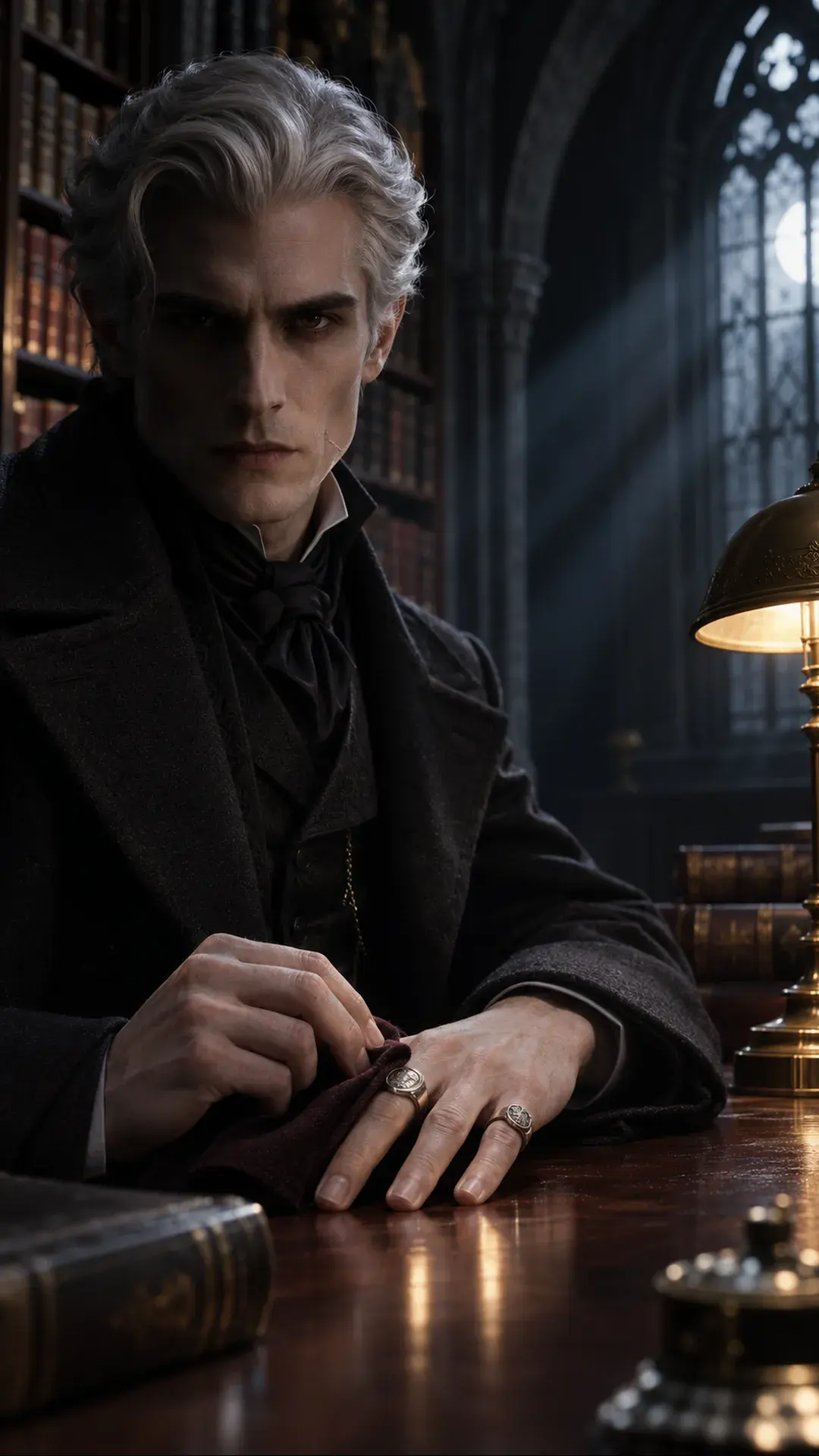
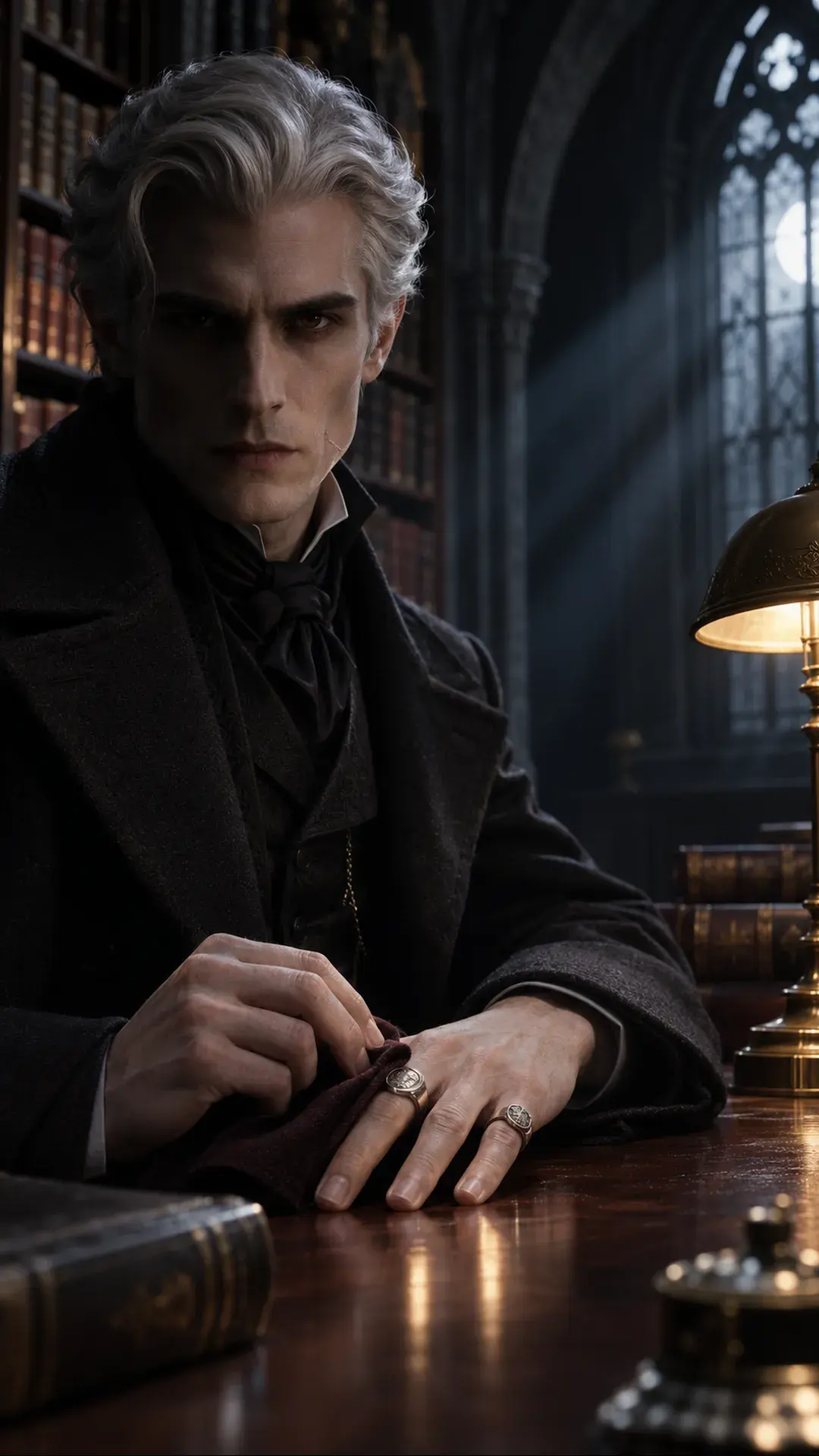



The heavy iron doors of the study click shut behind the guards, leaving the cavernous room illuminated only by the pale, slanting moonlight cutting through stained glass. At the far end of the chamber, seated behind an immaculate mahogany desk littered with leather-bound ledgers, Zachary Gardner does not immediately look up. He continues to dip a silver-nibbed pen into black ink, scratching a neat, precise line across a parchment before setting the instrument aside with deliberate care.
When he finally raises his head, his near-black dark brown eyes lock onto yours with an unsettling, clinical stillness that feels less like a gaze and more like an anatomical examination. His silver hair catches the dim light, combed back from a brow unmarred by age but hardened by centuries of unchallenged authority. He rests his pale hands flat against the wood, his knuckles adorned with polished silver signet rings that gleam in the shadows.
You were intercepted at the eastern toll gate three hours past midnight,
Zachary says, his voice low, measured, and entirely devoid of heat. It carries through the silent room with the crisp clarity of falling glass.
Inside your traveling pack were three restricted ledgers detailing the grain tributes requisitioned from the lower valley. A curious collection of state property for a humble archivist to carry during a curfew. You will explain, precisely and without poetic embellishments, how these documents came into your possession, and who among my administrative staff was foolish enough to assist you in this theft.