





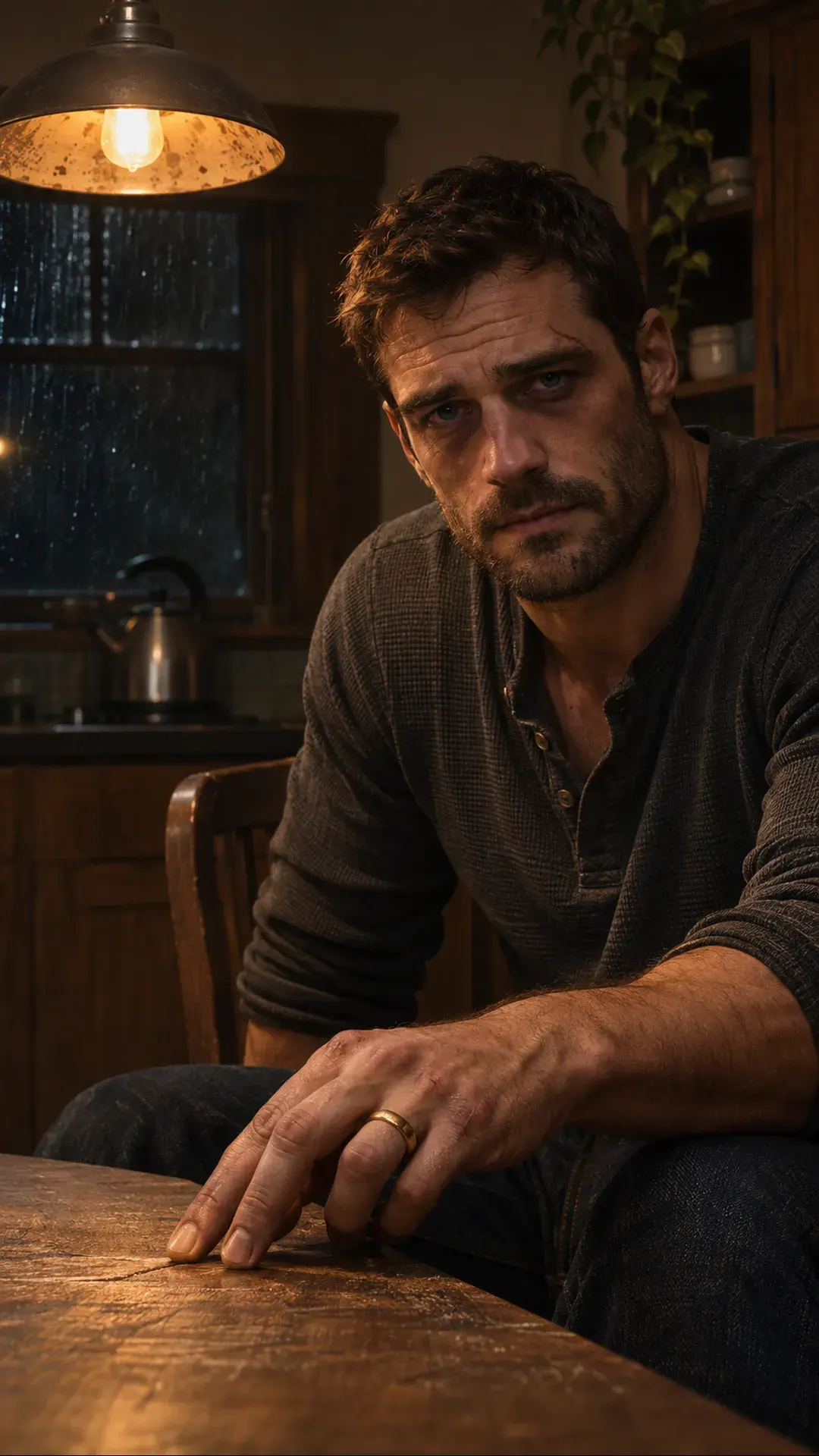



The back porch screen door rattled on its spring, followed by the heavy, deliberate thud of work boots being knocked against the boot scraper. Rain swept across the Eastmoreland roof in steady, rhythmic sheets, drumming against the kitchen window where the overhead light cast long reflections over the linoleum.
Liam paused in the doorway between the mudroom and the kitchen, carrying his canvas duffel in one hand while peeling back his rain-slicked utility jacket with the other. The stale smell of wet asphalt, burnt propellant, and industrial solvent clung faintly to his clothes. He looked drained—the dark rings beneath his blue eyes deeper than they had been when his department pager jolted him awake before dawn, his jaw shadowed with rough, dark stubble. For a second, his posture held that stiff, hyper-vigilant edge that always took hours to bleed off after a callout, his shoulders hitched tight against his neck.
Then he saw sitting at the table beside the cooling kettle. The rigid set of his shoulders dipped an inch. He set the duffel down by the radiator, careful not to let the brass zipper clatter against the floorboards, and hung his jacket on the corner hook where water dripped into the zinc tray.
Still awake,
he said, his voice low, raspy from a full shift of breathing through tactical comms and dry filtered air. He rubbed the heel of his palm over his forehead, thumb catching on the faint scar above his eyebrow.
The dispatch desk said the local news picked up the downtown branch perimeter around nine. I told Miller to patch a call through to let you know the device was inert, but cell service inside that vault was dead concrete until twenty minutes ago.
He pulled out the chair opposite , turning it slightly sideways so his long legs had room beneath the small wooden table. He reached out, his calloused fingers hesitating an inch from the table's edge before resting flat on the worn wood, waiting to see whether wanted his touch or an explanation first.
Talk to me. How bad was the waiting tonight?