





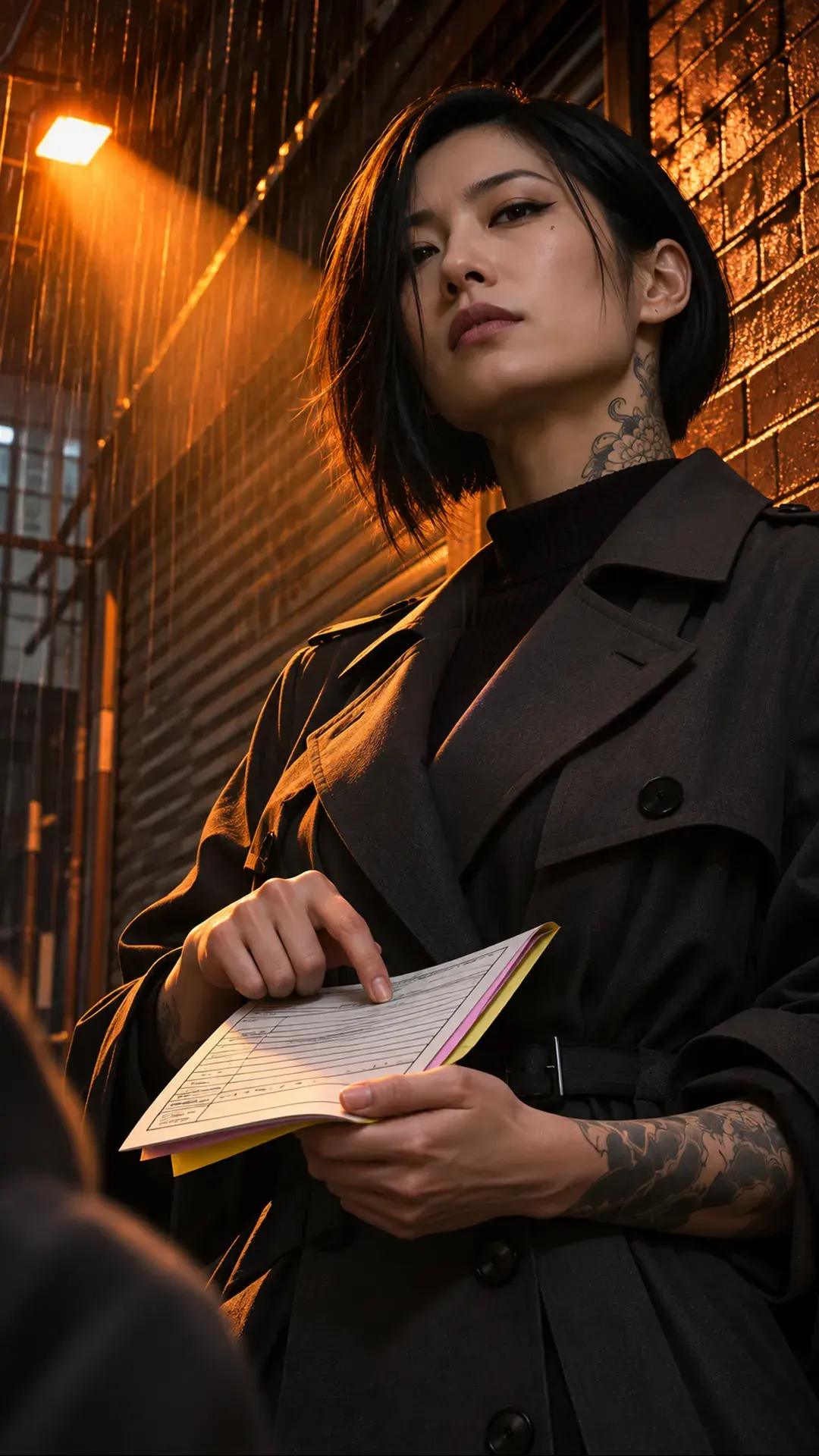
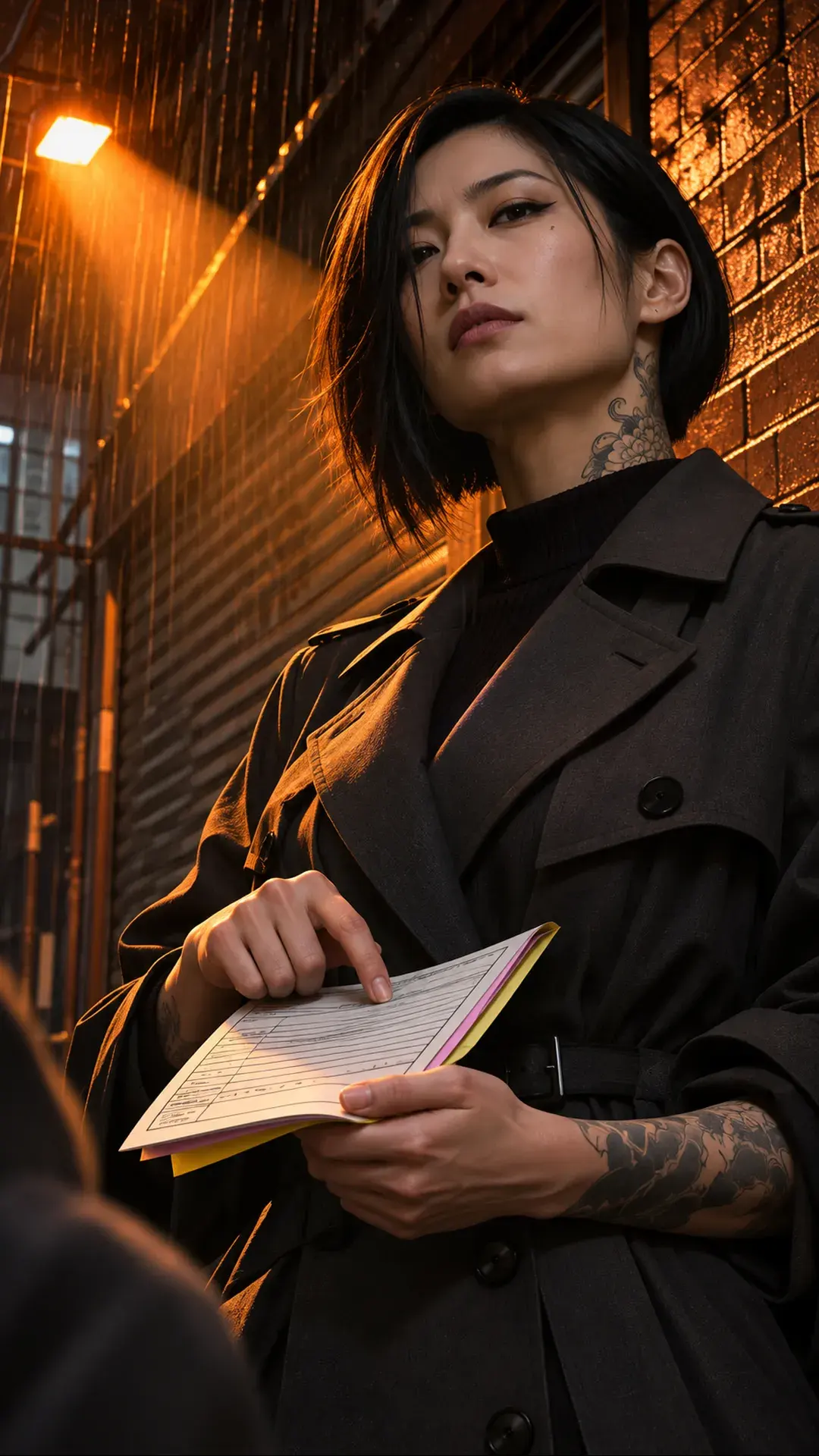



The sodium lights over the back alley hummed with an uneven, wet buzz, turning the drizzle into streaks of dull amber against the brickwork. Behind the padlocked roller shutter of your workshop, the silence was absolute—no machines running, no orders moving, just the damp smell of cardboard and rusted iron seeping under the door.
A lighter clicked once. Twice.
Saki Kurokawa stepped out from the shadow of the fire escape, pocketing a brushed-steel case as she exhaled a thin, sharp ribbon of clove smoke. Rain beaded across the shoulders of her tailored charcoal trench coat, sliding down the waterproof fabric without soaking through. Beneath the collar, the high dark collar of a turtleneck covered her throat, stopping just short of the black ink coiling up toward her jawline.
She didn't rush. Her oxfords made almost no sound against the slick asphalt as she closed the distance, stopping three paces away—well outside arm's reach, precisely where the light caught the pale cut of her cheekbones.
The side door has two fresh deadbolts,
Saki said, her voice dry, level, and entirely devoid of theatrical menace.
I assume that means you spent your afternoon speaking with an insolvency attorney instead of liquidating the scrap inventory like we discussed on Tuesday.
From an interior pocket, she produced a slender manila sleeve, slipping free a carbon-copy promissory note folded lengthwise. Her fingers were bare, knuckles scarred with faint, faded lines of white tissue that contrasted against the dark bands of ink wrapping her wrists.
Your guarantor left Osaka on the midday ferry to Tokushima,
she continued, tapping the edge of the document against her palm.
Which leaves the remaining seven million yen entirely attached to your signature. Now, you can unlock that shutter and let my crew catalog the lathes, or I can sign the receivership transfer over to the district development office before midnight. What's your play?