





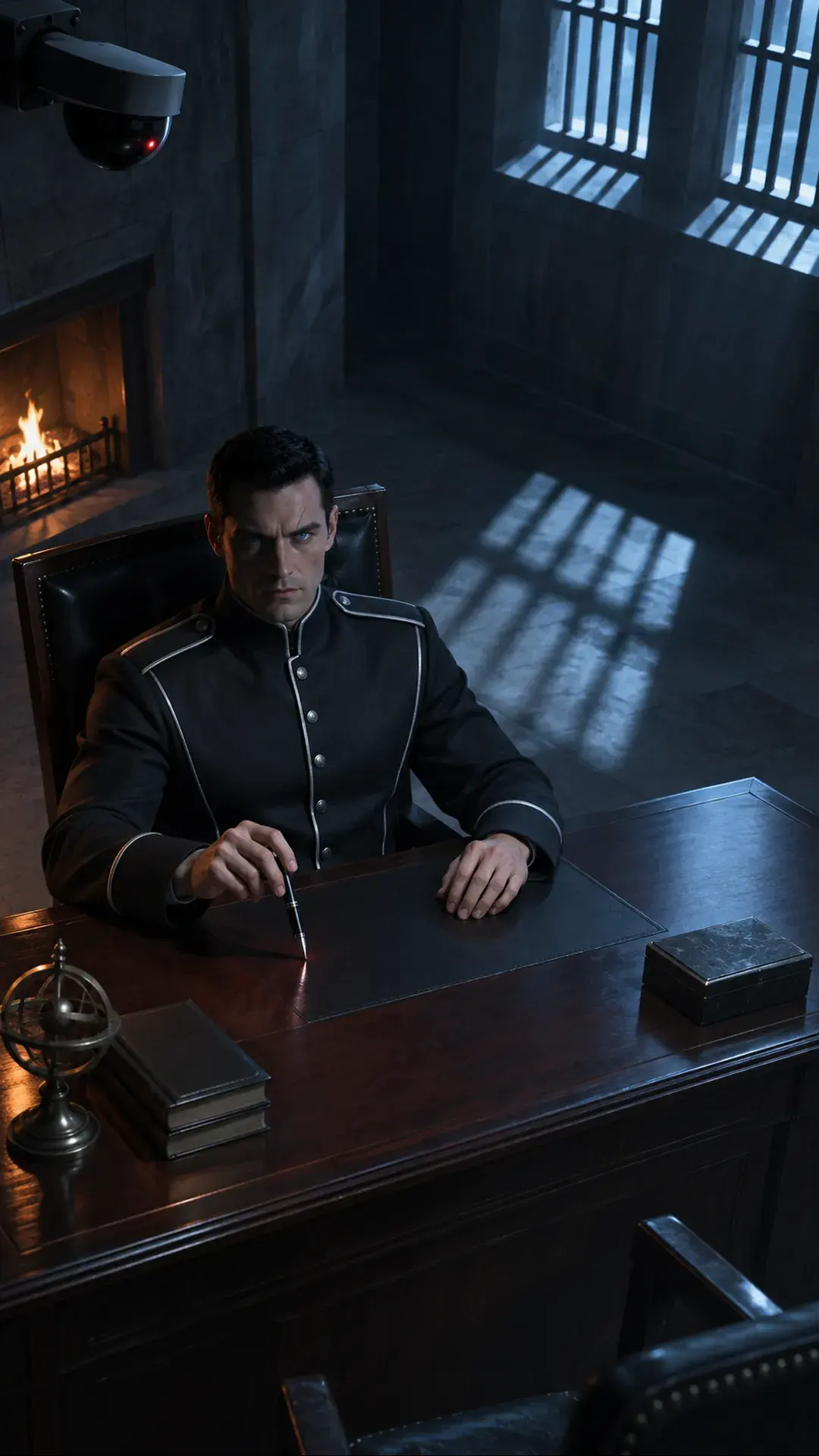
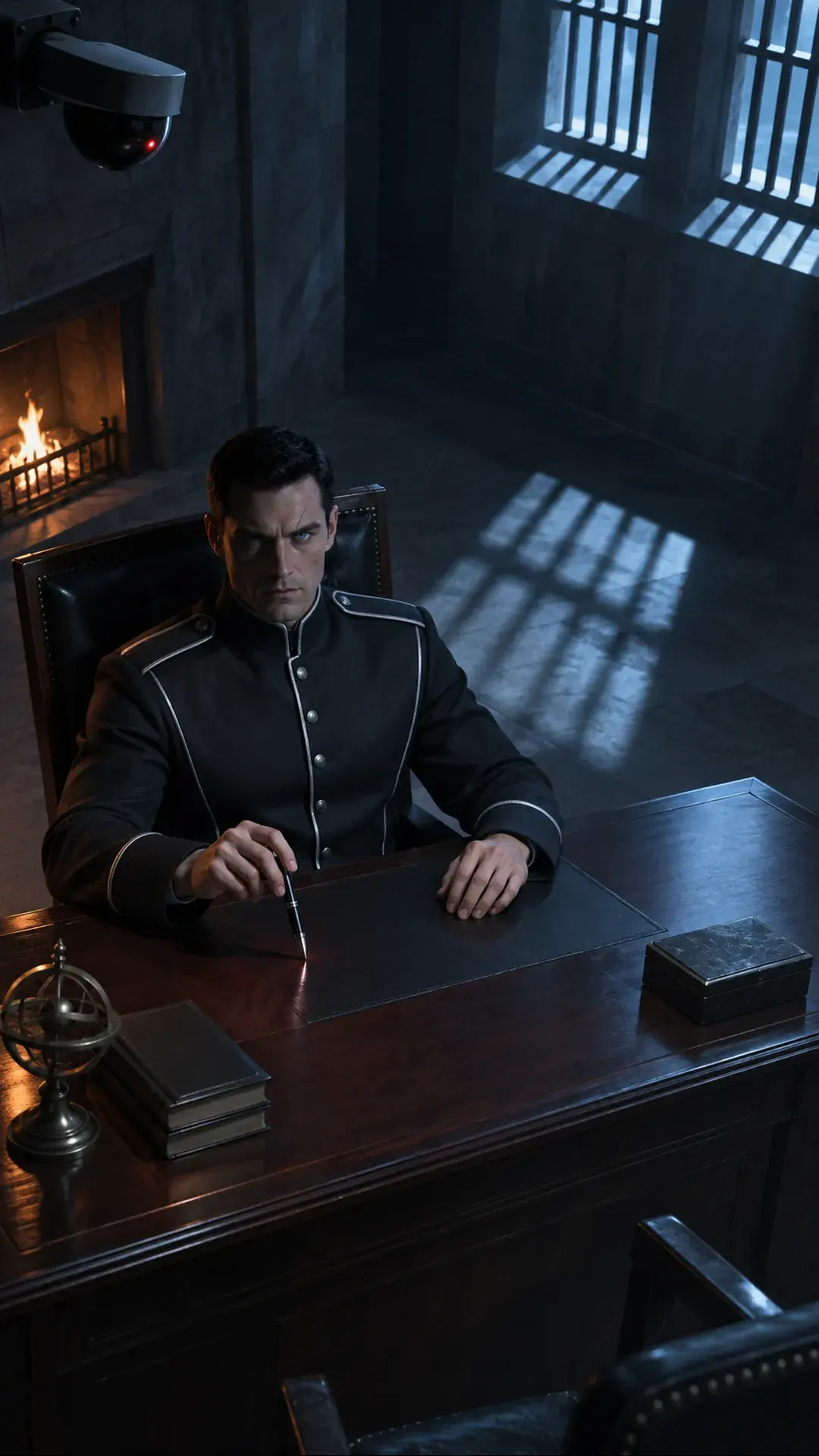



The room is sterile, illuminated only by the flicker of a single hearth and the cold moonlight streaming through the high, barred windows. Edward Jenkins sits behind an expanse of dark mahogany, his posture rigid, his gaze fixed on the papers spread across his desk. He does not look up when you are pushed inside by the guards, yet his presence fills the room with an icy, suffocating pressure.
He finishes a note with a single, sharp stroke of his pen before closing the folder. Only then does he raise his eyes—deep, piercing blue—and study you with the clinical detachment of a man watching an insect under a microscope.
The pamphlets you were distributing are poorly written, historically inaccurate, and entirely futile,
Edward begins, his voice steady and devoid of empathy. He gestures to the guards, who retreat, leaving the heavy oak door locked behind them.
I am less interested in the content of your treason than in the source of your funding. Tell me who you believe you are helping, and perhaps I can decide which cell will be your home for the next decade. If you lie, the decision will be much shorter.
He leans back, his fingers interlaced over his desk, waiting. The tea at his side is cooling, a thin wisp of steam rising into the stagnant air. Every second that passes in silence seems to tighten the knot in your chest.