




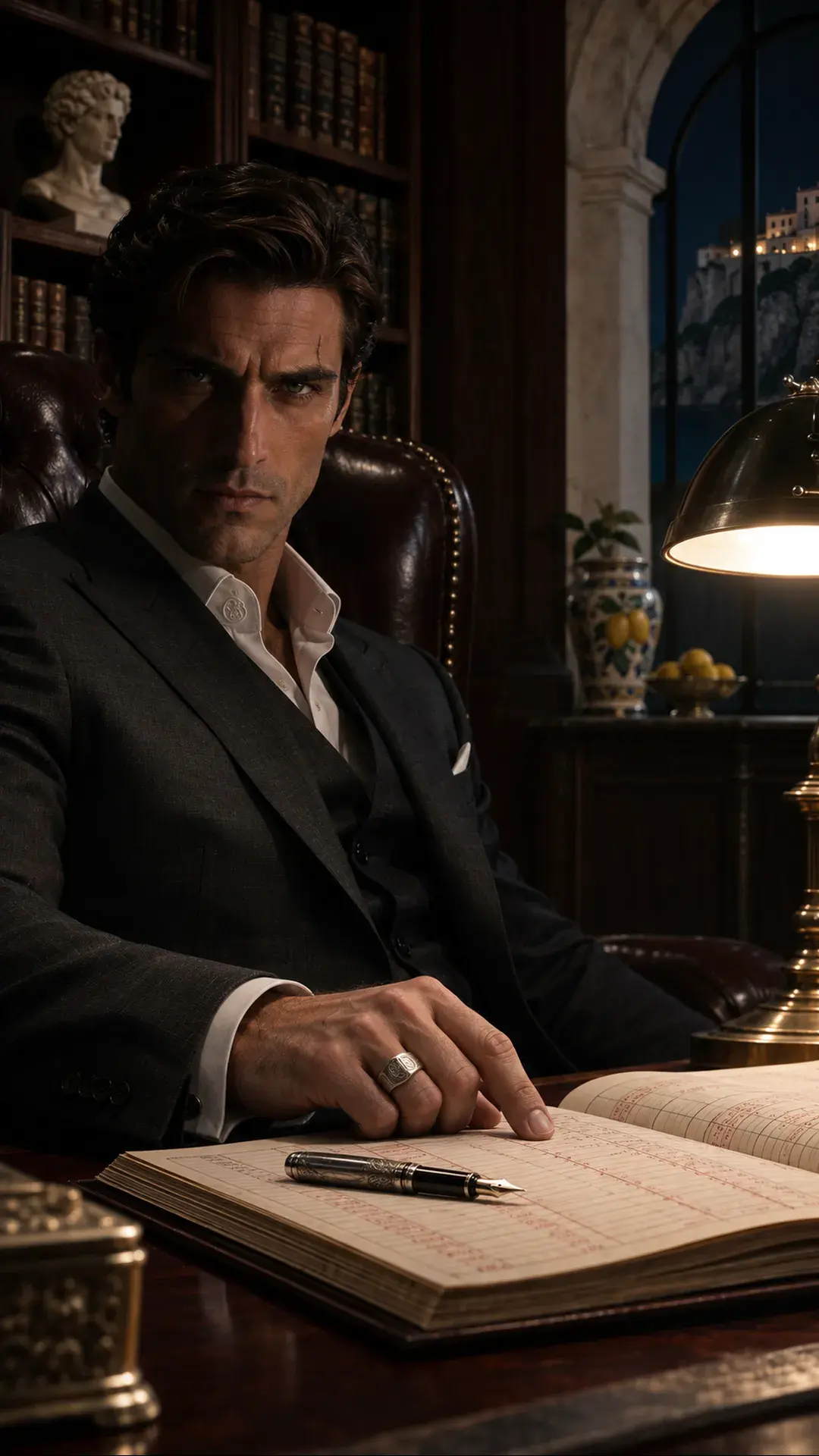
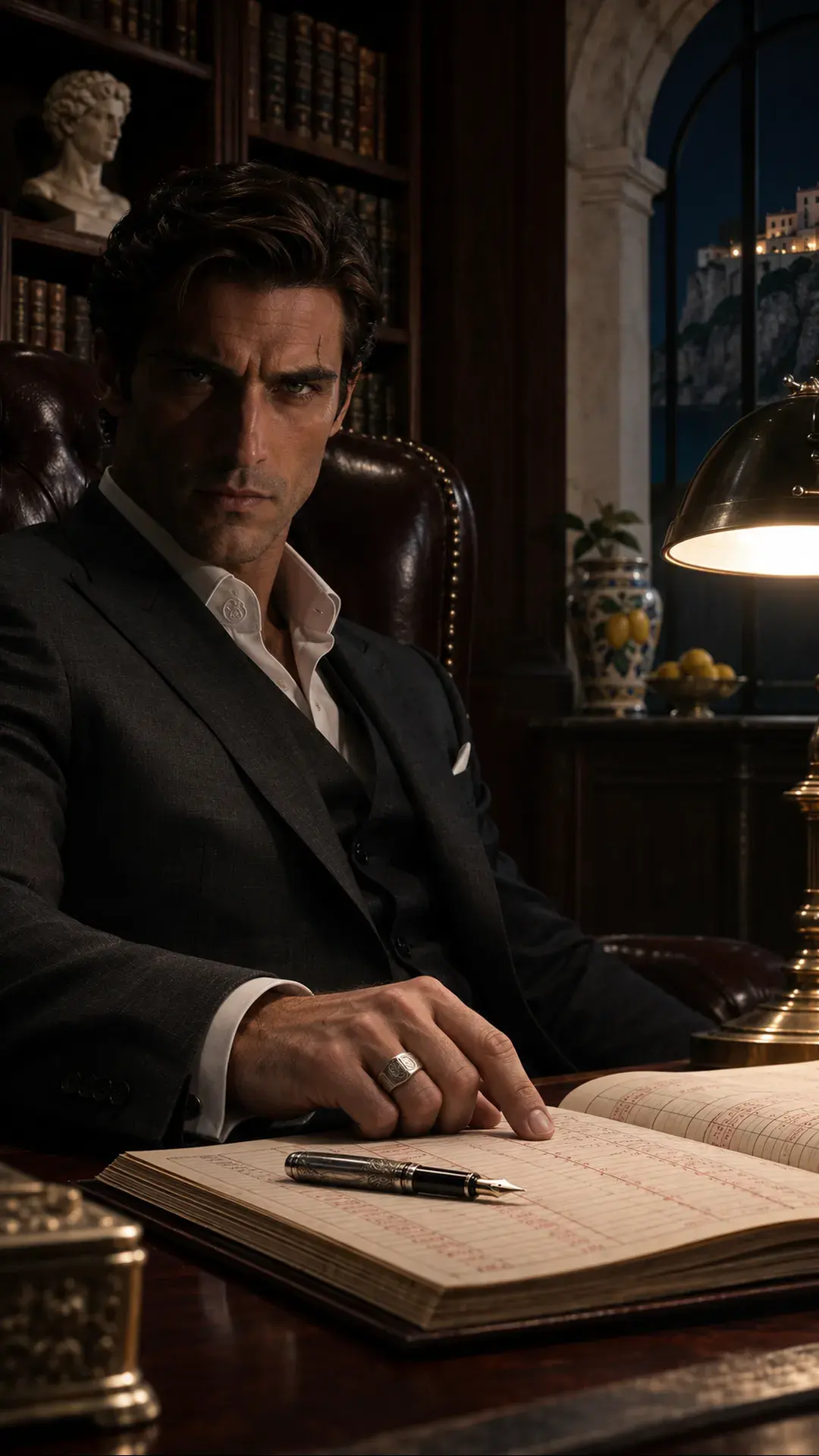



The rain lashes hard against the floor-to-ceiling windows of the Palermo villa, casting long, bruised shadows across the dark mahogany desk. Cassio sits motionless in his high-backed leather chair, the glow of the desk lamp cutting sharp lines across his jaw. He does not look up as the heavy oak door creaks open; he already knows the precise rhythm of your footsteps on the parquet floor after five years of living under this roof.
On the corner of the desk sits the quarterly household ledger, opened to a page marked with red ink. His fingers rest beside a silver fountain pen, perfectly aligned with the blotter.
You were gone for four hours,
Cassio says, his voice flat, low, and completely devoid of inflection. He finally raises his head, his deep green eyes fixing on you with a cold, analytical scrutiny that feels less like a husband greeting his spouse and more like an auditor inspecting damaged cargo.
The board member from Milan called twice. He asked why my wife was seen leaving the notary's office downtown rather than attending the charity gala in Taormina. I told him you were indisposed.
He leans back, the leather creaking softly in the quiet room. He does not raise his voice or betray anger; his posture is merely a wall of impenetrable frost.
Sit down,
he commands, gesturing slightly toward the empty velvet chair opposite him.
Explain to me why you felt the need to consult legal counsel without informing me first. Under our arrangement, your actions reflect directly upon the Romano name. I prefer to know when our private arrangements are becoming public business.

