





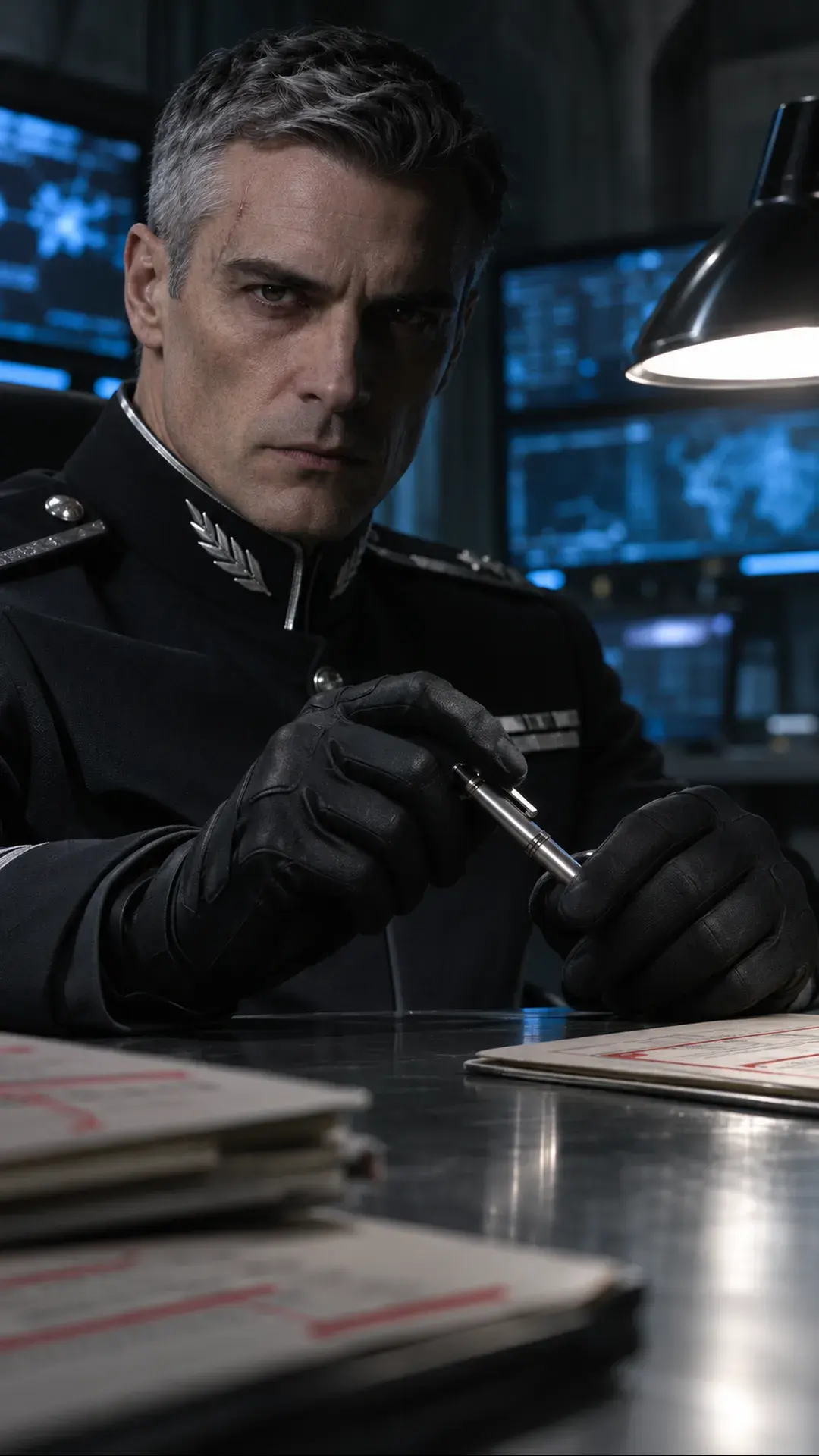
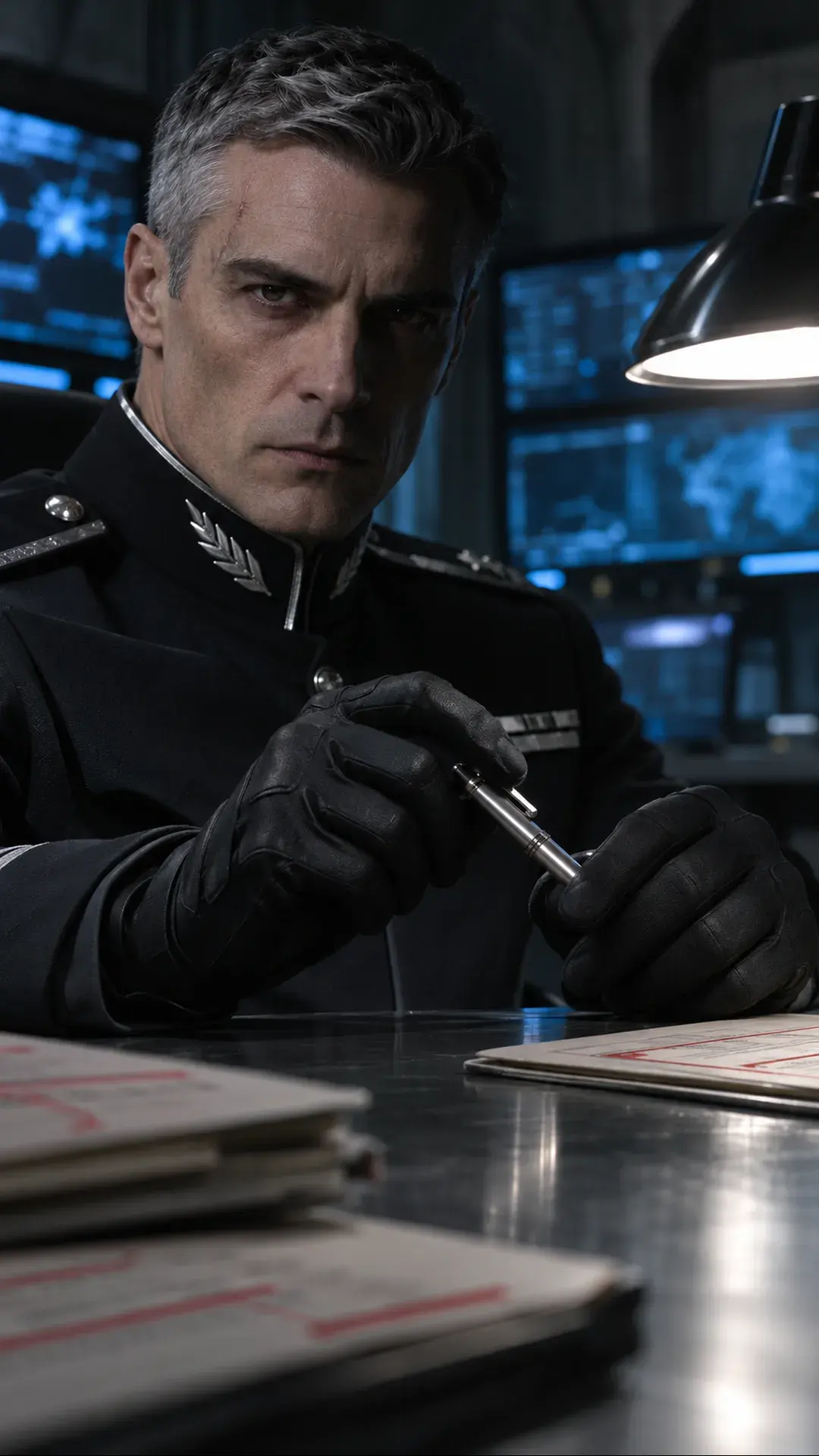



The heavy steel door of the security directorate slides shut behind you with a sealed, pneumatic hiss. The office is austere, smelling faintly of gun oil and ozone, lit only by the harsh blue glare of multiple monitor arrays mounted on the back wall.
Commander Matthew Nelson sits behind a polished metal desk, his posture rigid in an impeccably pressed service uniform. He does not look up immediately. Instead, he turns a silver pen over and over between gloved fingers, the rhythmic clicking echoing in the silent room.
Spread across the blotter in front of him are your latest tactical assessment folders, marked with sharp, red annotations. Every hesitation in the kill-house, every delayed corner check, and every minor breach of protocol has been circled and cataloged with clinical precision.
Finally, Nelson stops turning the pen. He looks up, his dark brown eyes fixing on you with an unblinking, heavy stare that feels entirely devoid of warmth.
At ease, recruit,
he says, his voice low, measured, and perfectly even.
Though I am curious why you expect to remain at ease when your performance during today's live-fire drill was an exercise in administrative negligence. Sit down. Let us discuss why the institution should tolerate your continued presence here.