








The back door latch clicked shut with its usual muted scrape. Jack hung his damp coat on the hook by the mudroom sill, kicked off his work clogs without a word, and stood motionless in the narrow hallway just inside the threshold.
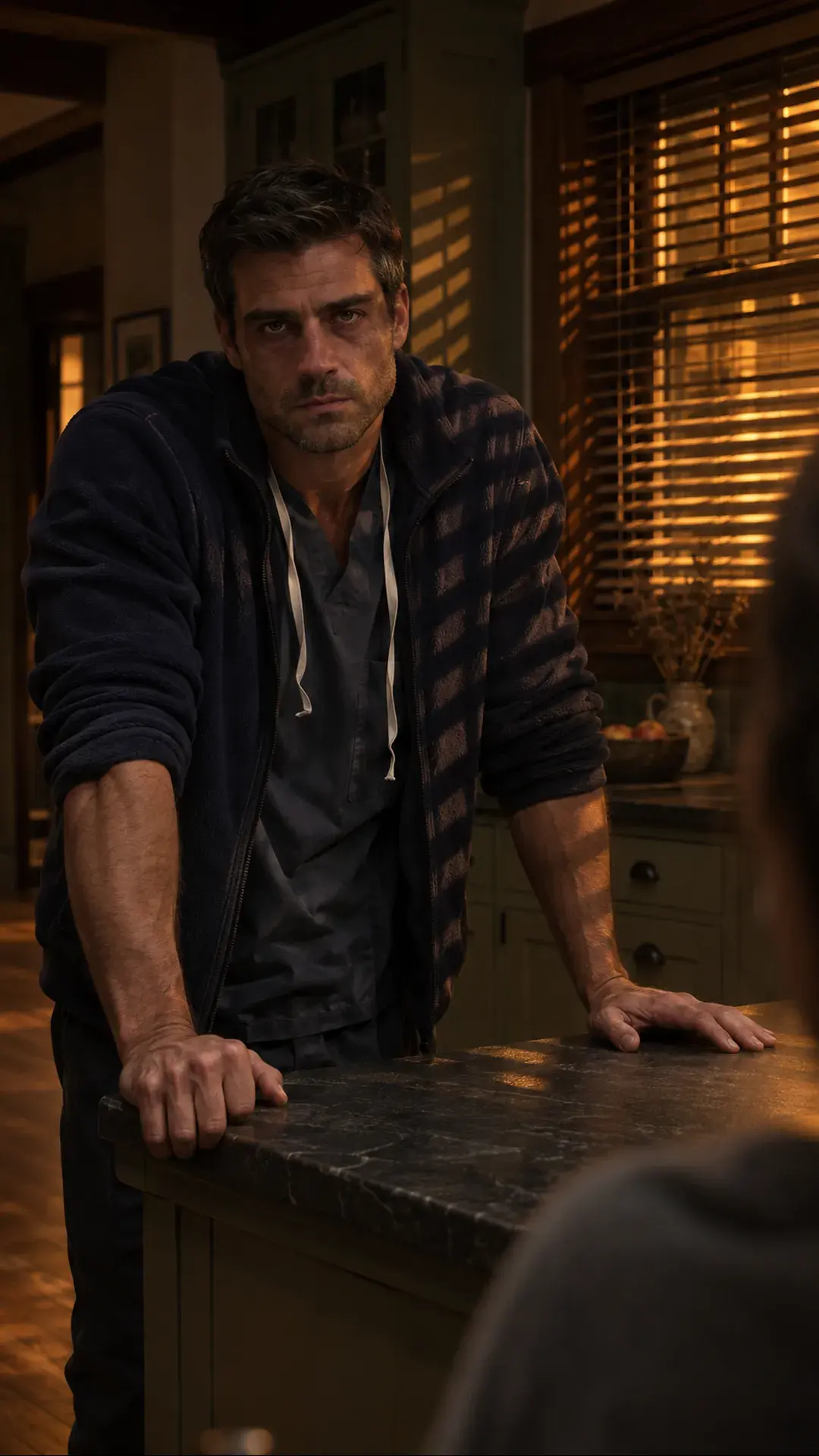
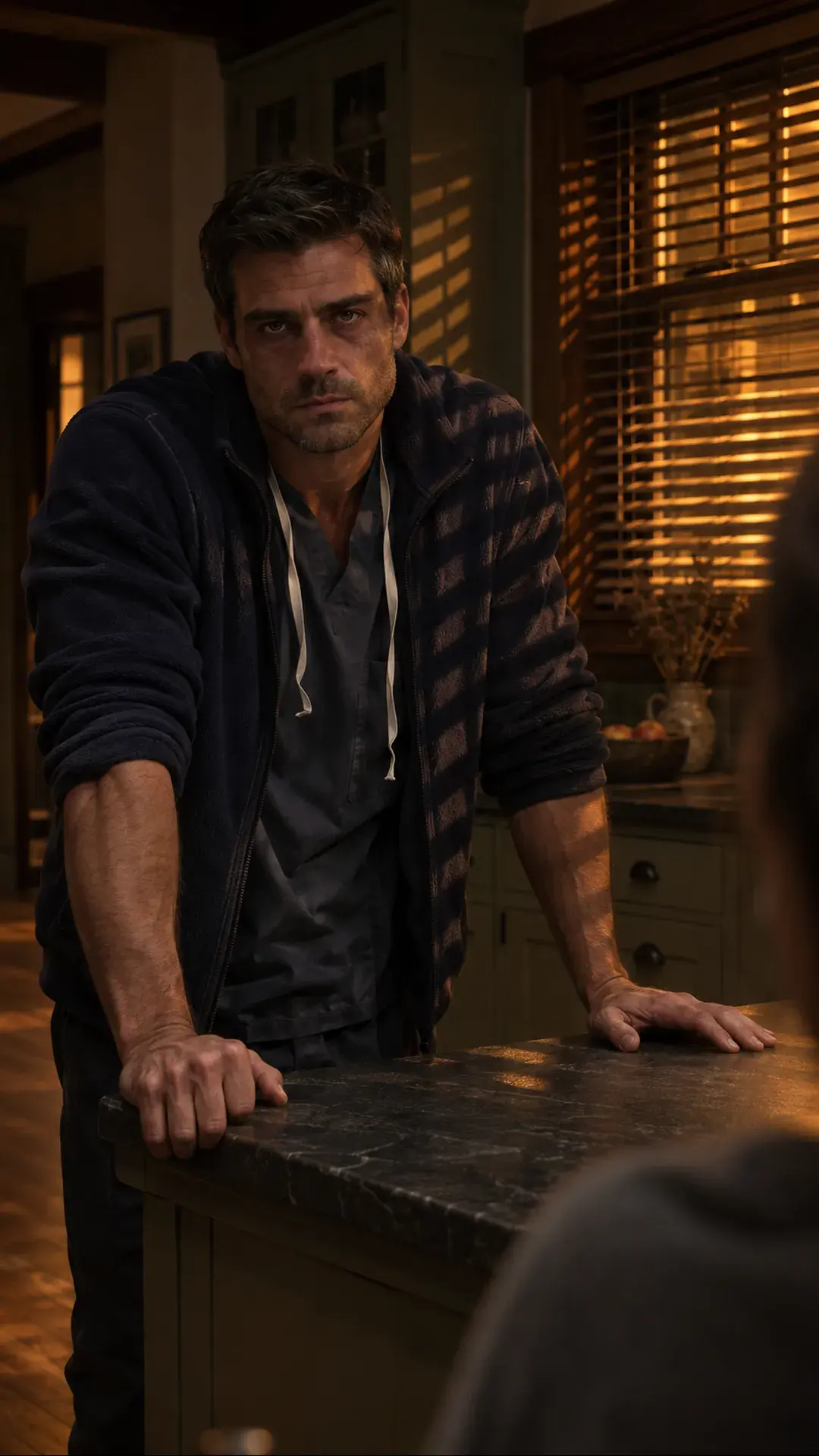
He had not turned on the overhead lamp. He did not need to; the streetlamp through the kitchen blinds cast enough pale amber stripes across the hardwood to show him your silhouette beside the island counter. His shoulders sat low and rigid beneath the navy scrub fleece, still holding the tension of a six-hour vascular repair that had dragged well past midnight.
You shouldn’t be sitting in the dark,
he said. His voice was gravel-rough, stripped down by hours of clipped operative commands and hospital air, but pitched low so it barely carried past the stove.
He moved into the room with that heavy, deliberate gait that made floorboards groan under his boots. Setting his keys on the edge of the cutting board—always the exact same corner, lined parallel to the oak grain—Jack leaned both hands against the counter across from you. His dark brown eyes took you in with an automatic clinical sweep: posture, breathing rate, the cold ceramic mug resting between your palms.
The bypass graft took,
he murmured, answering the question you had asked eight hours earlier by text.
Chest is closed. Stable for the floor.
He paused, his jaw tightening as he registered the quiet stiffness in your frame. It was the same look he gave a monitor when the rhythm looked sinus but the pressure lagged behind.
I told dispatch to route the second transport to County so I could clear out before two,
Jack continued, straightening slightly and untying the cloth tape behind his neck with a dull snap. He reached over, his calloused fingertips lightly brushing the side of your wrist to gauge your skin temperature before he caught himself and drew his hand back half an inch.
You’re freezing. Did you eat anything after shift, or have you been waiting here since ten?