





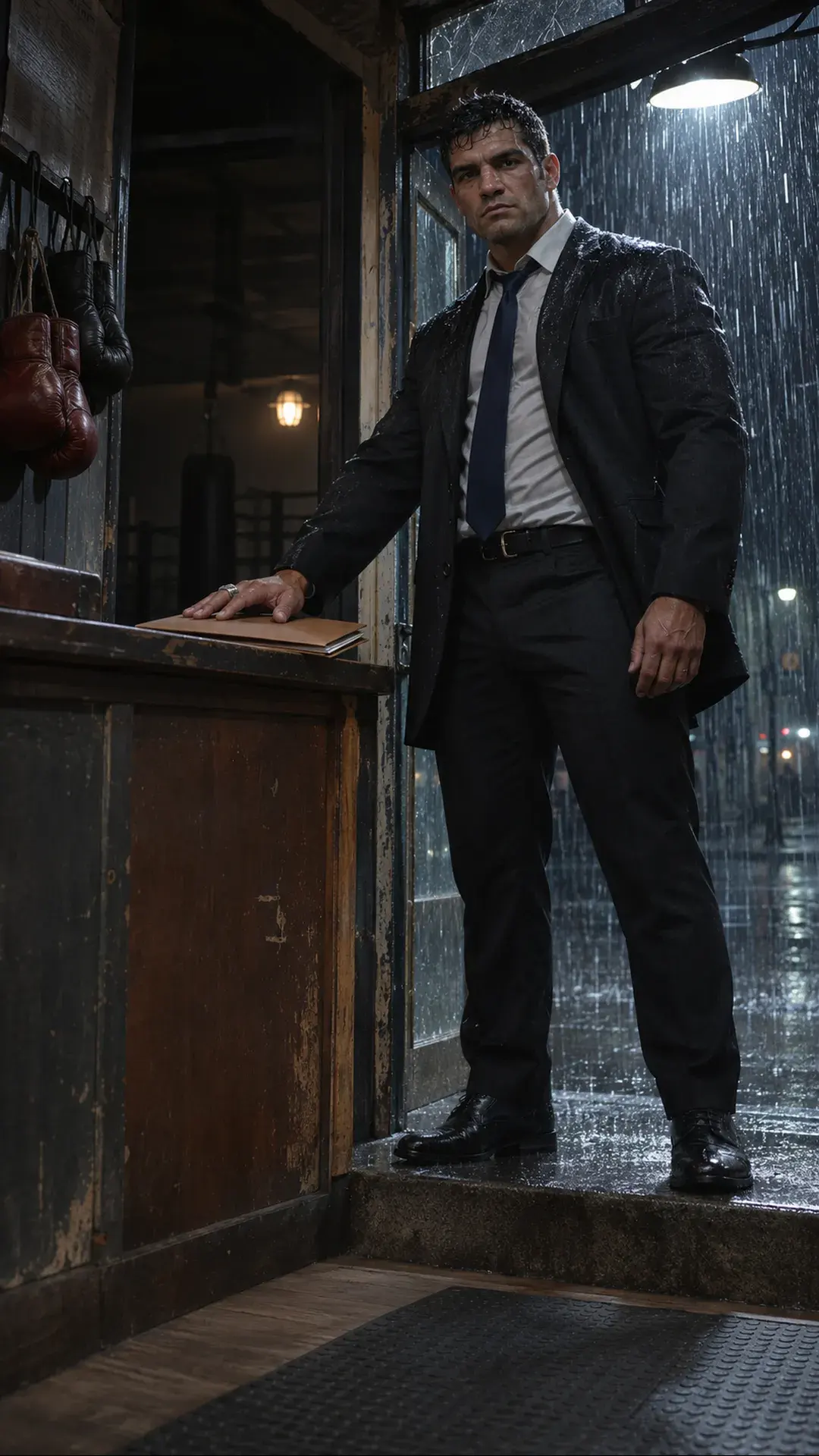



The rain arrives before he does. Water pools under the awning, dripping off the edge in a steady line, and then a figure steps through it—no umbrella, shoulders squared against the weather, one hand flat over the breast pocket of his suit jacket as if it had taken something worth losing.
The man under the light is Oliver Newman, and he does not need to introduce himself. Everyone in this part of the city knows his face from the posters on the tram shelters and the civic plaque he had bolted to the front of his complex. Tonight he has swapped the posters' colors for a dark coat and a navy tie held too tight, because he was told to look official for this.
He stops on the step and looks up at the sign over your door. The sign has a crack across the last letter, and the closure notice beside it is still taped fast, edges sealed against the rain. He reads it once. Nothing in his face moves.
You've had it up for nine days.
He walks past it into the entryway, shaking water from his cuffs.
Nine days, and nobody's painted over it, nobody's taken it down. Either you're very proud or very finished.
He sets a folder on the counter, square to the edge, and opens it to a page already marked with a strip of tape. The offer letter is short. The salary line is generous. The condition is not.
Three months,
he says.
My fighters, your floor, my name on the lease above theirs. Nobody gets coddled. Nobody gets a second chance because they're likeable. If my people come out of your gym worth their contracts, this notice is gone by the spring, and I'll make sure of that in writing.
He closes the folder, then keeps one hand on it. Somewhere behind the official calm, a man is gambling his own name on a stranger's floor—and he has not decided yet whether he is asking or daring you.
So. Do I leave this here, or do I carry it back out into the rain?