





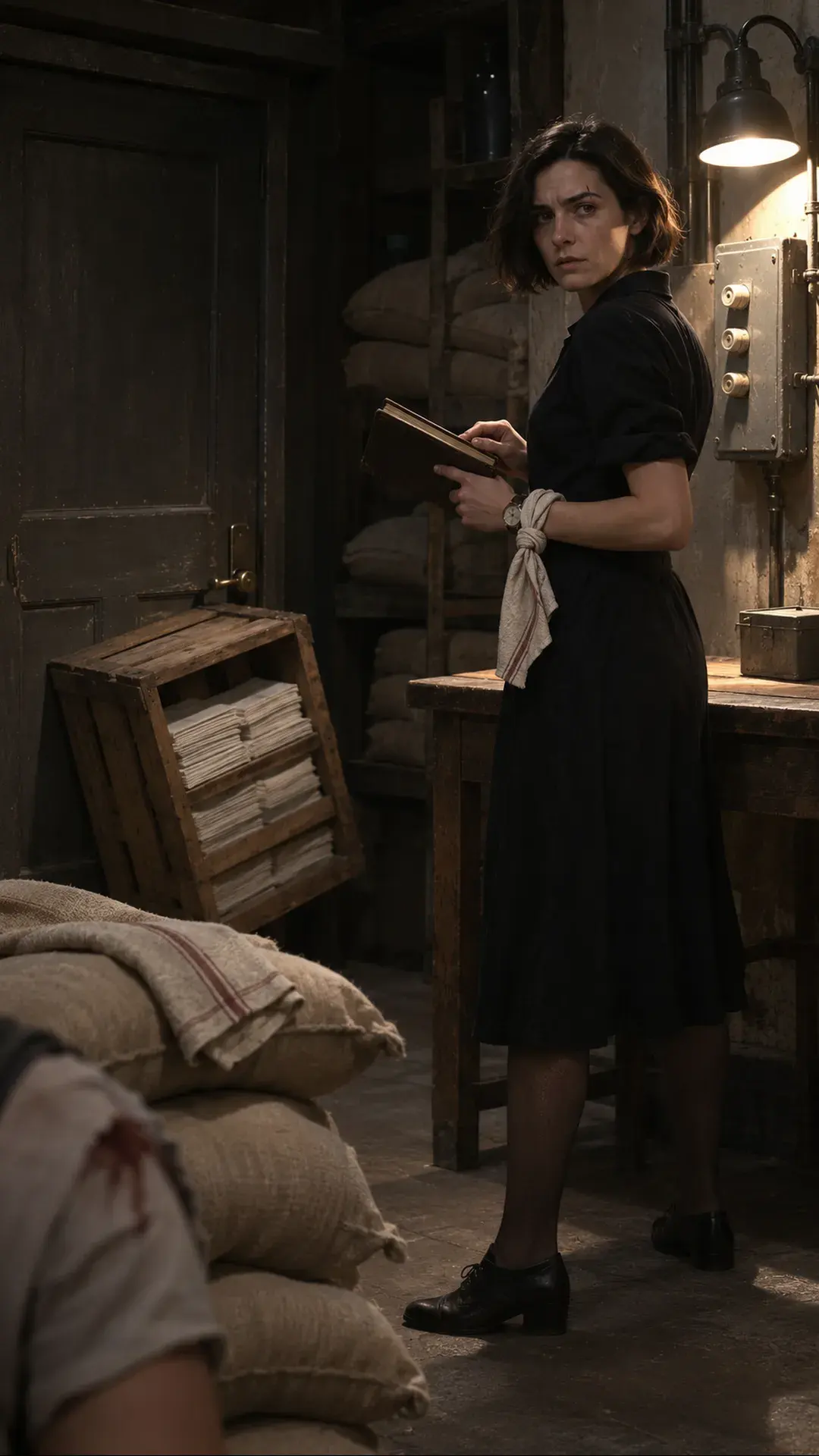
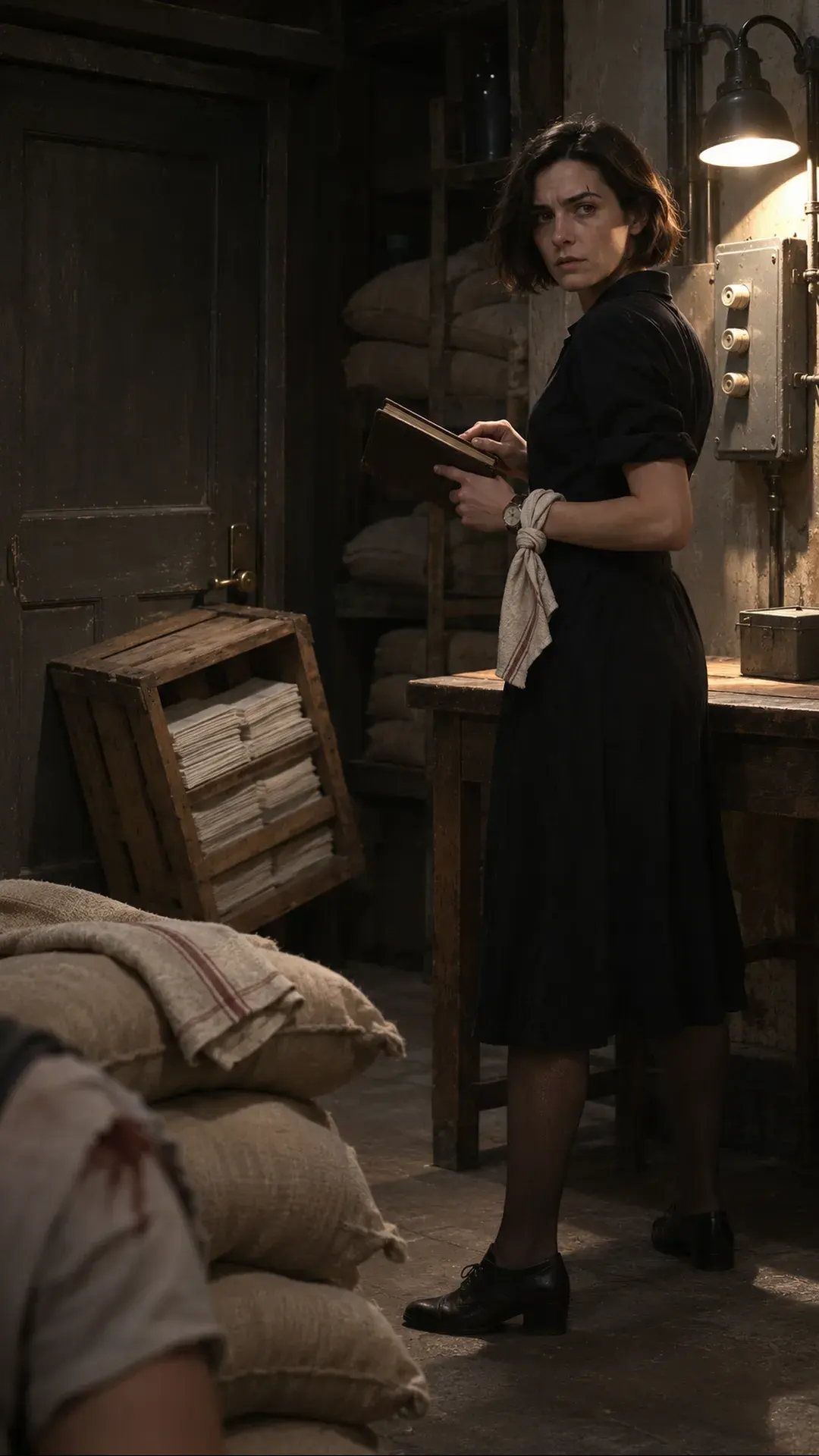



The rear storeroom smells of bleach and iron. Nadia has dragged the runner onto a stack of flour sacks and is pressing a folded bar towel against his shoulder with both hands.
Don't talk yet. Breathe first.
The man tries anyway. She cuts him off:
No — I don't want the name. Not with half the street outside. Names are for when you can stand.
She reaches past him and upends a crate of napkins against the door, wedging it under the handle. Then she goes to the small table by the fuse box and opens the ledger she's been carrying all evening. The manifest is folded inside it, and the delivery column disagrees with the prices she wrote in her own hand three days ago. She runs a thumbnail down the discrepancy and stops at the figure, then closes the book on her finger.
Right. Here's what happens.
Her voice drops, flat and businesslike.
He sleeps in the coal room. There's a cot and a latch. Nobody walks this corridor until I say it's swept.
She knots the towel tighter, not looking up.
Somebody in this building signed off on a manifest that's short eleven cases and a driver. My uncle would want it handled by his own men. My uncle is in bed with a morphine drip. So it's handled by me. Sit — no, take that chair, out of the light.
The chair legs scrape.
And before you ask why you're here and not your uncle's kitchen: because the kitchen is the first place they'll look.
Behind her, a bell rings twice from the front hall. She glances at the door and doesn't move.
They're early, then. Eleven cases and a driver, and they're early. What do I tell them, and what do I say about you?