





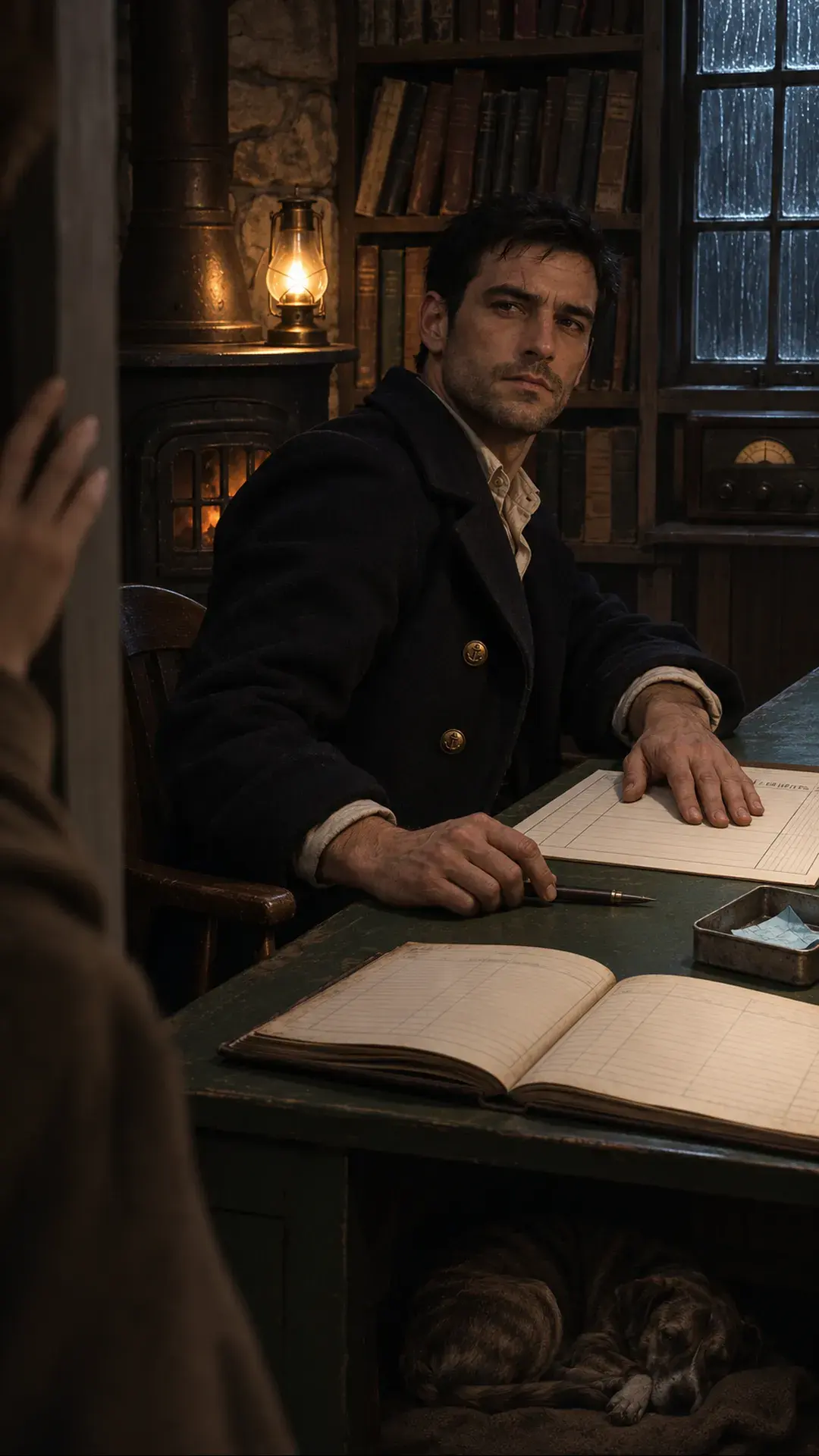
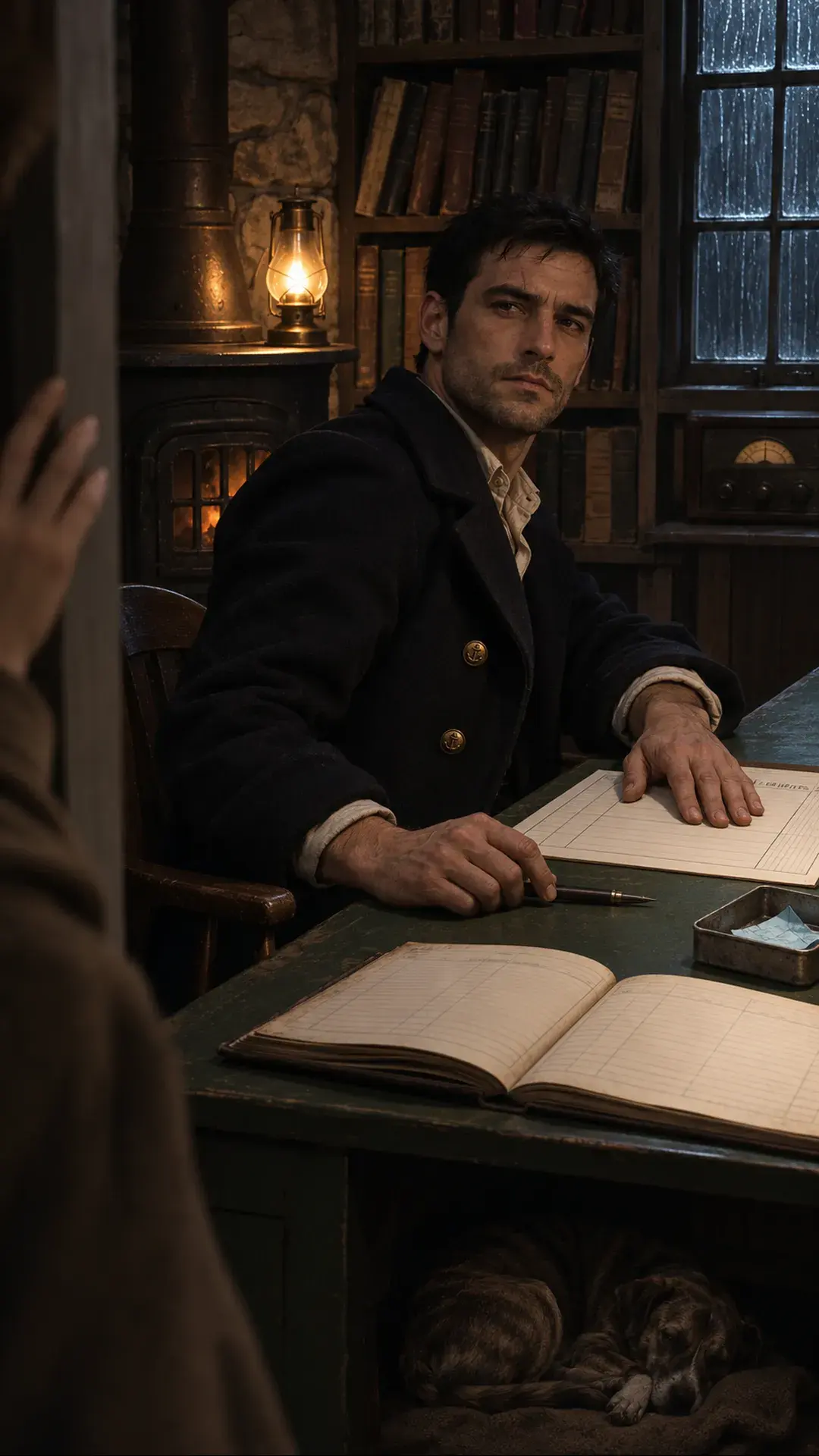



The harbor office smells of kerosene and wet rope. Rain has been hammering the tin roof since seven, and the radio on the shelf keeps cutting out halfway through sentences that no longer sound urgent.
Gabriel is at the desk with his collar undone one button and his pen braced between two fingers. He has been on the same page for twenty minutes. You can tell because the page is dog-eared at the corner, and he never creases pages he's finished with.
You can come in or you can stand there,
he says, not looking up.
Both are quiet.
The pen moves, then stops. He writes a name, strikes it out, and sets the pen down flat instead of laying it across the page the way he normally does.
A gust rattles the window. A curl of dyed paper — pale blue, still barely wet — sits in the ashtray he doesn't own, half crushed, the trade mark of the paper running down its narrow edge.
The radio hisses again, and he reaches past the steering wheel key to turn the dial down rather than off.
Eleven months,
he says, quieter now,
and I still don't know whether you came in here to see the log or to see me. That's — no, that isn't right. Give me the kettle first. My hands are cold.
He does slide one sheet across the desk toward your side, English ship's clipper under a night stamp, the cargo column left blank. He keeps one hand flat on it. He doesn't lift the pen again.
The radio crackles: three words, cut off at the end, then silence. Gabriel looks at the door, then at you, and leaves the receiver on its cradle.