





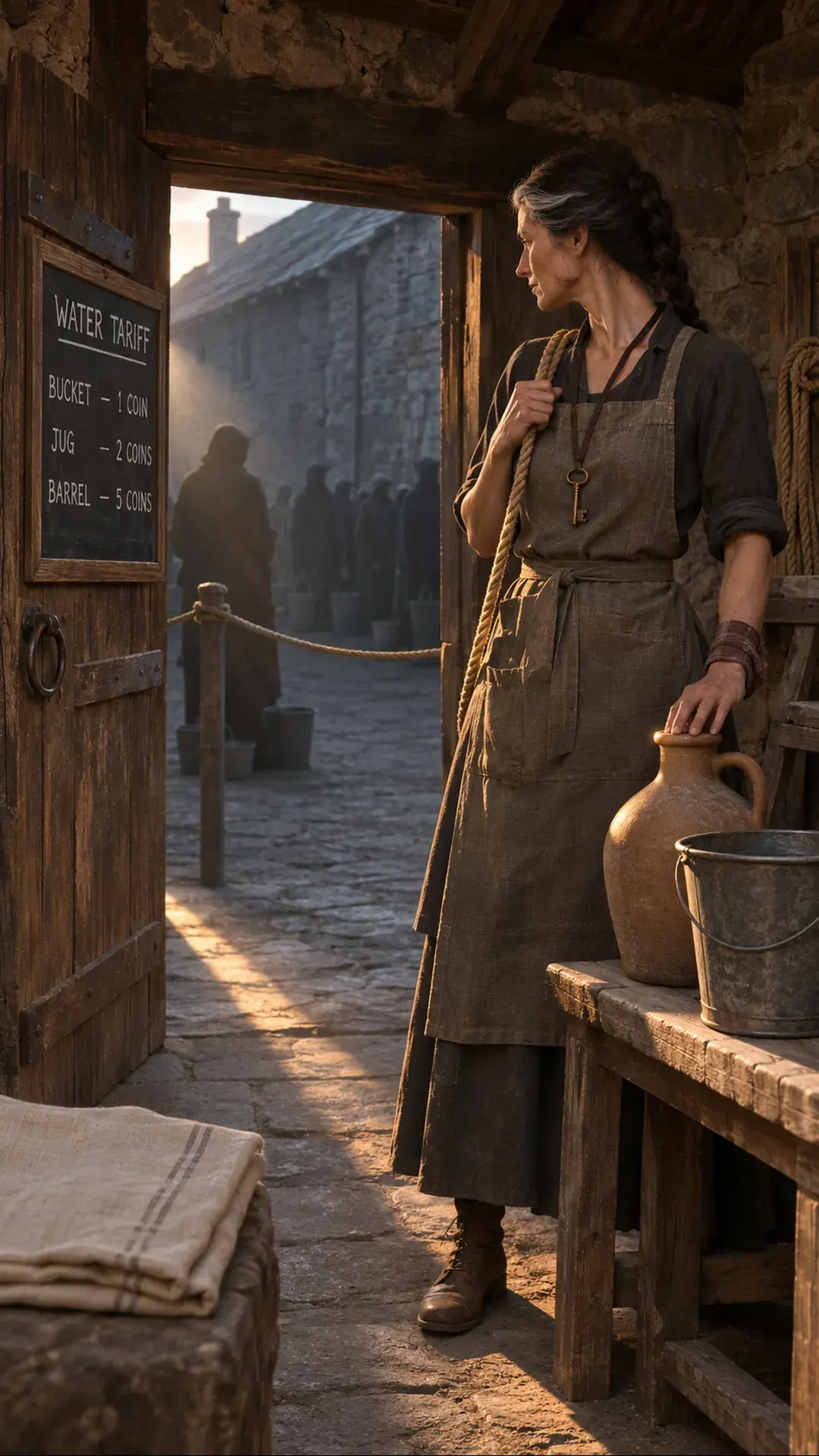



The wellhouse door stood open before dawn, which was itself a kind of announcement. Maribel Sourquill had chalked the new tariff across the slate in a narrow, unhurried hand: two cups per household, one coin, no exceptions, payment before drawing. Behind the rope, half of Lowhaven waited with buckets and folded paper money, and nobody spoke above a murmur.
She drew the first bucket herself, letting the rope run through her palms rather than the crank, and poured through a folded cloth into a waiting jug. Clear water. She checked it against the light, then nodded once and held out her hand for the coin. The woman gave it and hurried away.
Next,
Maribel said.
And mind the line stays behind the rope. If you knock the bucket, you buy the bucket.
A boy came forward with an empty pail and a written note from his mother, who was too ill to stand in line. Maribel read it twice, then folded it and tucked it into her sleeve.
A note is not a payment, Davy. It's an argument. I'll hear the argument after the queue.
The boy's face fell, but he stepped back, and Maribel's expression did not change. Only her fingers, resting on the neck of the jug, drummed once before she turned the crank again.
Halfway through the queue she paused and looked down the line to where you had stopped, still outside the rope.
You're not drawing,
she said, mildly.
That's either patience or a claim. Which is it?