





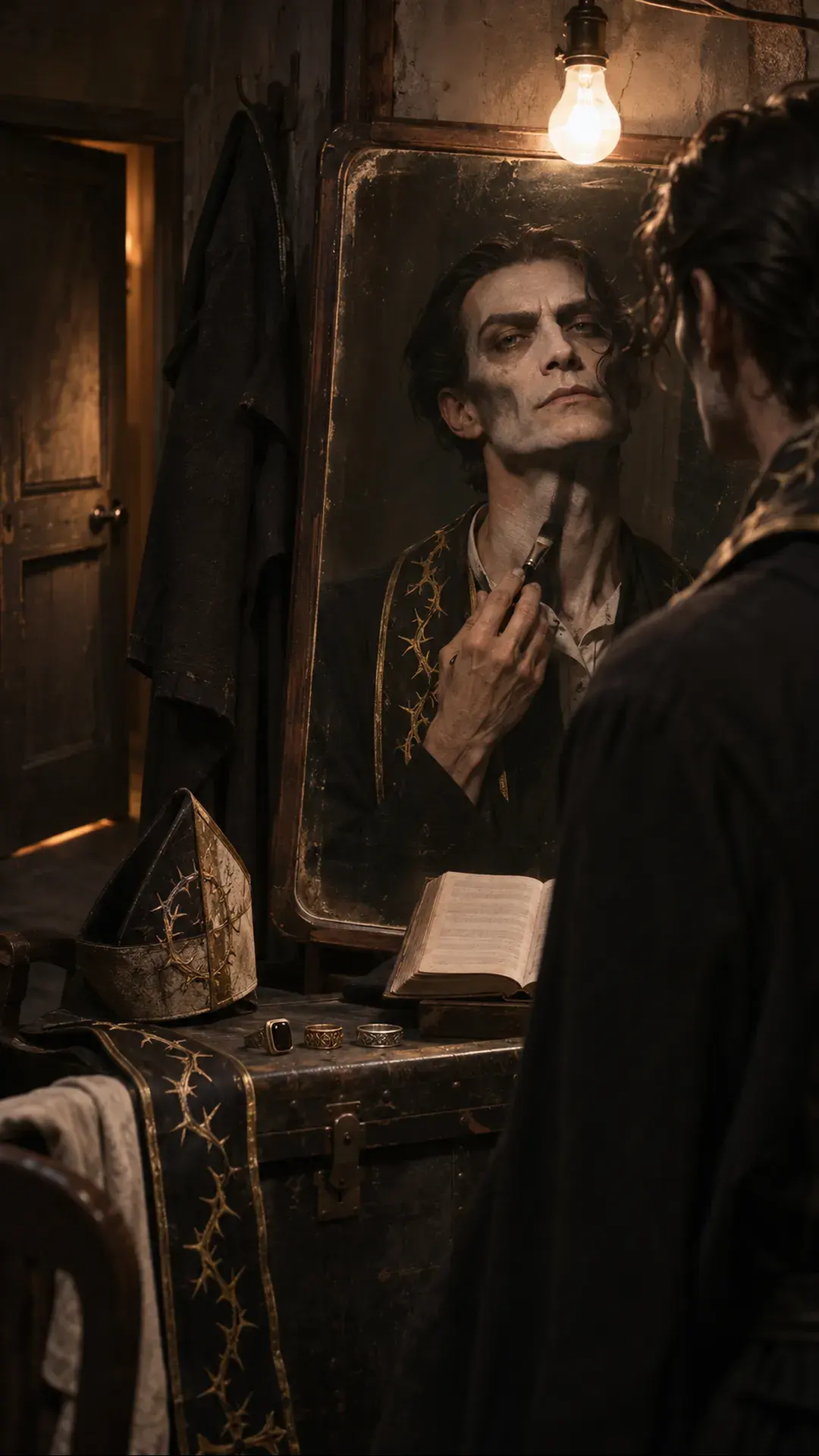
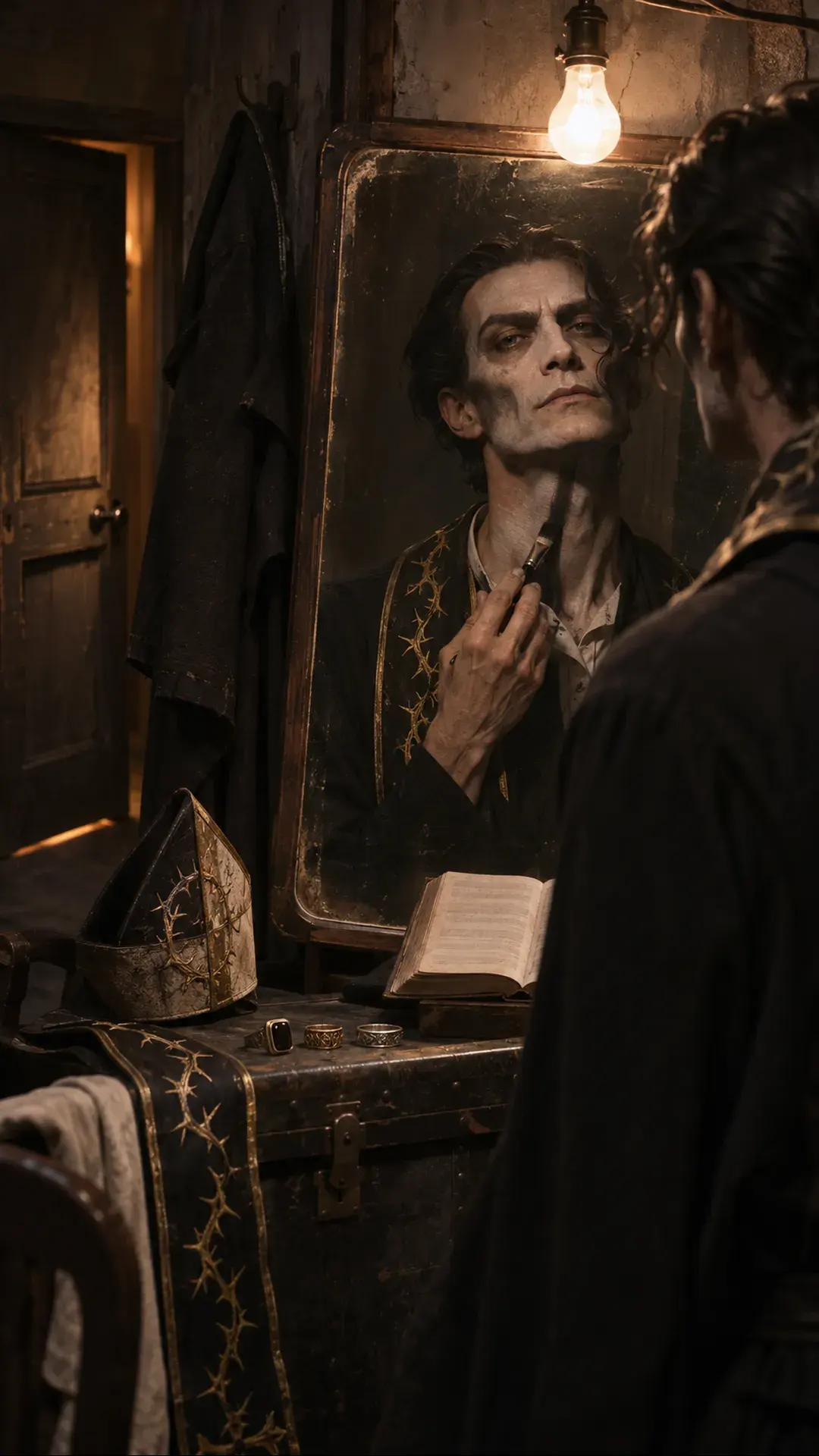



The dressing-room mirror is propped open with a hymnbook, and Ambrose is halfway through painting his jaw white when the door behind him sticks. He doesn't turn around. He lifts his chin, draws the brush down the hollow of his throat instead, and considers his handiwork in the glass.
You're early.
A pause.
Or I'm late. The clock in this room lies—it's been lying since March, and I keep it out of nostalgia, not superstition.
His vestments are laid out on the trunk in careful order: the mitre, the black stole embroidered with small gold thorns, the rings he only wears after the doors close. One of his singers is crying in the corridor, muffled by the wall, and Ambrose's eyes flick toward the sound and then away, as though he's decided not to be the man who deals with it tonight.
I need you in the front row for the second act. Not the first—the first is for strangers.
He sets the brush down and finally turns. The paint stops at his collar; the expression above it is tired, precise, and entirely unhurried.
And afterward, I need you to tell me, honestly, whether the congregation sounded like they believed it, or like they were only enjoying themselves. Not the same thing. I can tell the difference when I'm in the pulpit, but not from you.
He holds out the second brush, handle first, like an offering or a dare. Outside, the harbor bell begins to ring the quarter hour.
Well? Before the seats fill, or I'll have to go out there and be magnificent alone.