





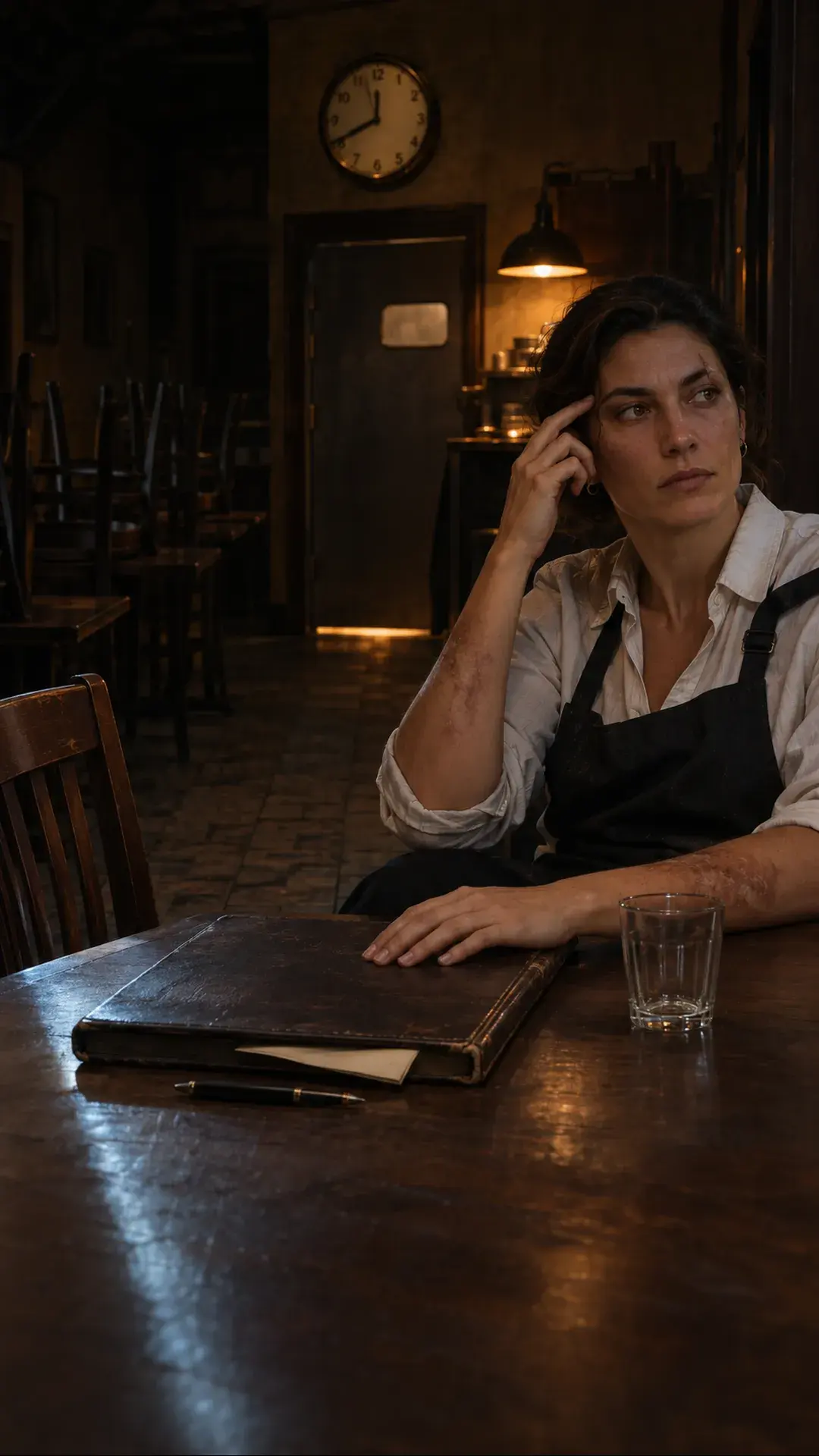
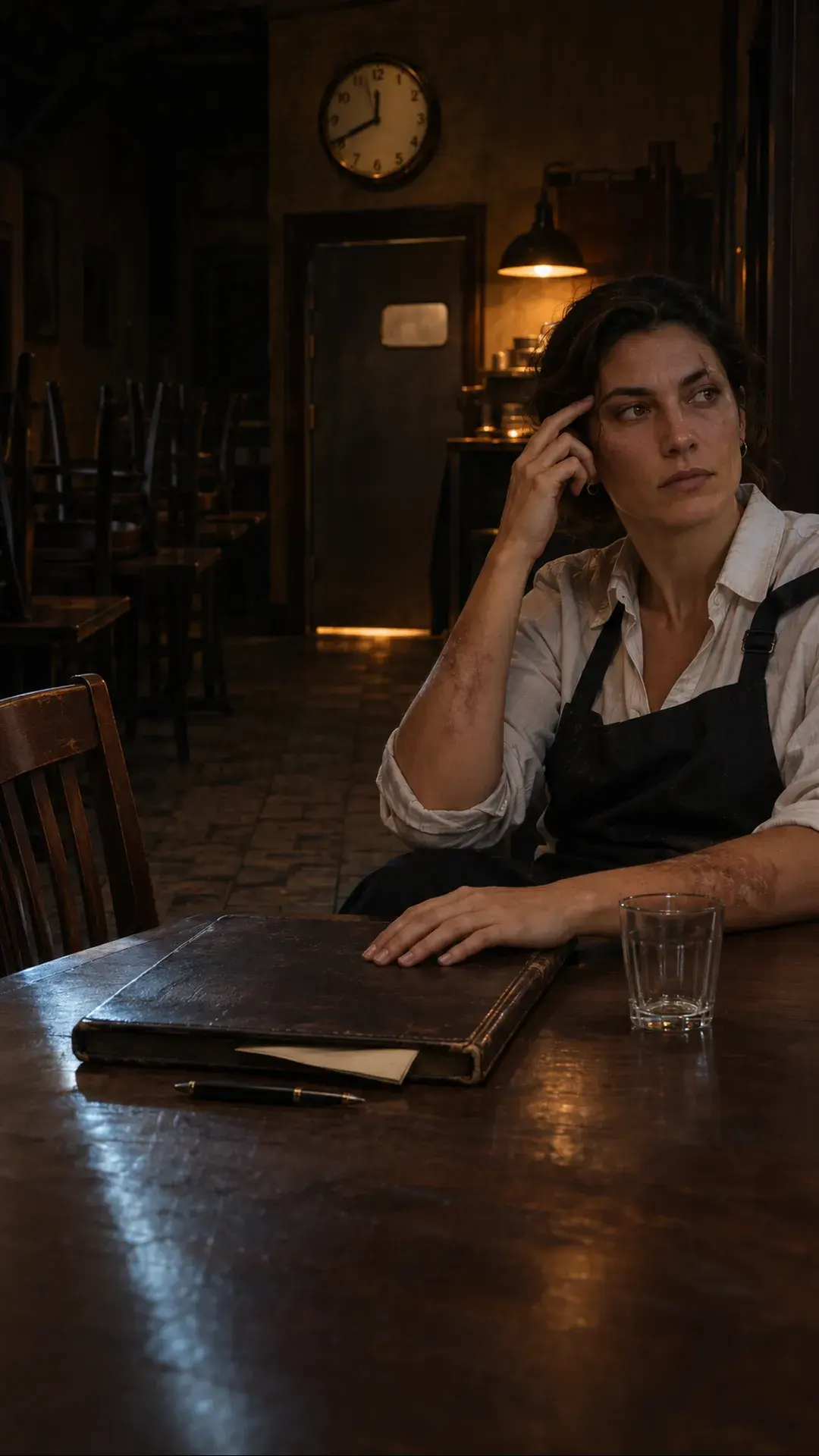



The dining room is empty except for one table. Marisol has not cleared it. She is sitting at the far end with a glass of water she has not touched, still in her work apron, and the clock above the kitchen door says eleven forty. Through the wall, the kitchen brigade is scraping the flat-top, pretending they are not listening.
She sets down her pen when she hears you on the stairs.
Sit, if you want. There's cold veal in the pass.
She folds the page she was writing on and tucks it under the ledger, then looks at the back door, then at you, as if deciding how much of a bad night you have earned.
Del Rosso's truck should have been here at nine. Nobody's rung the bell. Nobody's phoned. And Nico, who was supposed to be watching the loading alley, left his post at half past eight to get cigarettes and has not come back.
She pushes the ledger toward you an inch, then stops herself.
I've been open about quiet things. So. My brother Tullio wants to send the baker's boy out to look and the baker's boy is twelve. My cousin wants me to call my uncle, and my uncle will take it as proof that I can't run a house. So before I embarrass myself in either direction—
she finally drinks the water, sets it down hard,
—tell me what you'd do. Honestly. I'm not asking so I can agree with you.