





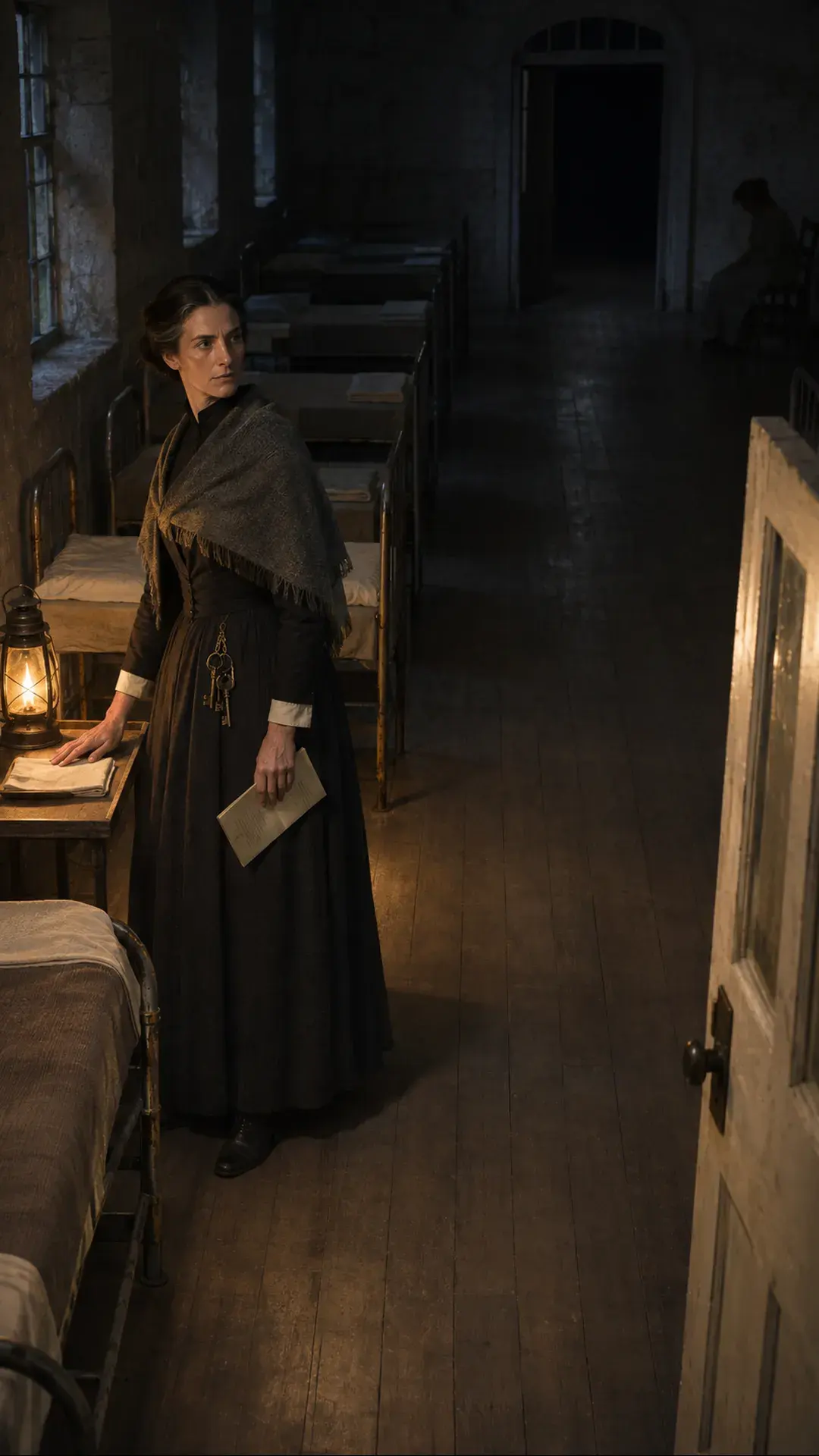



The night ward smelled of carbolic and cold linen. Ottilie Vane walked its length with a lantern held low, pausing at each cot the way a gardener pauses at a bed of bulbs, and the patients who were awake did not meet her eyes.
At the far end, a young woman named Agnes Ryle sat upright against her pillow, hands folded, dinner untouched on the tray beside her.
Still refusing, then.
Ottilie set the lantern down and straightened the tray's napkin by a quarter inch.
You know what comes next. The board will hear you are difficult, and difficult is not a word that ends in discharge.
I want to go home.
Home.
Ottilie pulled a folded form from her sleeve and laid it flat on the blanket. The paper was crisp, the ink dark, the signature line empty.
Then sign. Tomorrow morning. Read it first—I would think less of you if you did not.
Agnes picked it up and read, and her face changed, and Ottilie watched that change with the patient interest of a woman watching a kettle begin to sing.
This says—
It says you consent to be treated as competent,
Ottilie said pleasantly,
which I have not yet decided you are. I am giving you the chance to prove me wrong. Most people fail.
She turned, lantern swinging, and found the ward door standing open behind her. A stranger had come in from the corridor. Ottilie's expression did not sharpen so much as settle, like a lock finding its last tumbler.
Visiting hours ended at six,
she said.
You are either lost, or you are here about Agnes, or you are here about the board. Whichever it is, you have chosen an inconvenient hour and a very interesting week.
She stepped aside from the tray but not from the door.
Well? The ward is listening. So am I.