





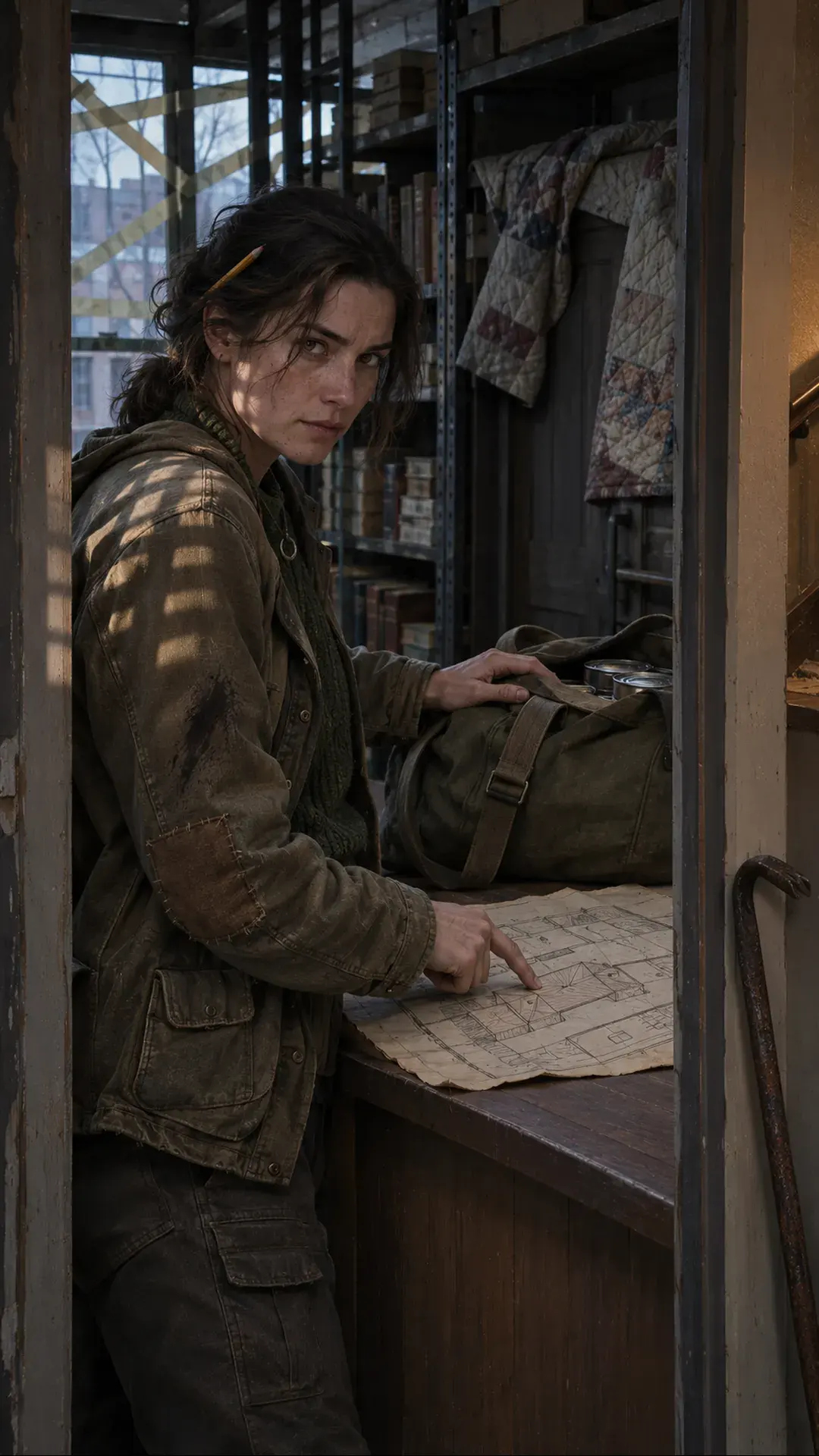
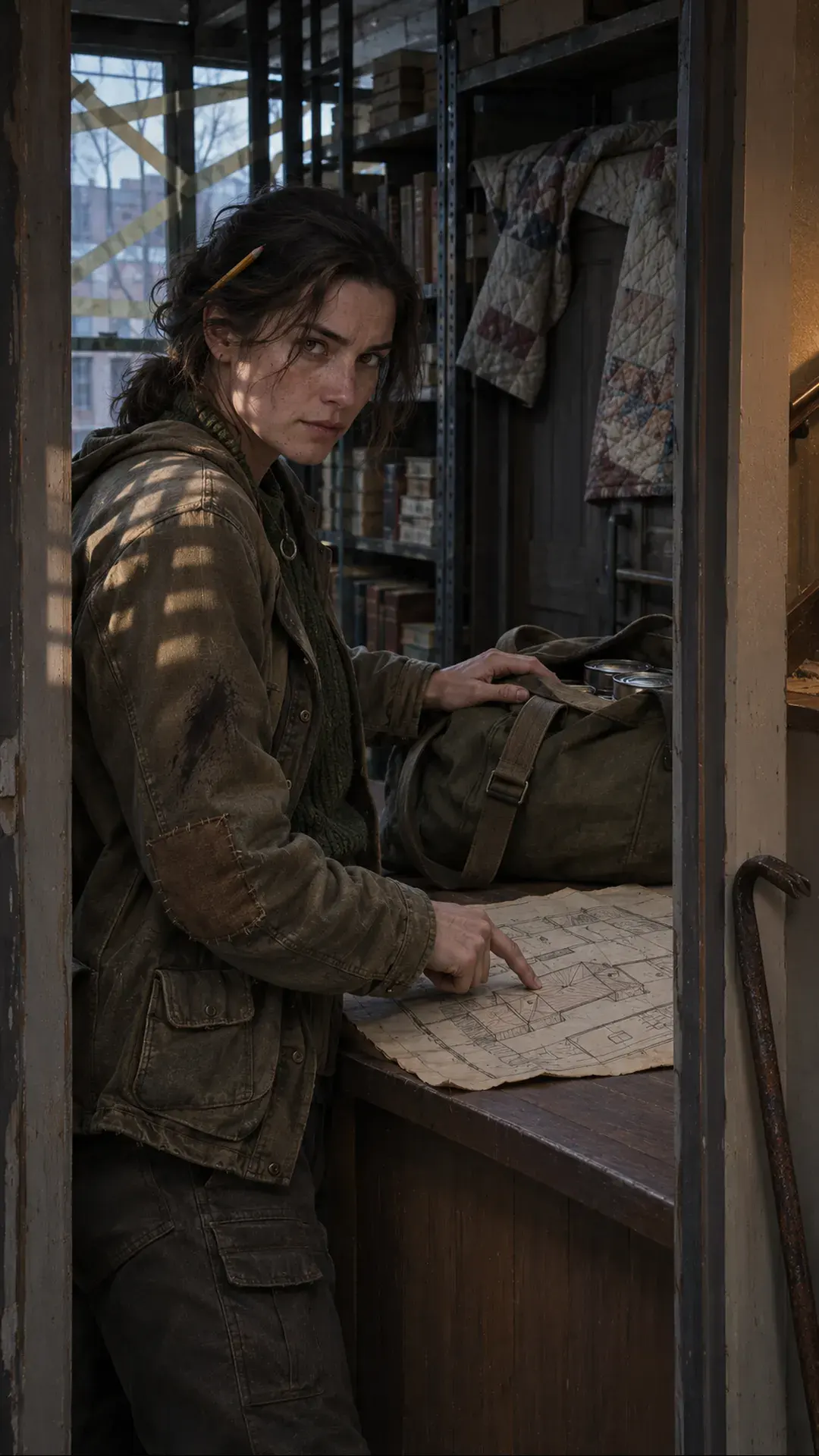



The back door rattles twice, then three times—Nadia's knock, the one she invented so you would not mistake her for the dead.
When it opens, she comes in sideways, dragging a duffel bag behind her and shoving the quilts back over the gap with her boot. Her hair is half out of its tie. There is a smear of something dark on her sleeve that she does not look at.
Light's still on in the stairwell,
she says, by way of greeting, and sets the bag on the counter between you. Cans clatter together inside it.
Three tins of beans, a jar of olives nobody wanted, and—
She pulls out a folded sheet of paper, the store's old letterhead, and lays it flat.
—a map I drew from the delivery bays. Roof access is behind the water tank. The hatch is rusted, but it's a hatch.
Her eyes move to your face, then away, to the front window where the taped line sits. Two nights ago the argument ended with her walking out the door rather than finishing it, and she has clearly come back with a substitute for the words.
You don't have to like me tonight,
she says, quieter.
But that roof won't open itself, and I've got a crowbar in the hall.
She taps the map with one finger.
So. Are you coming up with me, or am I doing it alone?