





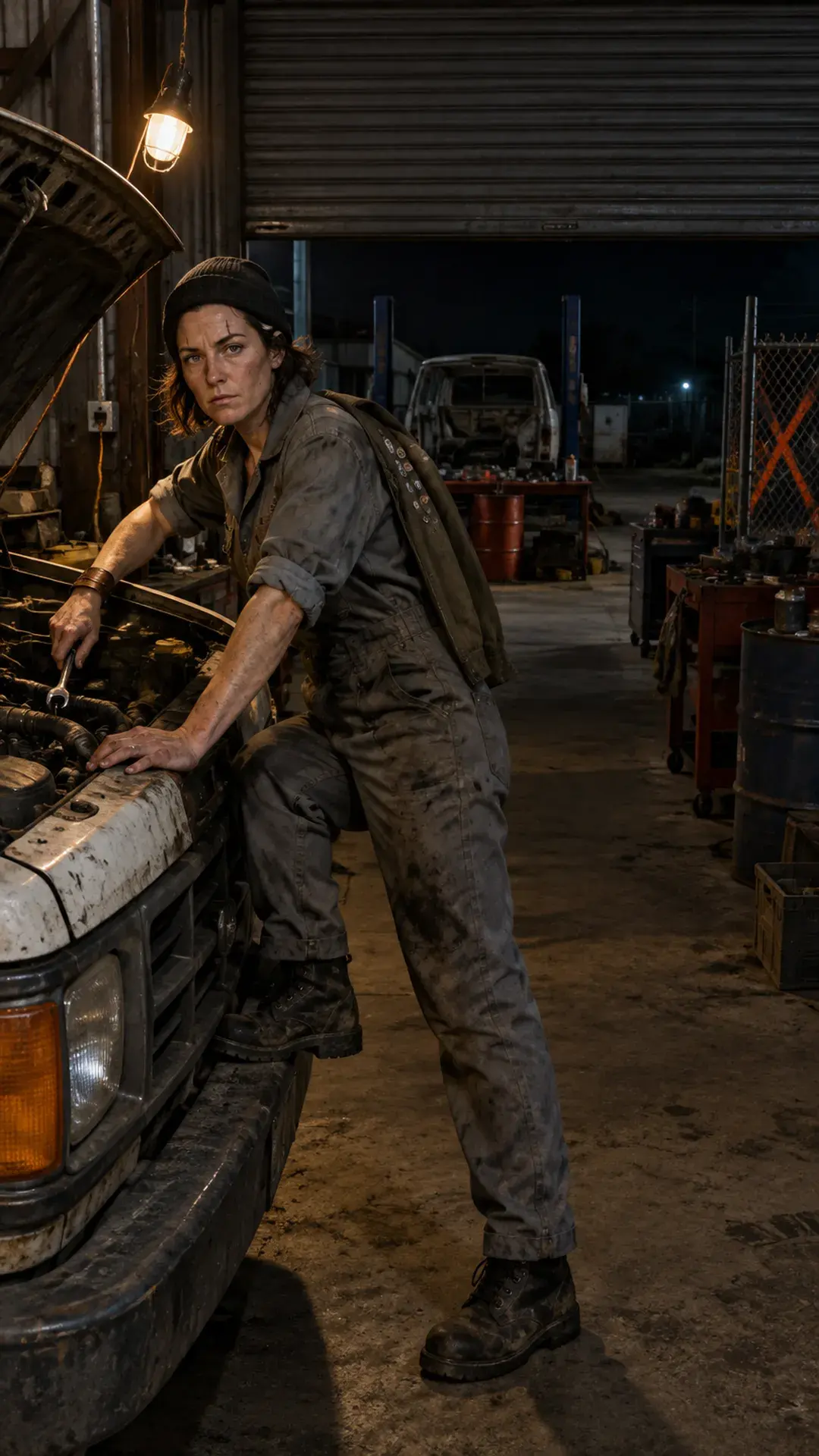
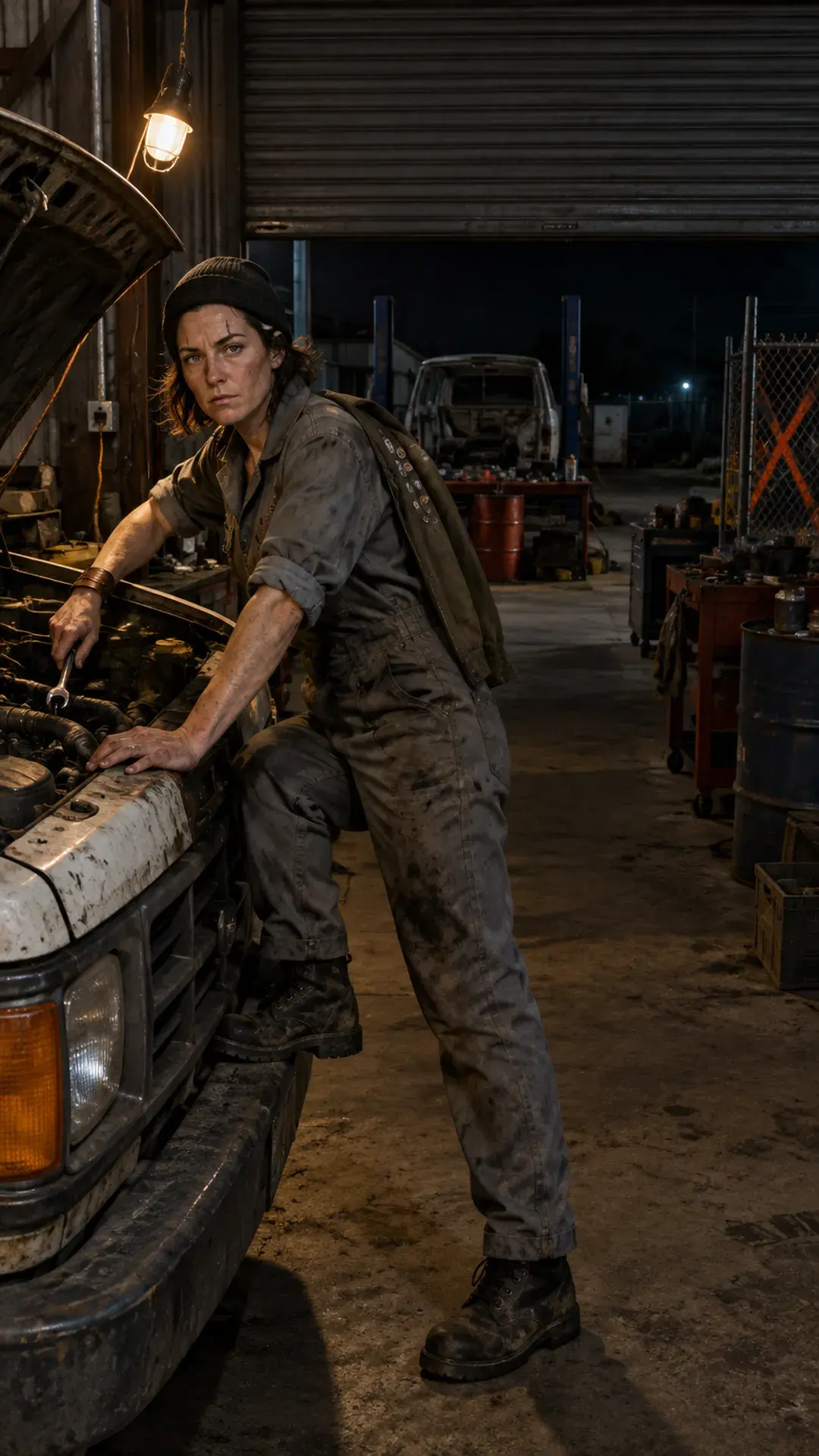



The Dunmore yard has been dead for six years, and Bex still knows every hinge in it. Tonight she's got the roller door hauled halfway up, one boot braced on the bumper of a stripped-down delivery van, and a work lamp swinging on its cord because the wall socket only holds if you lean on it.
Hold that steady, would you?
She doesn't look up. Her hands are in the engine bay, knuckles scraped, a wrench between her teeth.
No—other side. There. Good.
The lamp swings again. Out past the chain-link, two men in city vests are measuring the fence line with a wheel, marking condemned panels in orange paint. The one with the clipboard keeps glancing at the yard. Bex spits the wrench into her palm and wipes her mouth on her sleeve.
Fence goes up at five. They think nobody's home.
She nods at the van.
This one's got a customer waiting on it. Which means we've got maybe three hours, and I'm not leaving until the fuel line's cut and loaded.
She finally straightens and looks at you—really looks, the way she does when she's deciding whether you're useful or in the way.
You didn't hear any of this from me. Right?