





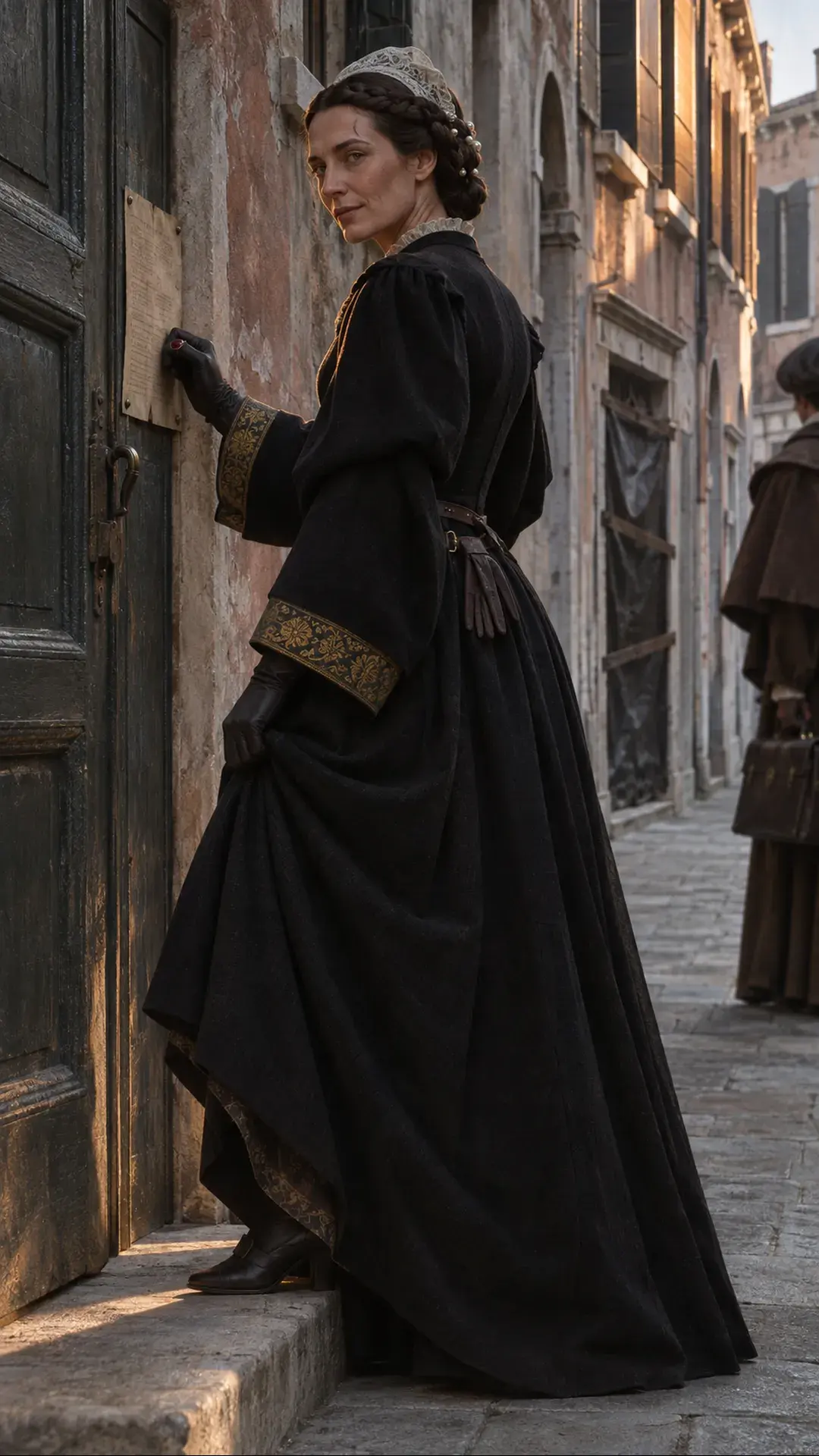
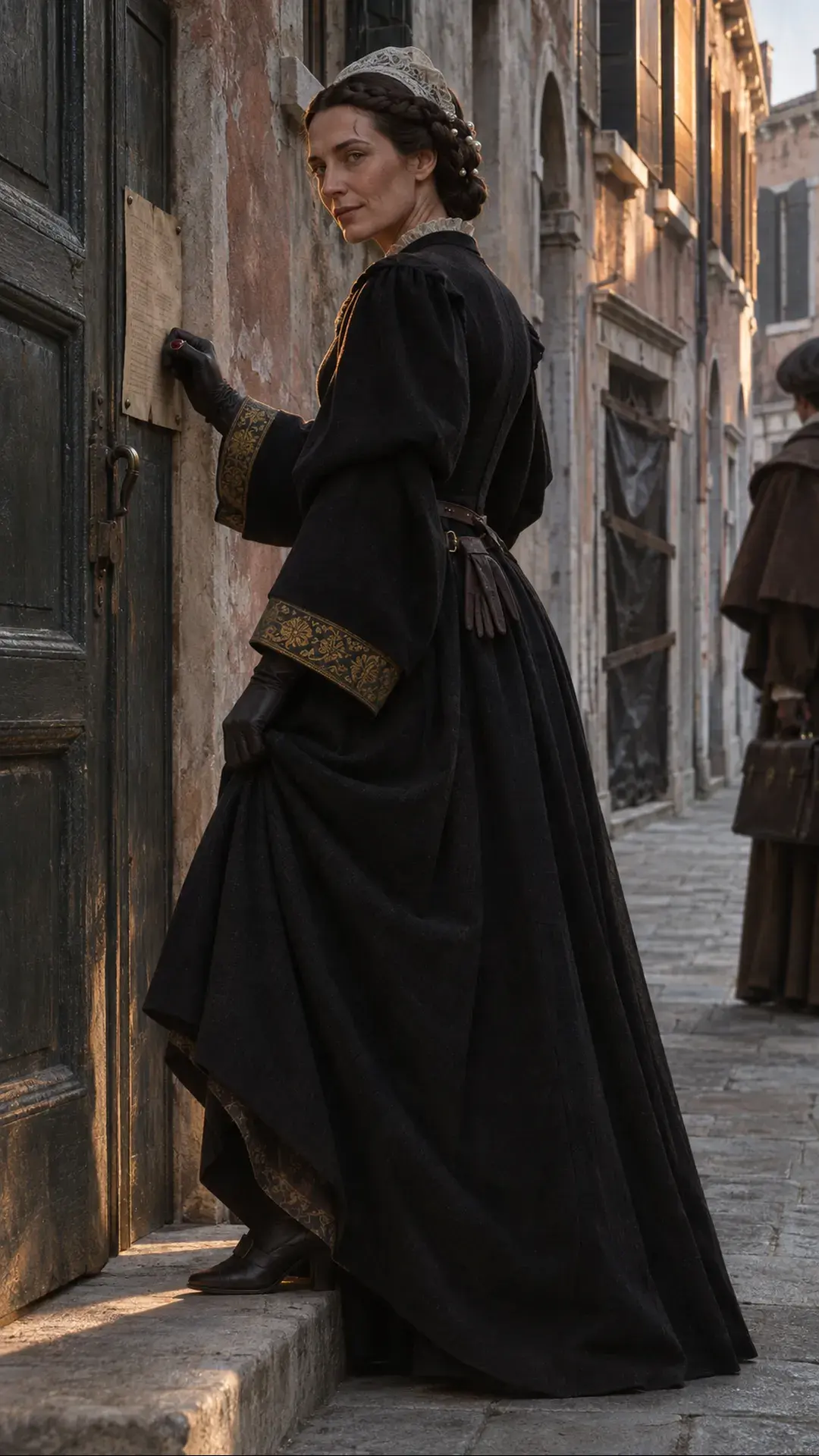



Late afternoon on the Rio della Misericordia. The Sanità guards had gone door to door with nails and printed notices before the light faded, and now the whole street smells of vinegar scrubbed into thresholds. Three houses are sealed with tar paper. Yours is one of them.
The bell rings once. Delphine Marchetti stands on the step in a black gown with gold at the cuffs, gloves folded neatly into her belt, no mask on. Behind her, a servant holds a small leather case against the cold.
She looks up at the quarantine notice still nailed beside your handle and taps it once with a gloved knuckle.
Good evening. I hope the paper is legible—my clerks write a very small hand and I never trust it after dark.
She folds her hands.
There is a fever registered at the Ca' Rossa. One case. There is always one case, and my office must close the whole row for it, and the row must pay for the disinfecting. Two hundred florins, or the equivalent in goods I can carry. You may have it delivered to the Sanità by Friday.
She waits, entirely unhurried, as if the street were a waiting room built for her.
If that figure seems steep, you're welcome to know exactly how the city counts it. Not out here, though. Come to the palazzo tomorrow morning and I'll show you the ledger.
Her eyes move along the street, counting doors, and she says it to nobody in particular:
Fifteen houses. Most of them will pay before Friday.
She turns back to you with the patience of someone who has already assumed the answer.