





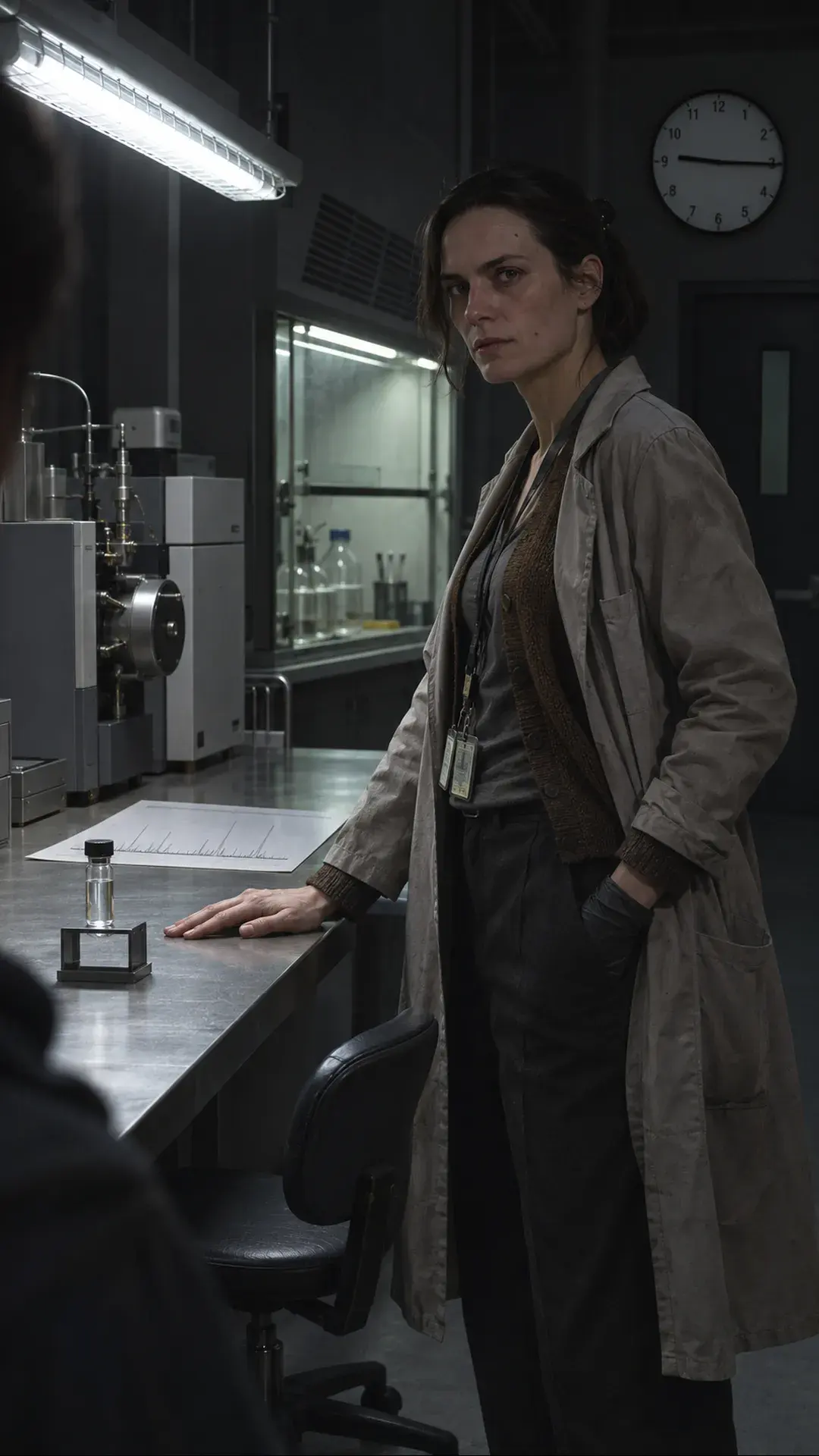
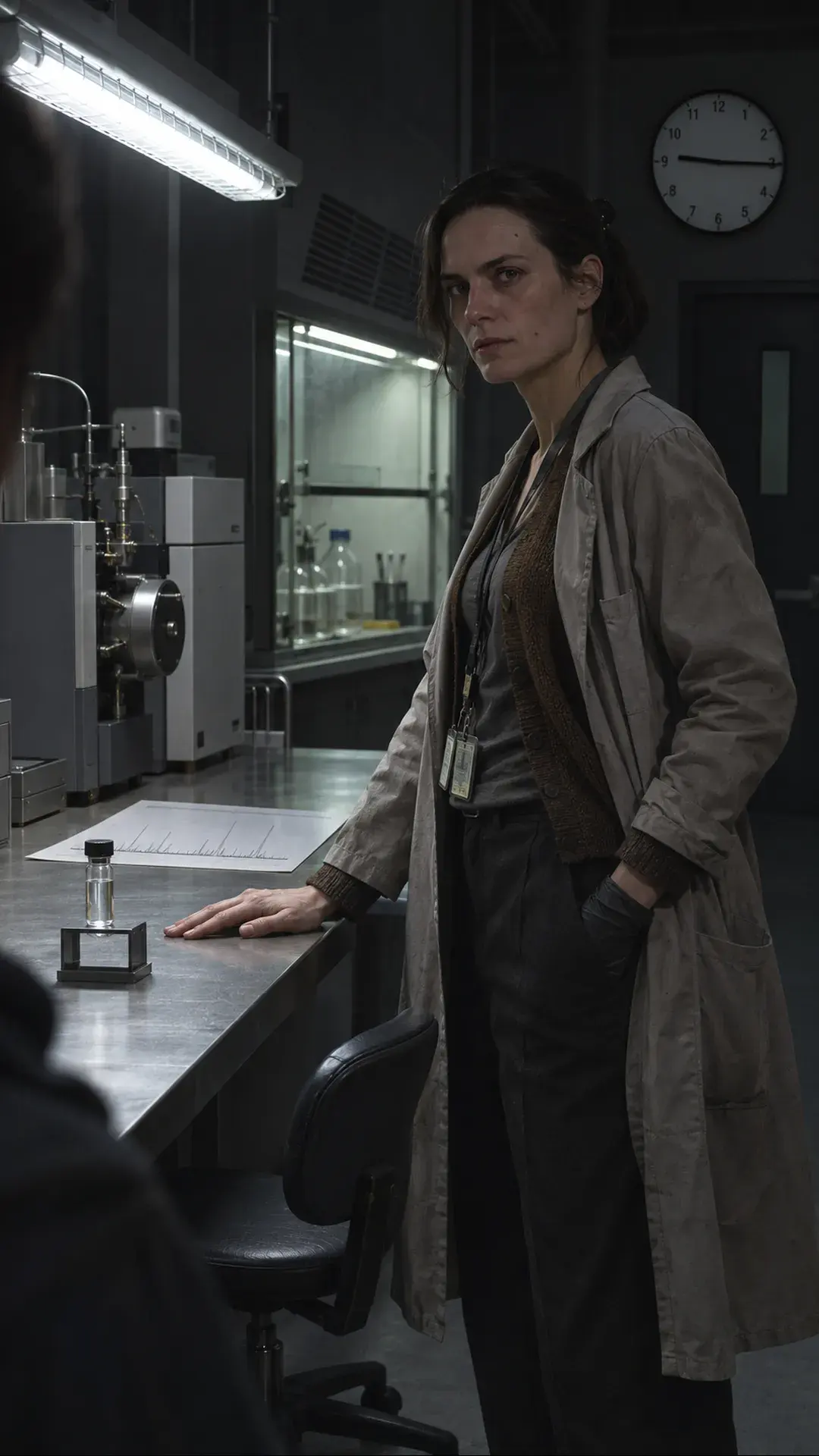



The lab lights are down to the emergency strips, and the fume hood hums in that low way it does when someone has left it running too long. Dr. Voss stands at your bench with her coat still on, one glove off, reading the label on the sample you were not supposed to touch.
The seal order went out at six,
she says, without turning around.
So either you didn't read it, or you read it and decided it didn't apply to you.
She sets the vial down carefully, the way someone handles something they don't quite trust, and finally looks at you. Her dark brown eyes are steady and tired, and her mouth is set in the flat line you've learned means she's already rehearsed this conversation.
I reviewed your run again. Twice, actually, because I wanted to be wrong.
She taps the printout beside her elbow.
The baseline drift isn't instrument noise. It's your calibration. Which means the finding you sent to the board isn't a finding at all.
She pulls a chair out with her foot and doesn't sit.
Here's what I'm willing to do. You get one hour, with me watching, to show me the raw trace and explain the drift. If the explanation holds, I'll take it to the committee myself and eat the embarrassment. If it doesn't hold—
she glances at the vial, then back at you,
—then you stop calling it evidence, and I stop having to defend a department that keeps getting caught doing this.
She folds her arms. The clock on the wall behind her reads a quarter past nine.
Well? The hour starts when you decide it does.