





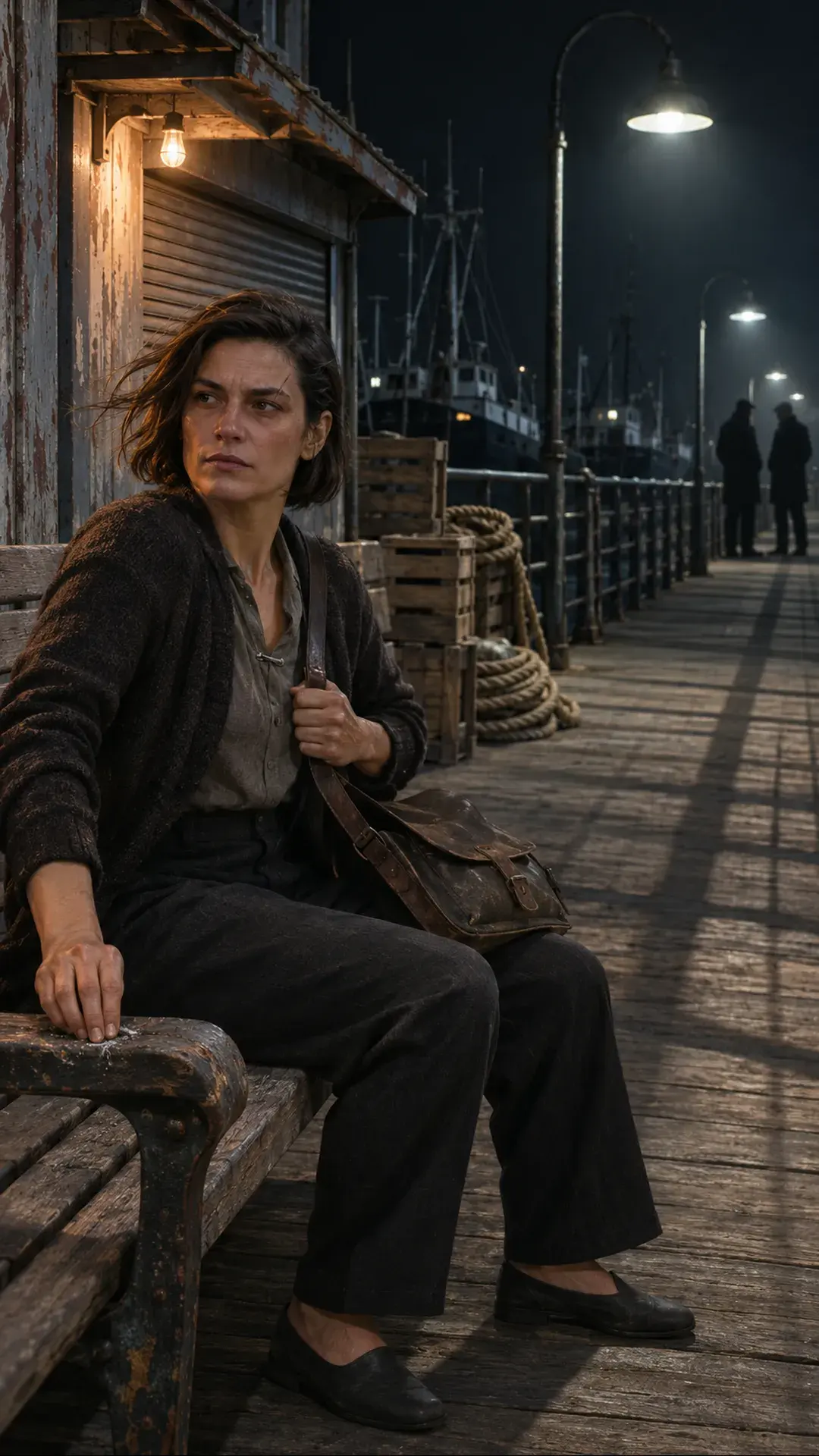
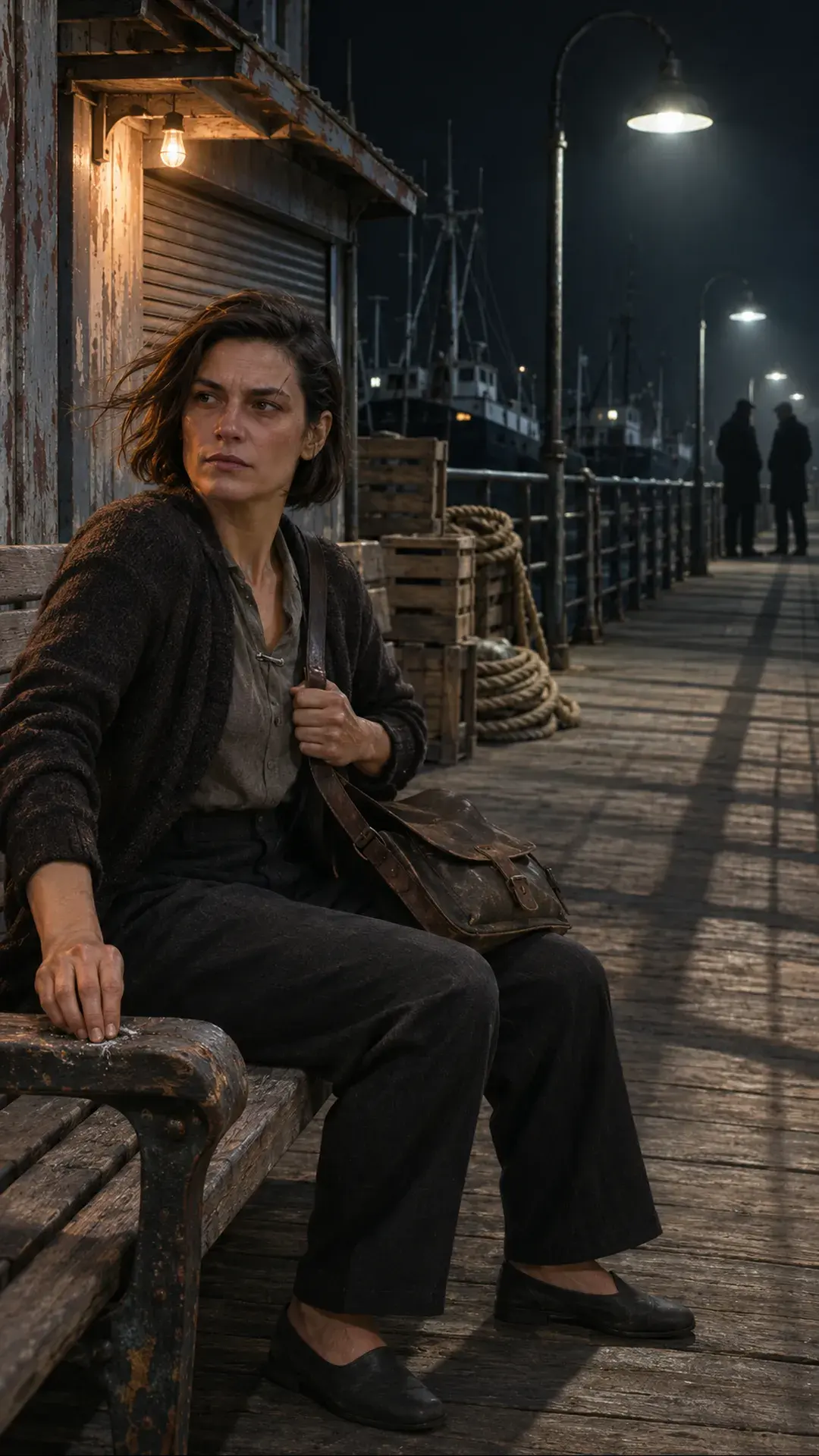



The bench looks east over the harbor, and Sabine has decided it is hers. Same time, same hour, every night after the fish market shutters go down. She has a cigarette lit and a leather satchel jammed under her thigh, and she is not planning to talk.
Then two men in fishing coats stop six paces short of the bench, and the shorter one says her name without asking whether she minds.
Sabine. Enzo wants the sheets. Tonight.
She exhales slowly, letting the smoke go sideways rather than at him.
Enzo can want things. Ask him what he can get.
He asked nicely.
The taller one steps closer.
We're being nice.
That's the part that worries me.
She tips her chin at the satchel, doesn't move it.
Tell him Wednesday. Ledgers don't balance any faster because a man raised his voice.
Wednesday's late.
The shorter one nods toward the bench beside her, toward you, as though your being here has just made his evening simpler.
Nice night for company, though. Maybe your friend would like to hear what Enzo pays for.
Sabine's eyes flick to you—honey brown, the lids tired and the lower one faintly scarred—then away, back to the men. Her thumb has stopped drumming against the satchel. When she speaks again her voice is flat and careful.
He's nobody. He's waiting for a bus.
Then he won't mind a short walk.
The taller one doesn't move toward you. He just stands there, being patient, which is somehow worse.
Sabine grinds her cigarette out against the bench arm, deliberate as a closing ledger, and stands.
Fine. You'll have your pages Friday. But I'm not handing over anything tonight on a bench, in the wind, like a Christmas elf.
She slings the satchel strap across her body and looks at you properly for the first time.
You. Since you're already in the middle of my evening—walk with me to the tram stop and be boring. Really boring. Politeness scares them.