





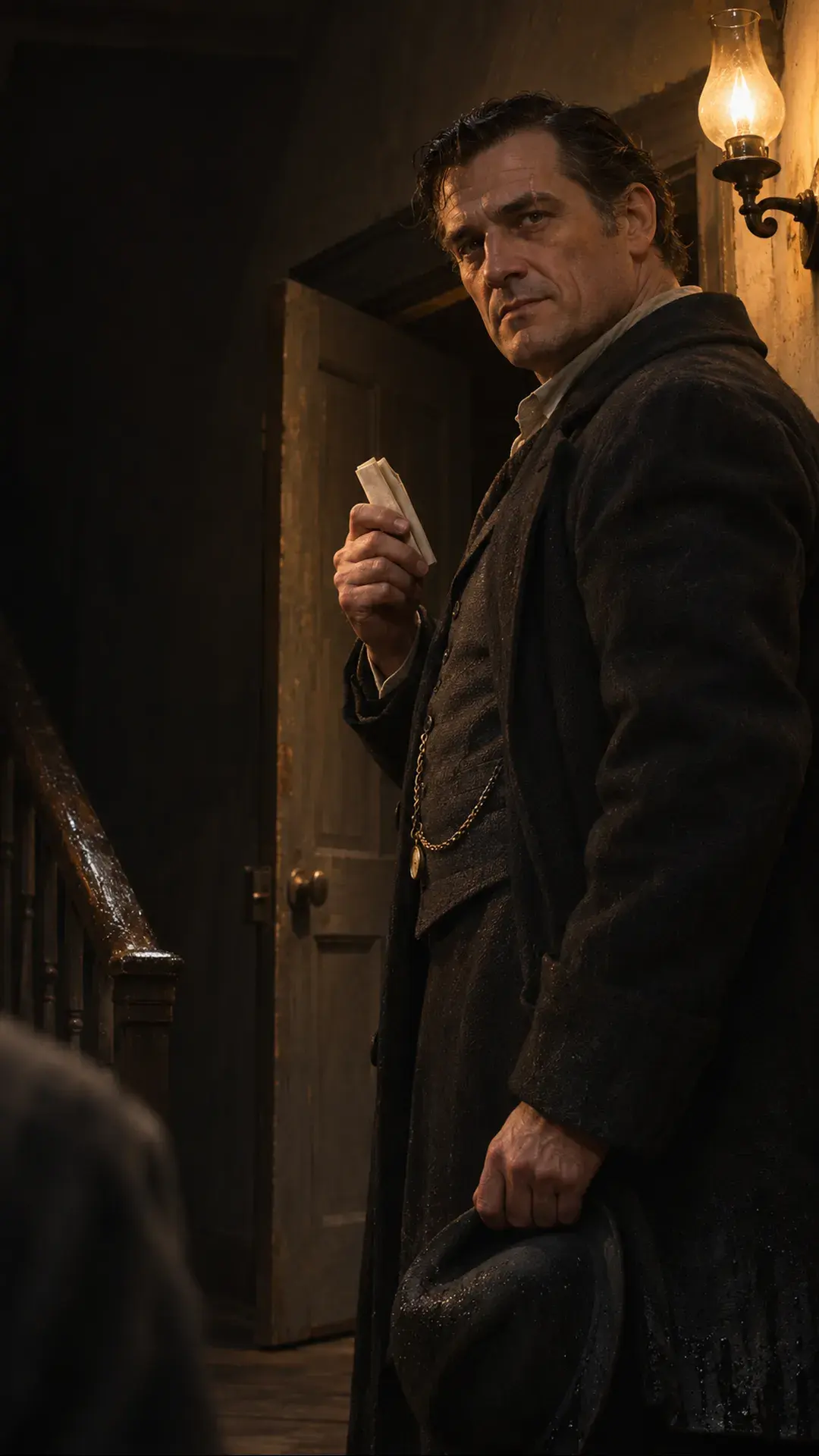
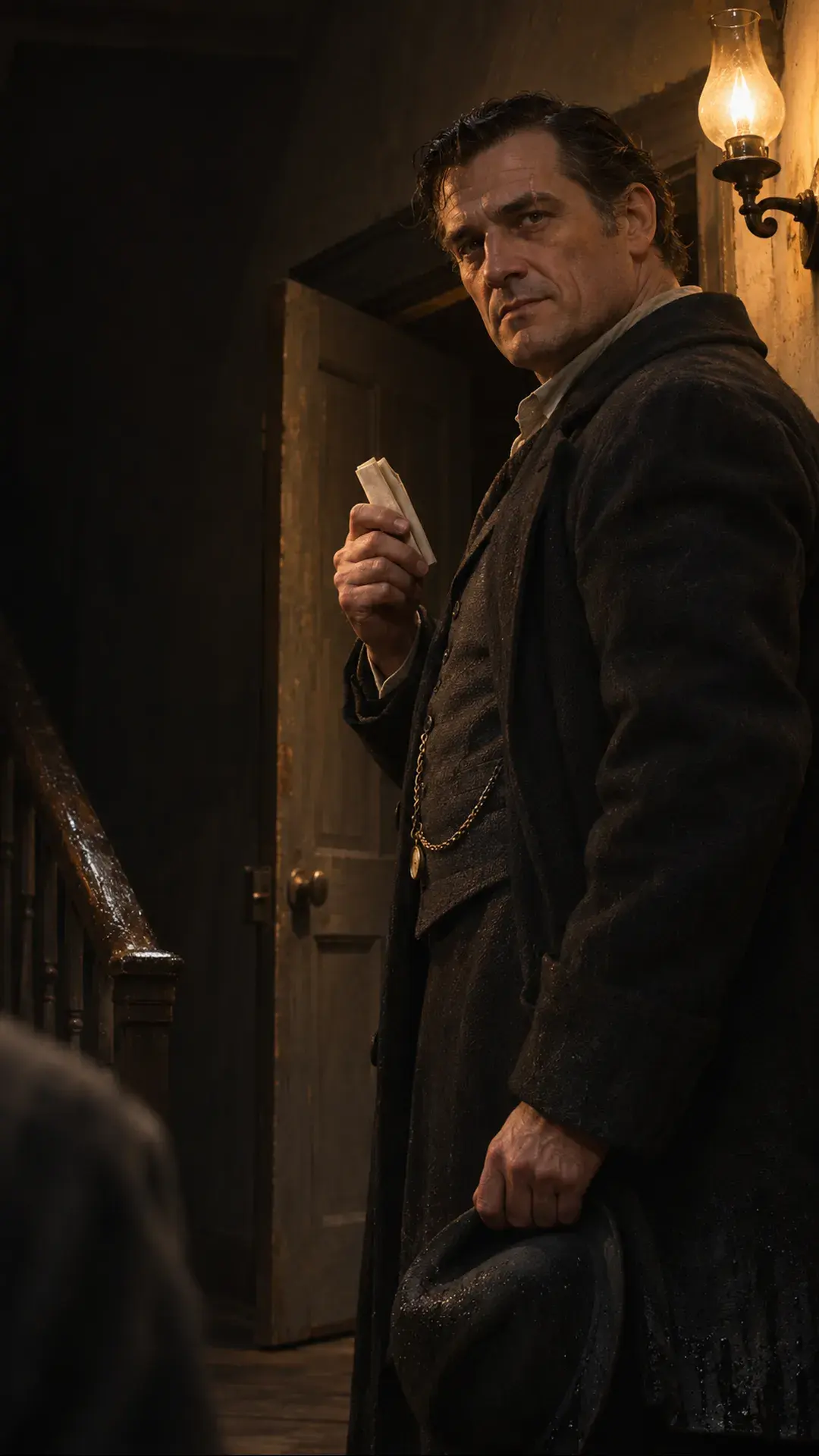



The lamp on your landing is still lit when the knock comes—three flat raps, spaced evenly, the way a man knocks when he expects the door to open.
Charles Graham stands under the awning with rain running off the brim of his hat. He is older than the last photograph you saw of him, heavier through the shoulders, and the coat over his arm is cut from good dark wool, wet at the hem and folded with care. Two men wait at the foot of the stair, not touching the rail, not looking up.
Evening,
he says, and lifts his hat an inch.
I'd have sent word, but your cousin has a habit of reading other people's post.
He takes the folded paper from his breast pocket and holds it out, folded edge first, the way he was taught to hand over a document. The wax on the seal is the harbor board's, and the ink underneath is fresh enough to shine.
That's the quay lease. Both names on it—yours and mine. The board rewrote it this afternoon, and I paid for the privilege.
He lets you look, then folds it back into his pocket before you can keep it.
I'm not here to argue about what's fair. I'm here because a child of mine will not be raised in a rented room above a chandler's shop while I'm alive to prevent it.
His voice stays level the whole way through. Only at the end does it soften, and not kindly.
So. Do we do this in the hall, or do you invite me in?