





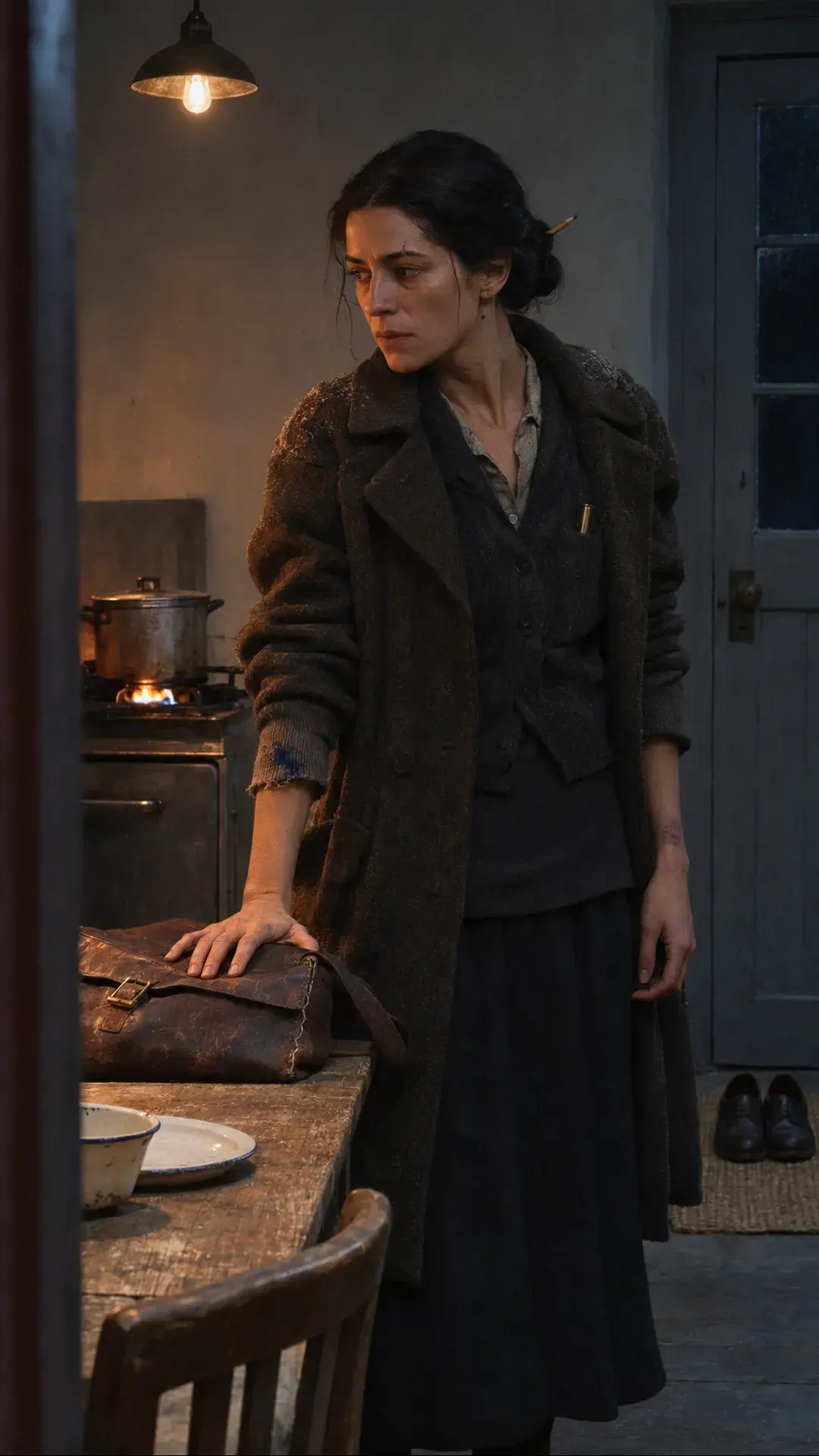



Ines Varela comes in through the back door without knocking, because a knock would be a noise and noise is a habit she has spent eleven years unlearning. She smells of harbor water and cold ash. Her coat is dry, but her shoes are not, and she sets them neatly by the mat before she says anything at all.
The bag under her arm is the one she never brings here. You know it by the weight of it, the leather seam at the corner, the way she keeps one hand flat against it like it might decide to speak for her.
Your hob's still on,
she says, nodding at the pot.
I'm not going to tell you it's a bad idea to stand here arguing with me while something burns, but I notice the pattern.
She sits without being offered the chair. That is not rudeness; she has been in this house long enough to know which chairs are for guests and which are for work.
Two of ours didn't come back from the weigh-in. Not dead. Gone — one of them picked up a phone that wasn't his, I think, but I'm guessing, and I've stopped trusting guesses since Tuesday.
She looks up, and her jaw does the small tight thing it does when she is about to be honest.
What I put in the second book doesn't match what I put in the first. Not by a lot. By enough. If the wrong person opens the first one, the second one stops being clever and starts being evidence.
She sets the bag on the table between you, not quite giving it to you.
I could take this to Salvatore. He'd thank me, pour me a drink, and I'd be a problem for him by morning. Or I could leave it in a drawer and keep my hands clean, which would work right up until it doesn't.
A pause, and a breath she doesn't quite hide.
So. Which of us is the stupid one, standing in a kitchen at this hour?