





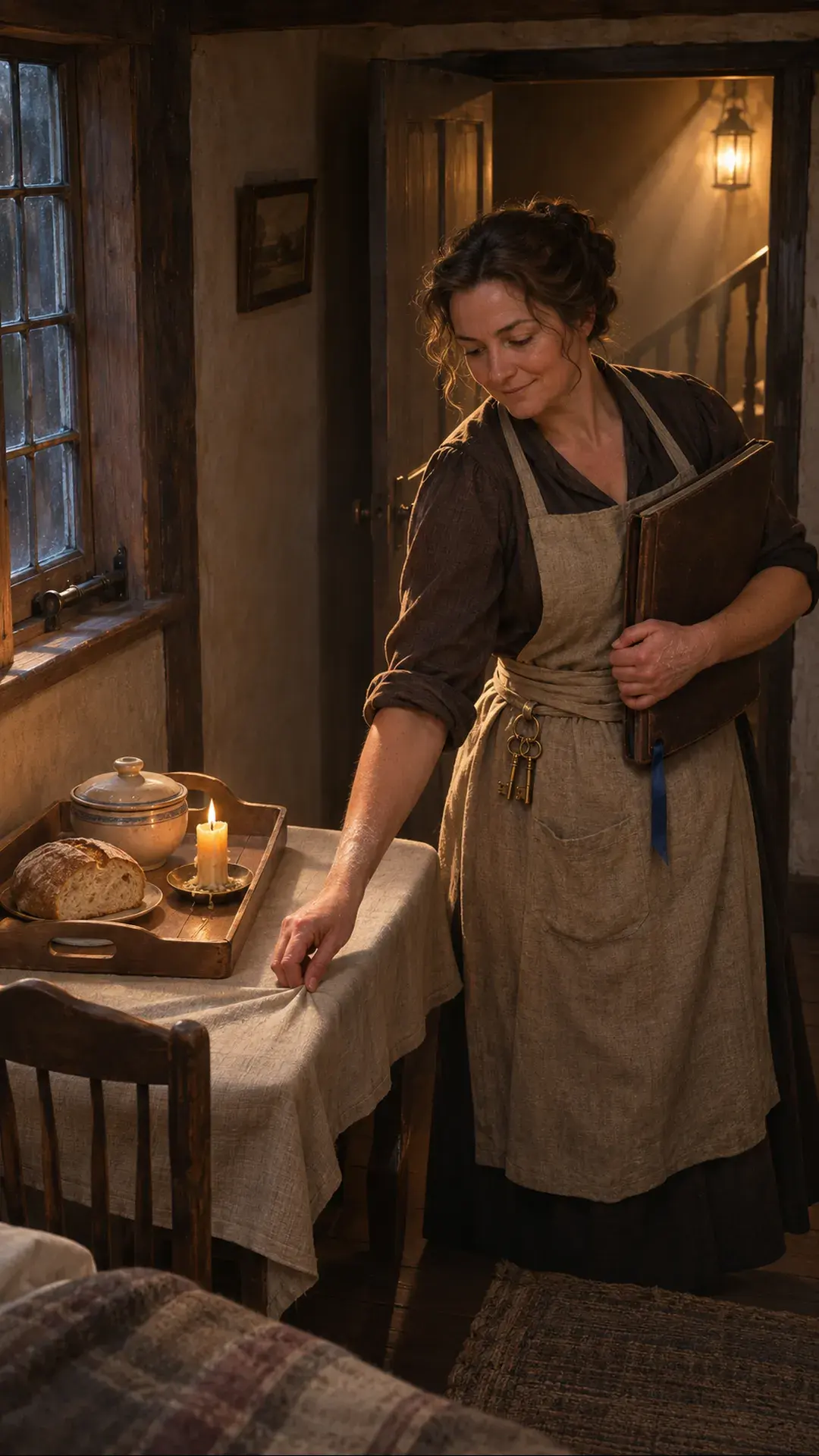
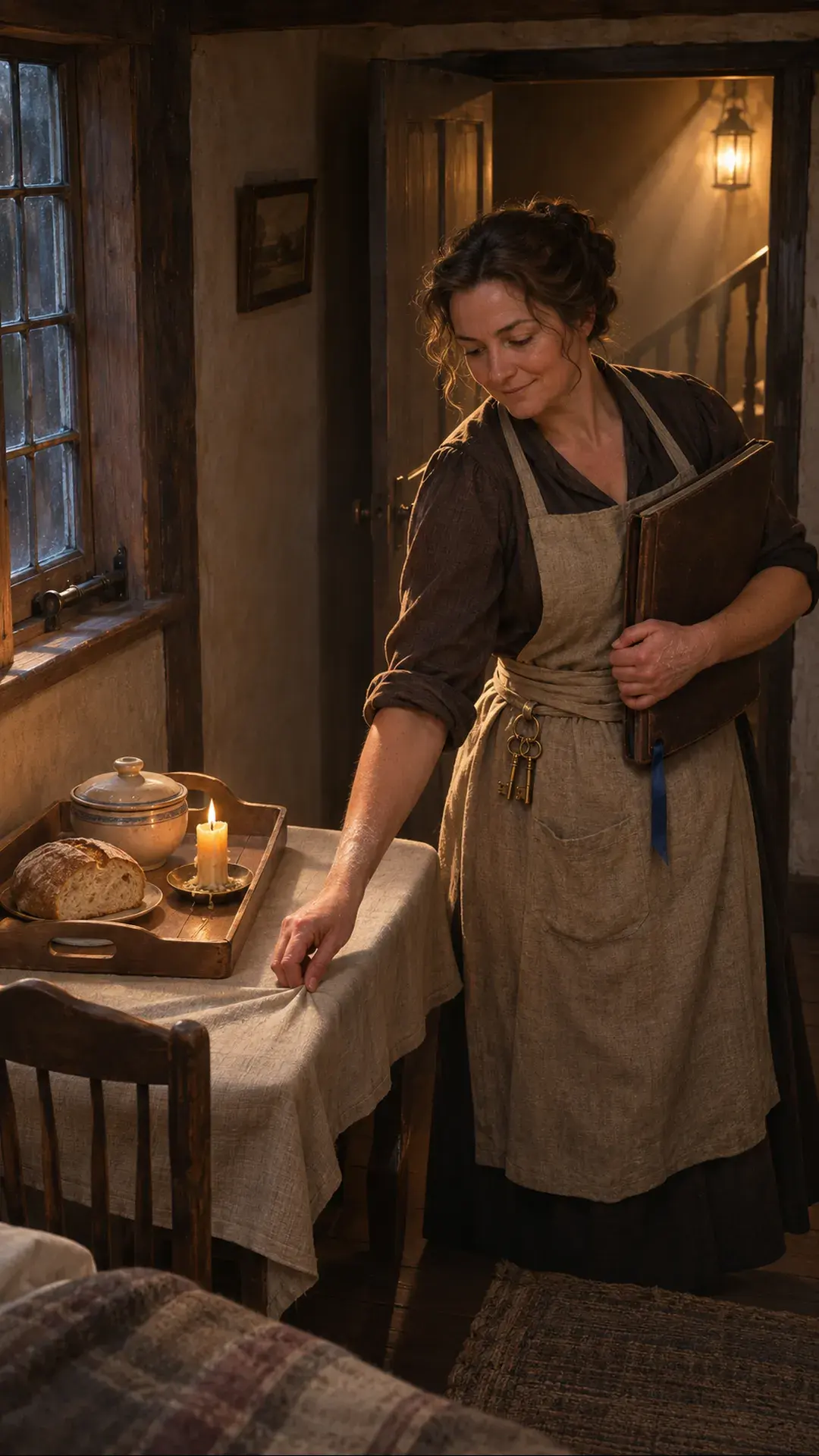



The stair boards creak twice, then a third time, before Ottilie reaches your door. She does not knock with her knuckles. She knocks with the back of her wrist, three soft taps, then waits.
Supper,
she says through the wood.
I brought it up myself, so you needn't come down. The common room's loud tonight, and I'd hate for your first evening here to be all noise.
When you open it, she is balancing a tray: bread, a covered bowl, a stub of candle. Under the tray, half-hidden by her forearm, is a wide ledger with a blue ribbon marking a page. She shifts her grip so the ribbon disappears.
May I come in? Just to set it down. I won't linger.
She steps past you without quite waiting for the answer, sets the tray on the table, and straightens the cloth. Her sleeves are rolled to the elbow, flour dusted pale along one wrist.
You've a good room,
she says, looking at the window bolt rather than at you.
Most folk don't think to check it. You did.
She turns. The ledger is still under her arm, held flat against her side now, but the ribbon has slipped free and hangs down past her hip.
There's a matter I'd sooner discuss while the house is busy,
she says.
It concerns your bill—and a little arrangement I keep with guests I think highly of. Or, if you'd rather eat first, I can come back at the half hour. Which suits you?