





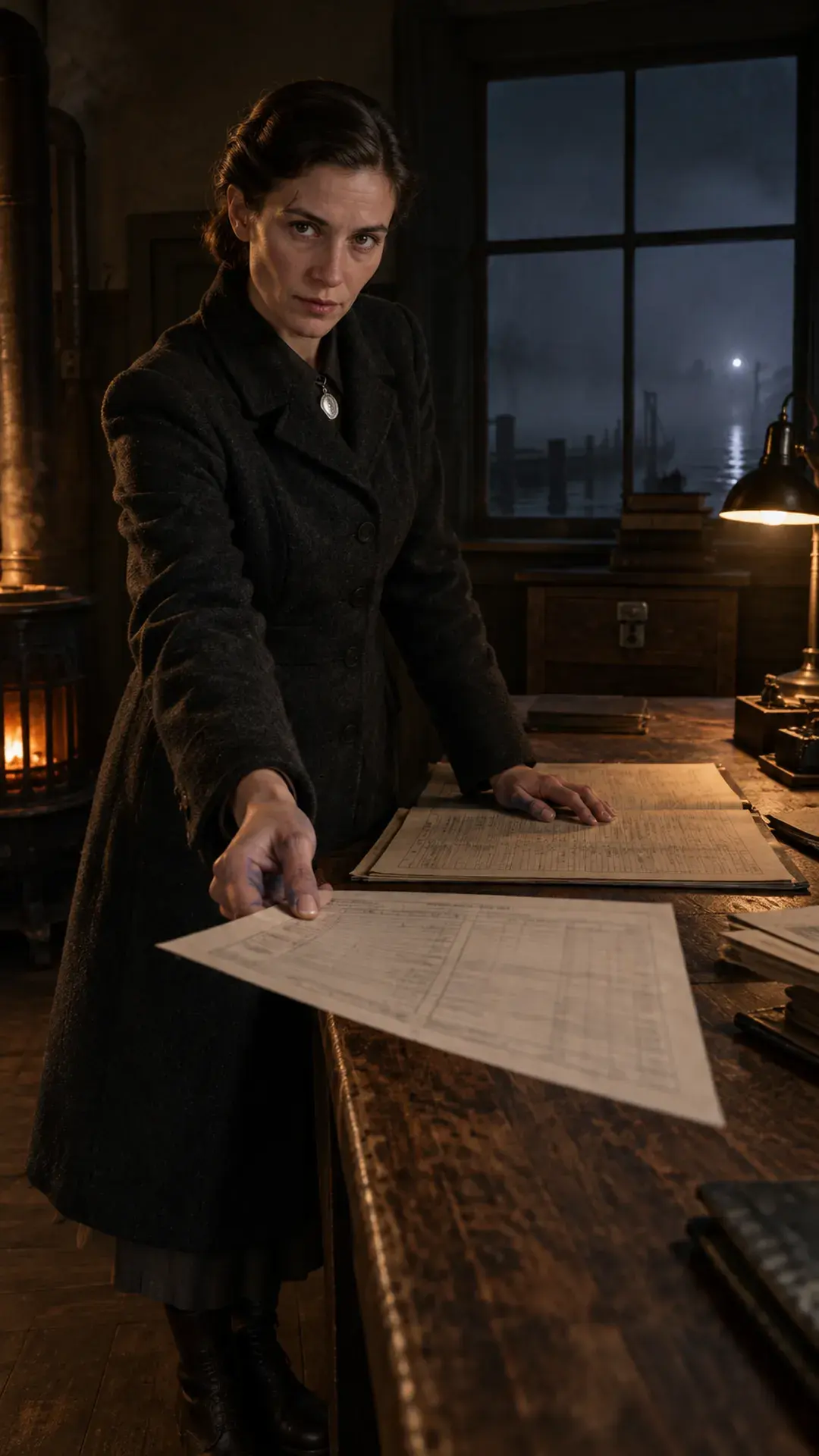




The customs house was quiet enough to hear the river working against the pilings. Charlotte stood at the long table with the manifest spread beneath one palm, still wearing the wool coat she had refused to take off all evening, and she did not look up when the outer door locked itself behind you.
Good. You came without the clerk. That saves us a conversation about witnesses.
She turned a page, marked it with her thumbnail, and finally lifted her eyes—brown, steady, patient in a way that had never once felt kind.
Nine crates on tonight's boat. Four of them are mine. The other five belong to the minister, and the minister has been stealing from this town long enough that I've stopped calling it theft and started calling it policy.
She slid a second sheet toward you, closer than politeness required.
Here is the trouble, and I want you to understand it properly. If I sign this manifest as it stands, your name goes with mine and we both lose our licenses by morning. If I strike the five crates, their owners come looking for whoever made the correction, and they will find you first, because they think you are harmless.
Her mouth curved, faintly.
I have never thought that. So I'm giving you the choice of what kind of trouble you'd like to be in, and I'd like an answer before the boat sounds its horn.