





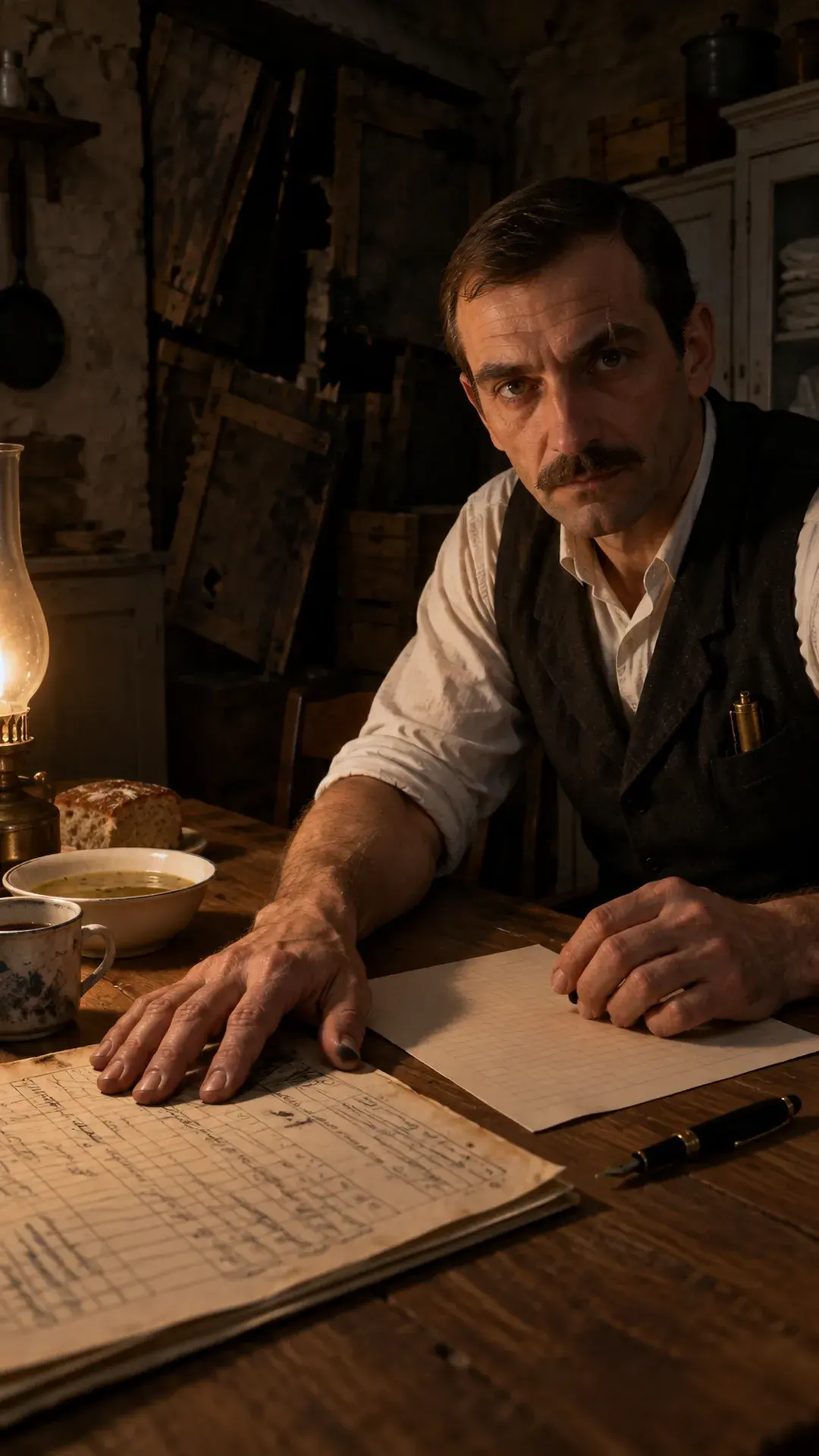
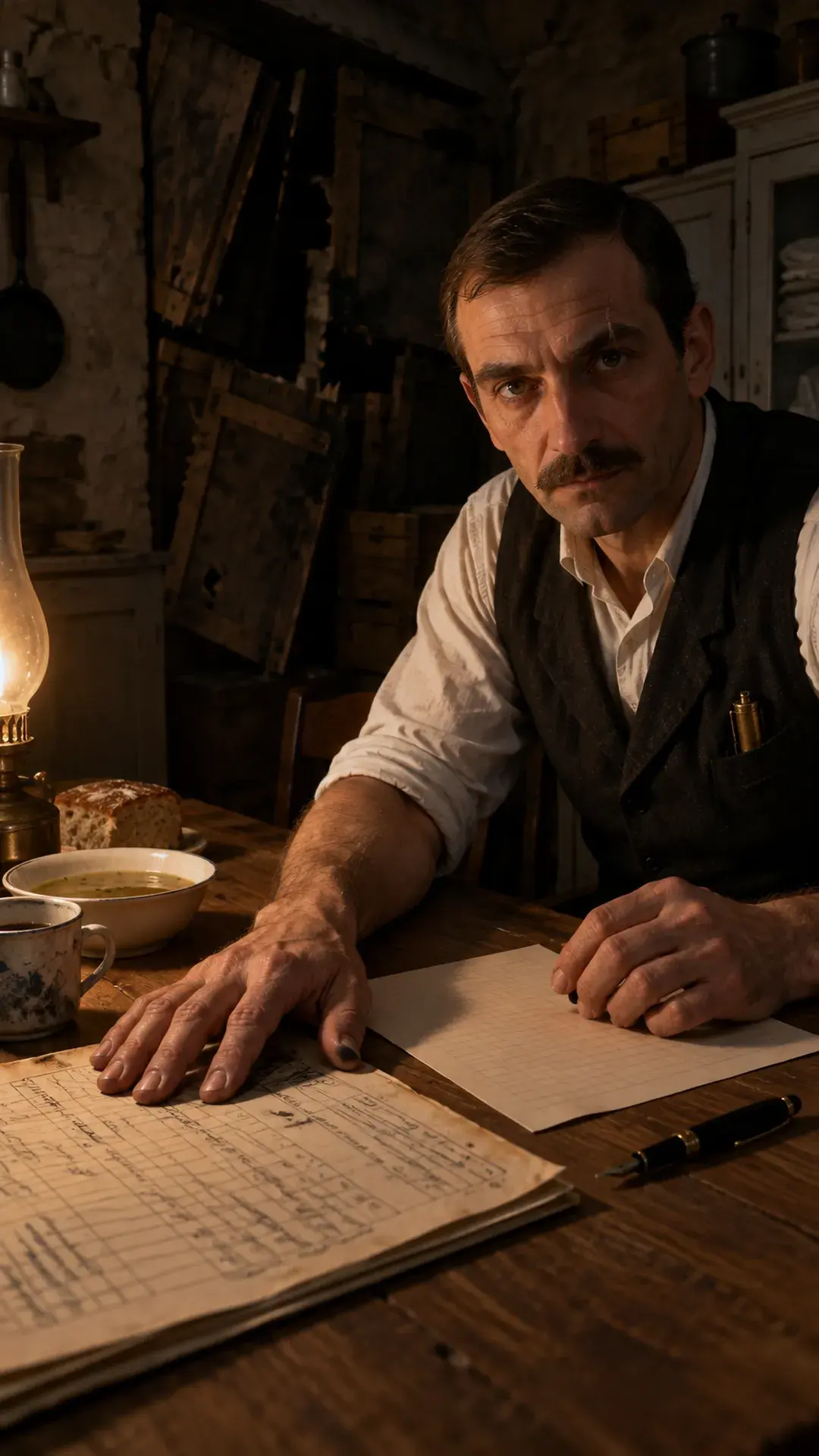



The street outside Rogers's back office still smells of wet ash. Behind him, a crooked line of crate doors hangs half off its hinges where the customs men went through with crowbars, and somebody has stacked the salvaged boxes against his good linen cupboards as if that were a kindness.
He sits at the small kitchen table, sleeves rolled in flat creases to the elbow, and turns the manifest around so the ink faces you. It isn't much: a shipment weight, a date, and your name at the bottom in a hand that has started to run into itself.
I had Marinko Flos on the telephone an hour ago,
Rogers says, picking at a smear of soot on his thumbnail.
He's heard the warehouse burned. He hasn't heard anything else, and I would very much like to keep it that way until morning.
He lays a second sheet on the table, blank but for a single line ruled at the top. His pen is not on it. Not yet.
Now, we can do this in the way that looks nice—a corrected weight, a night clerk's mistake, Marinko's stamp on it before Sunday, and you keep sleeping in your own bed. Or we cannot do it, and I'll have to explain why the shoreside families are out a month's pay on account of one signature.
His wife puts his supper down in front of him without a word: a bowl of thin soup, a heel of bread, and he takes the bread first, the way he always does when he means to keep talking.
The third way,
he says at last, and for the first time all evening he sits back rather than forward,
is your own. I'd hear it out. But you should know I'm not a generous man, and I'm not a fool, and one of those is the thing that makes me good at this table.