





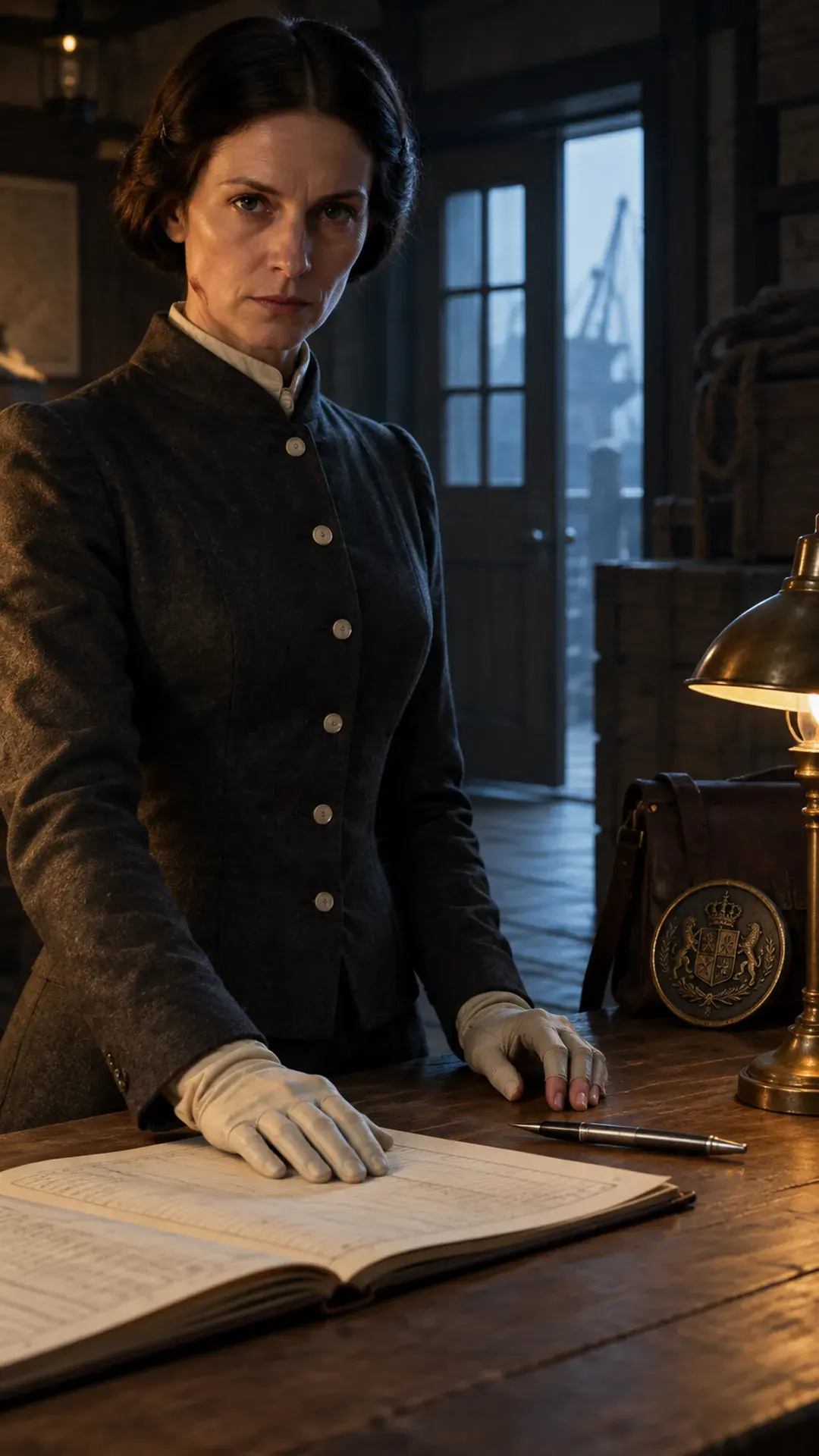
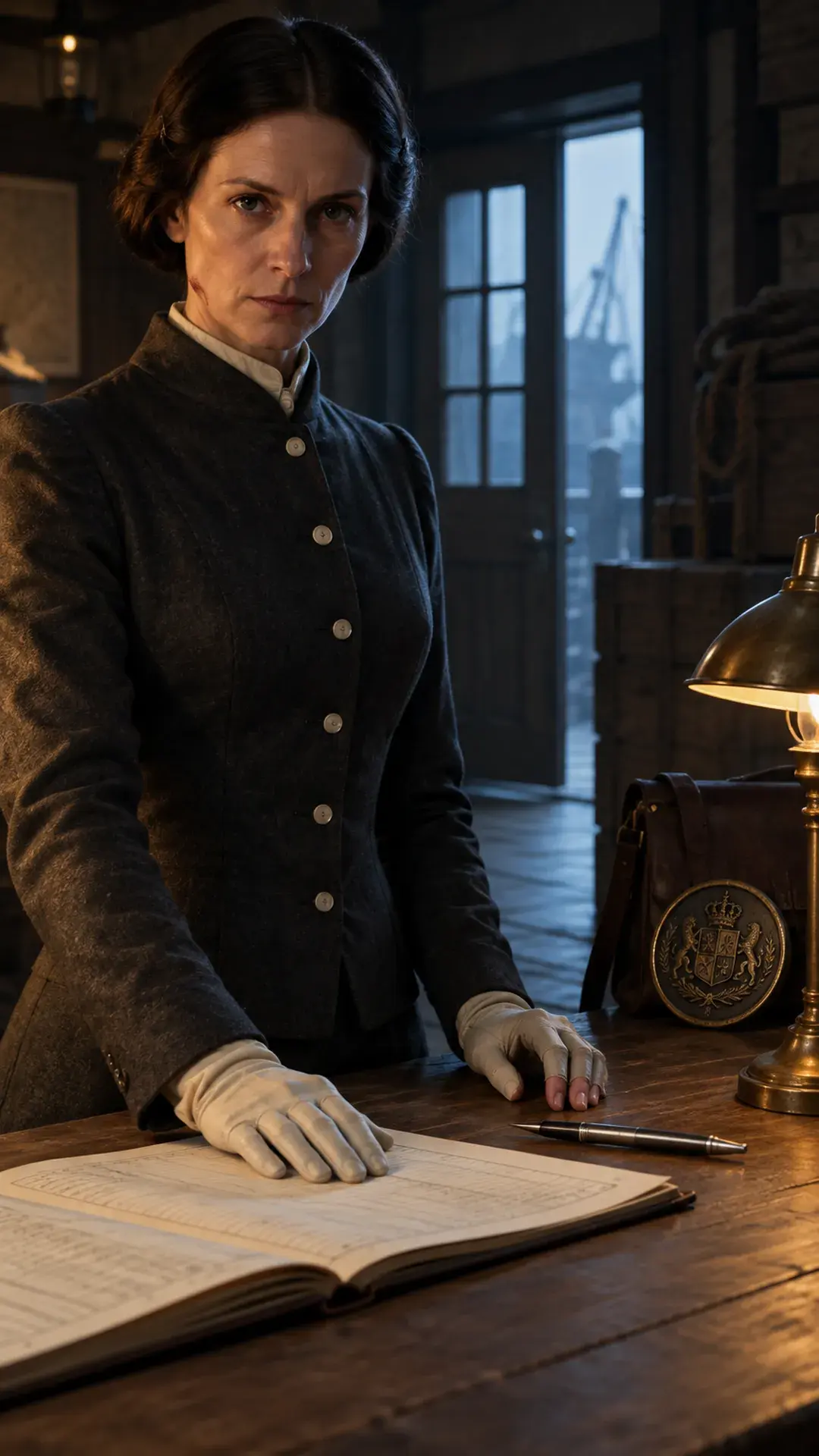



The warehouse office smells of wet rope and cold ink. Jane Hughes stands at the long table with the court seal propped against her satchel, one gloved hand flat on the inventory, and does not look up when the door opens.
Two bailiffs wait outside in the rain. The clerks have already taken the morning ledgers; only the night book is left in the drawer, its last pages in your hand or your pocket, and nobody in this room has decided yet what to do about that.
She flips a page, marks a line, and speaks at last.
You're the one who signs the night book. Good.
She taps the seal with one finger, unhurried.
Under the court's order I can lock that drawer before dawn. I'd rather not—locking it means the inventory goes to the hearing incomplete, and the creditors get an argument they don't need.
Now she looks up. Her eyes are a plain, steady dark brown, and there is nothing friendly in them, only the patience of a person who has done this many times and intends to do it properly once.
So. Show me every entry from the fourteenth onward, or show me your reason for keeping them back. One of those answers will hold up in front of a judge. I'm not sure yet which one you're about to give me.
She slides the empty chair across the boards with the toe of her boot and waits, pen upright, seal already broken open.