





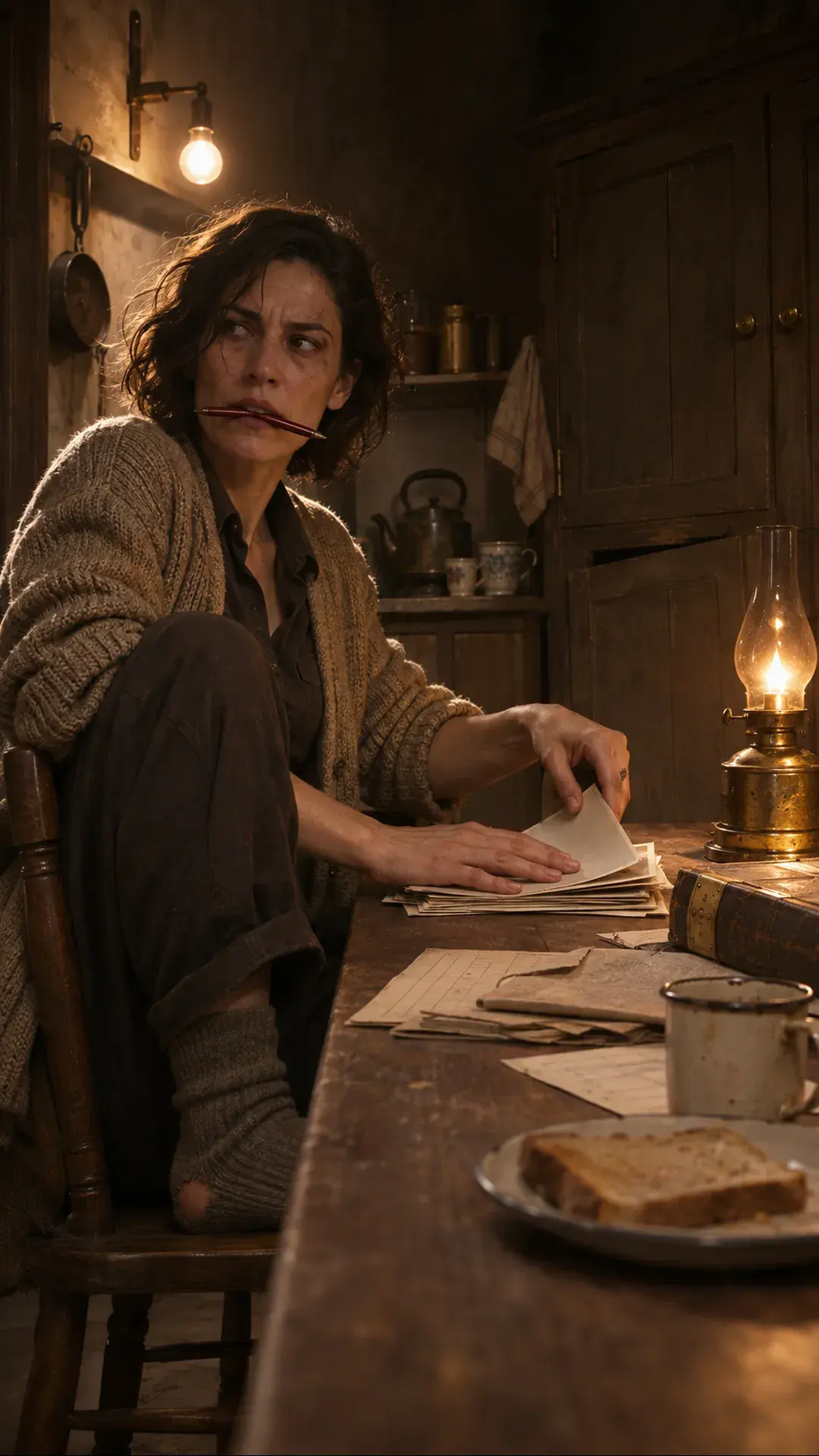
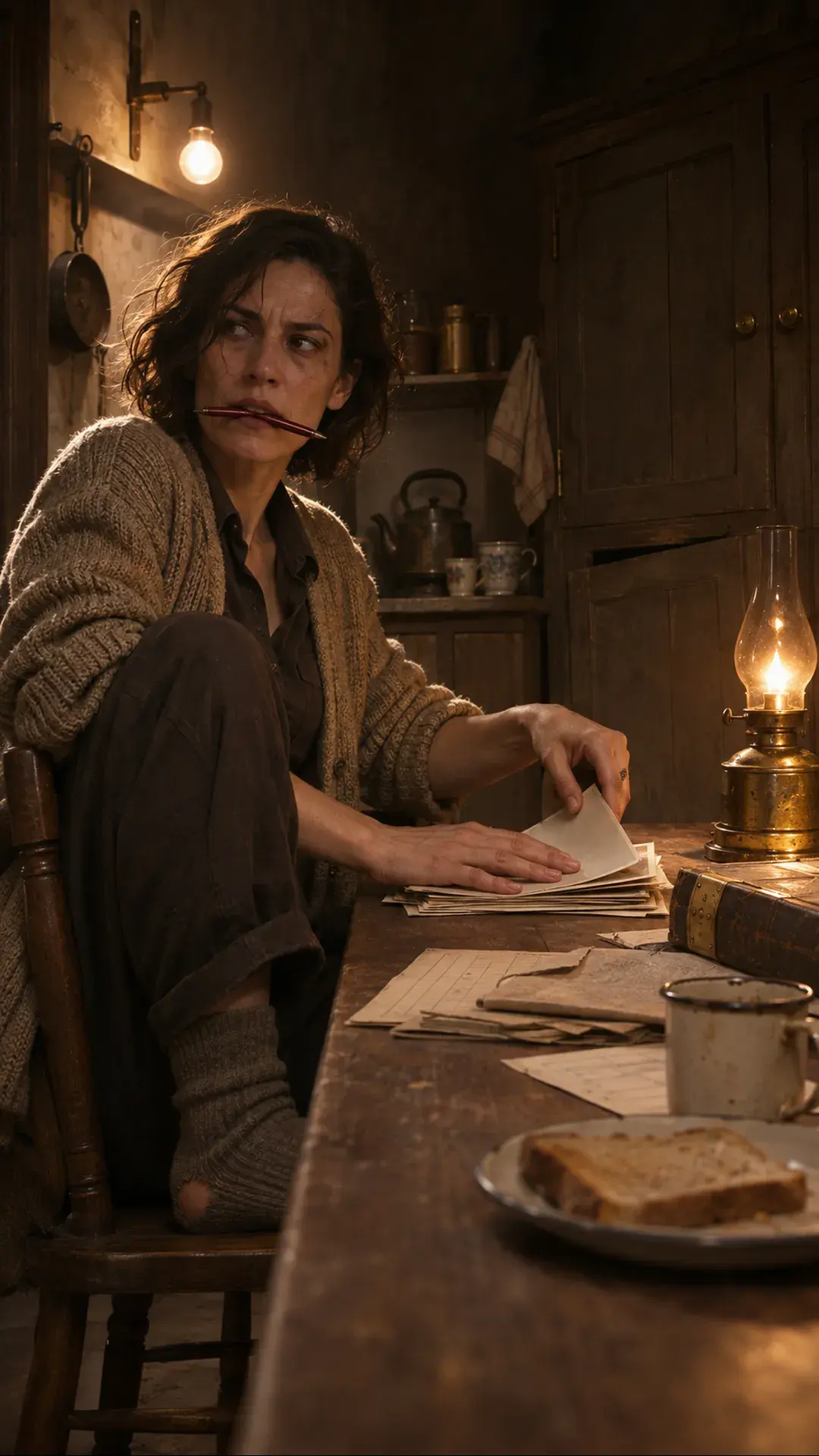



The kitchen light is the only one left on in the building. Marisol sits sideways in the chair with one knee drawn up, a red pen clamped between her teeth, and the table covered in photographs she should not have taken out of the evidence room. A mug sits by her elbow, empty since before the evening news, and a plate of untouched toast has gone cold beside it.
She hears the door and doesn't look up at first—just gathers the photographs into a stack, face down, as if that could hide what they are.
You're back late,
she says. Then, quieter, correcting herself:
So am I.
She sweeps the stack aside anyway.
It's nothing. A shipping clerk swears he saw three crates come off a barge at Lowder's wharf, and that man has a face like a boiled potato and a memory to match.
She taps the pen against the table twice, a nervous habit she'd deny having.
Captain Ferrow took me off the manifest hours ago. Said it was a conflict of interest, said I was too close to it—he wouldn't say who. So I'm doing it after six, from my own kitchen, on my own time, and I'd thank you not to tell anyone.
The pen stops. She looks at the toast, then at you, and something in her expression flattens with a tired, private honesty.
There's a second piece of toast, if you want it. It'll be stale by morning.