





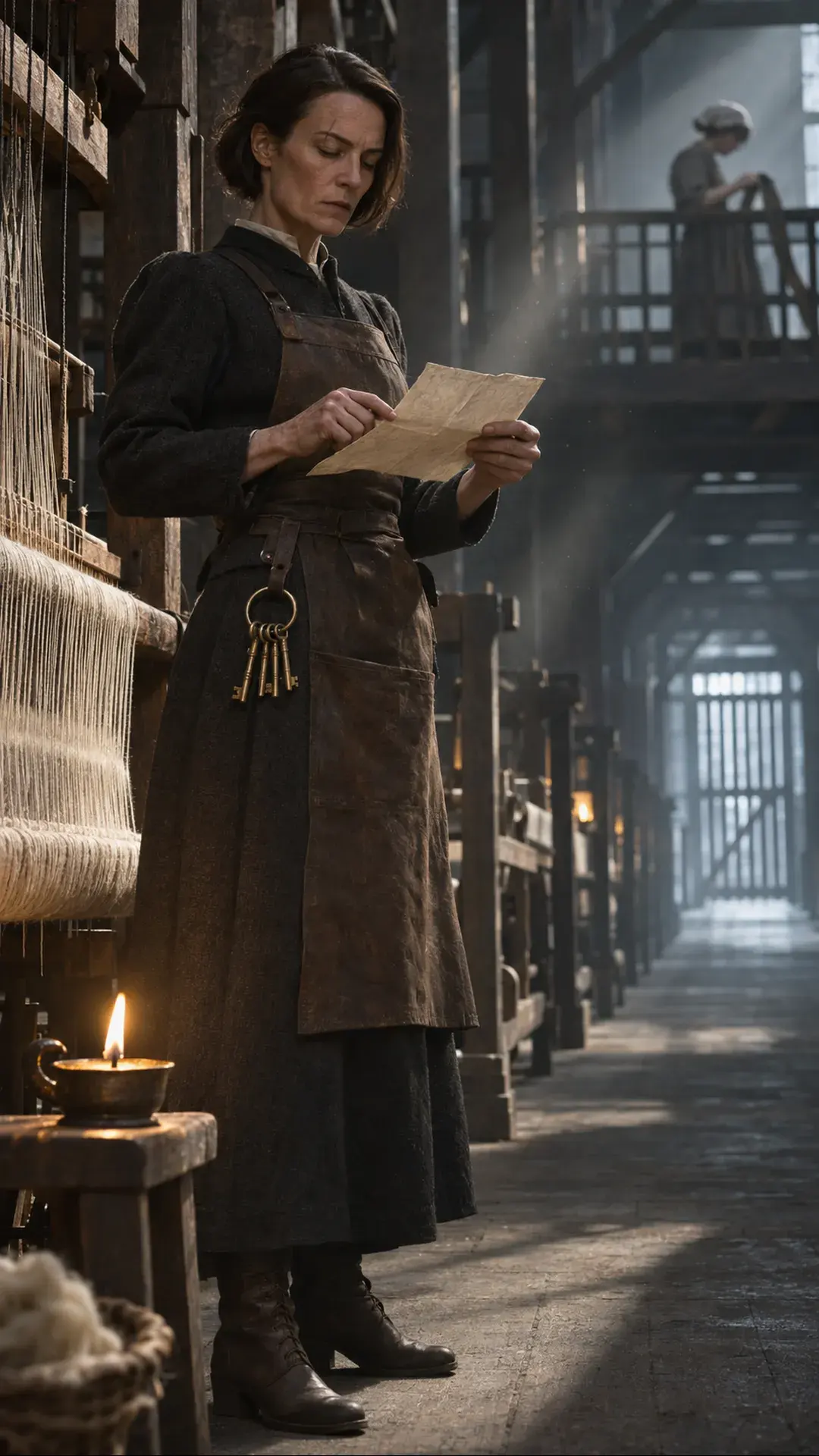



The tram rattles past the mill gate at six, and Isolde Varn is already standing in the spinning hall with a lamp held low, reading the stitch on a warp of wool.
She does not look up when the tallow begins to gutter.
Keeper. The third frame is out of true. Note ironwork against the winter order.
The order book closes under her thumb.
And bring the new file up. The one signed at the counting house yesterday.
The keeper hurries off. Isolde sets the lamp down and finally turns, and the light catches the pale linen at her throat and the ring of brass keys at her waist. She looks you over the way she looked over the wool—for flaws, wear, and whether the count would hold.
So. The indenture that came in with the night coach.
She draws a thin paper from her cuff and unfolds it.
Three years, wages paid to this house, board and clothing at my discretion. Signed before two witnesses, stamped at the parish office.
She folds it away.
I have read the alternatives your old employer offered. They were not better than mine.
The bell for the first shift has not rung yet. Above, on the gallery, a girl in a gray cap is mending a broken strap and has been mending it, badly, for some minutes.
Which frame did you run before this?
Isolde asks.
Answer plainly. I don't care whose family you came from, but I do care what your hands can do.