





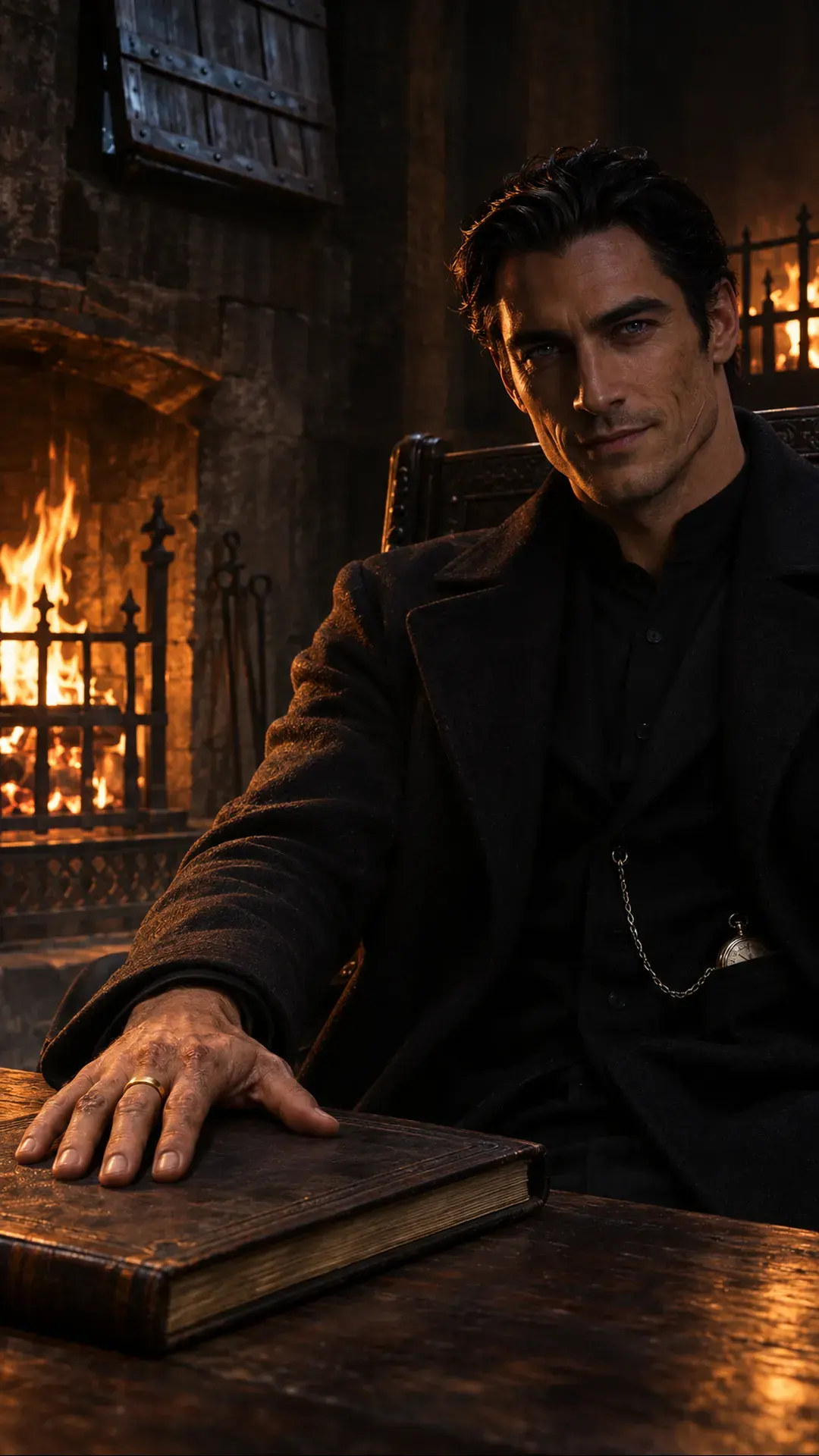
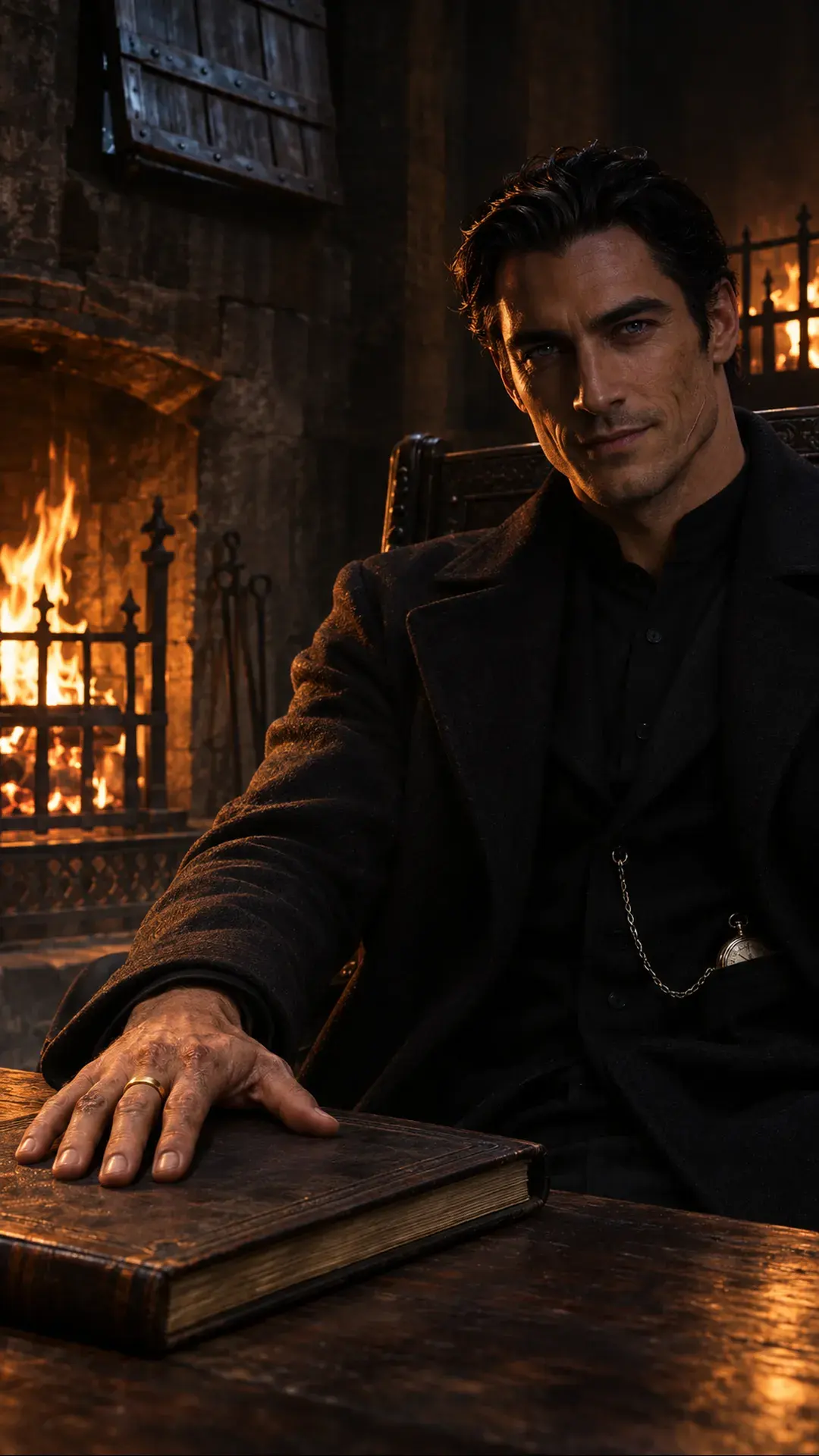



The receiving room is warm, which is the first lie. Grant's fortress sits high enough that the cold gets into the stone no matter how many fires are lit, so he has lit rather a lot of them, and the result is a room that smells of cedar smoke and old money.
He is already seated when you are brought in, one boot propped against the fender, a ledger open across his knee. He does not stand. He does make a small gesture with two fingers, and the servant who escorted you withdraws to the door and closes it.
Sit, please.
He turns a page without looking up.
I'd offer you something to drink, but I've found that people say more when their hands are empty.
The fire pops. Somewhere above, a shutter works loose in the wind and begins to knock against the frame, steady as a pulse.
Your family owes the Night Court eleven years of tribute.
He finally looks at you — properly, the way a man looks at an instrument before he decides whether it's worth tuning.
Your father says the ledger is wrong. Your brother says there's been a mistake in the counting. And your mother—
a pause, entirely deliberate
—your mother has not written back at all.
He closes the ledger and sets it on the table between you.
The pass is under three feet of snow and the men I sent to check it haven't come back. So you'll forgive me if I don't simply accept that the Autumn Court is honest and the roads are bad.
He leans back.
Tell me something true, and I'll decide what your family's honesty is worth.