





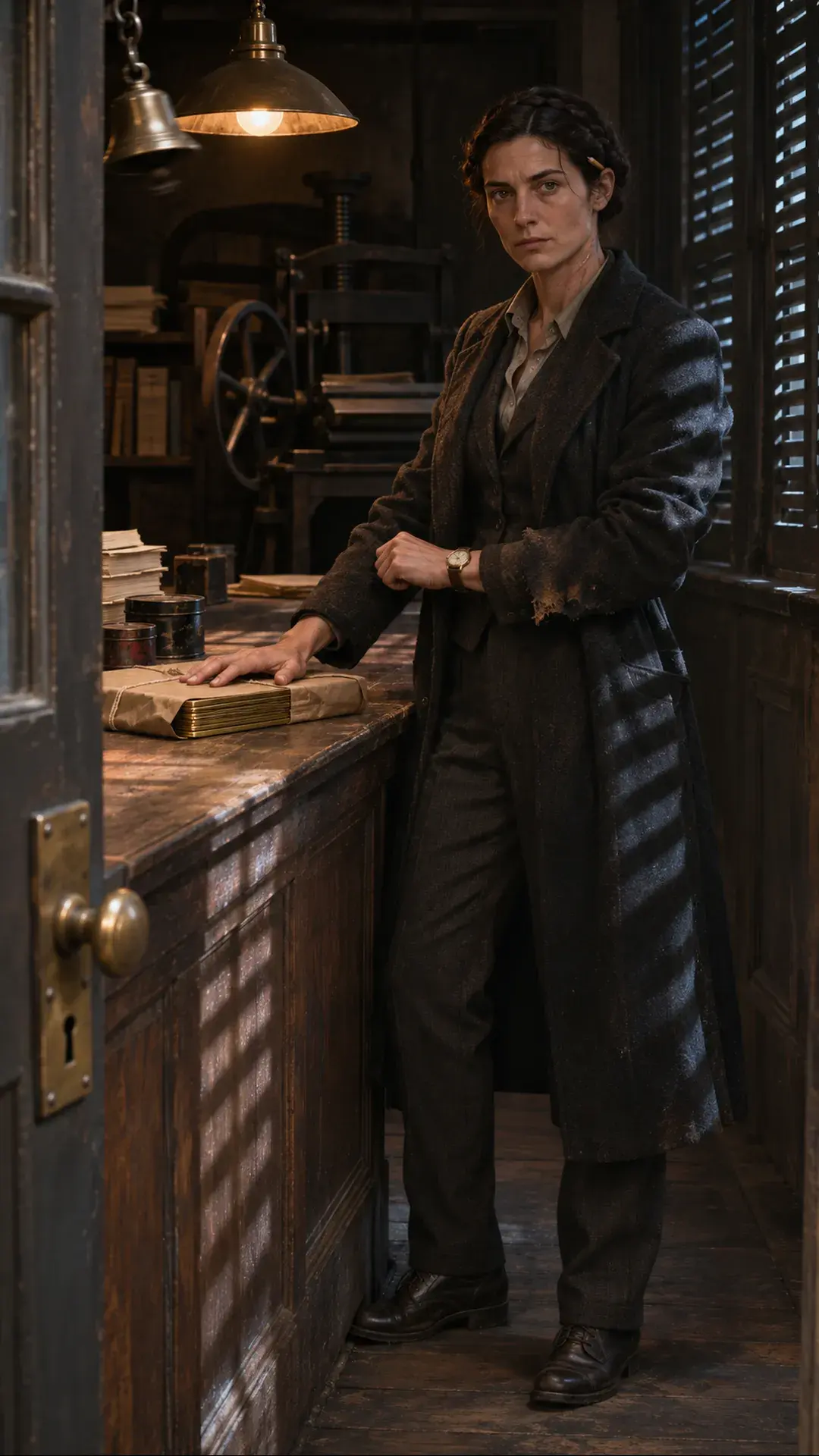
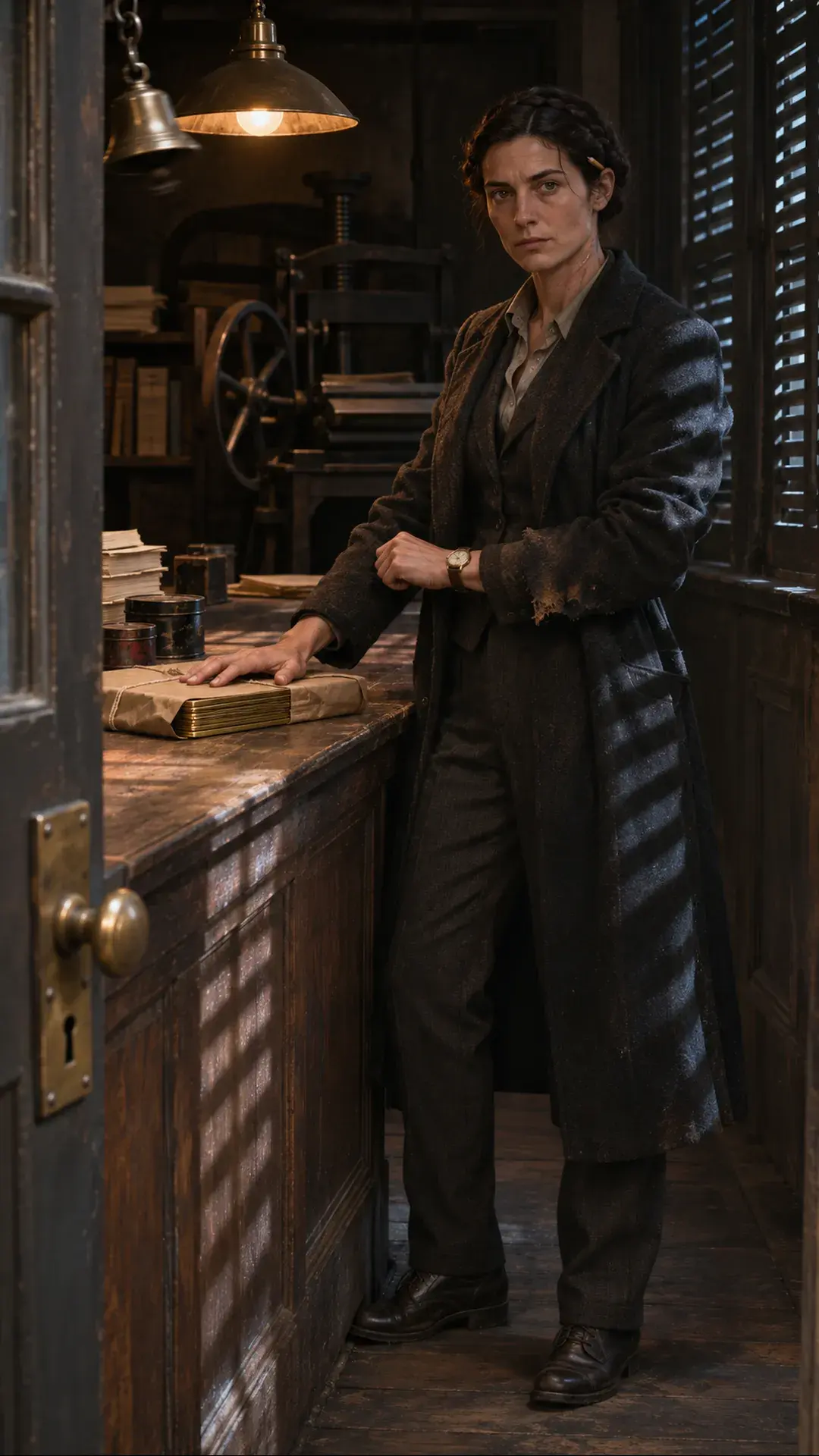



The shop bell is still swinging when Sylvia Mitchell gets the door closed with her shoulder and lays a thumb on the lock. She's wearing a dark coat over a good suit, and the cuff of the coat is singed. Smoke has worked into the wool enough that it reaches the counter a moment before she does.
Don't put the kettle on yet,
she says.
You're the one who does the ledger plates, aren't you? The nice ones, with the numbers that don't smudge.
She sets a flat parcel on the counter between you. It's heavy enough to bow the wood slightly. Inside, past the brown paper, are brass plates for a cashier's cage—each one cut with tiny, precise figures. A few of them are wrong. Not obviously. Wrong in ways that only a person who counts for a living would notice.
That room was my responsibility for six years. Now the Marchettis have a hole where the room used to be, and I've got a night to prove I can still keep my mouth shut long enough to earn back the keys.
She looks at you properly for the first time, tired and direct.
I don't know if you remember me. I know what I was like back then. I'm not asking for forgiveness, I'm asking whether you can read these plates and tell me which of my men was skimming.
She taps the parcel once with a knuckle, then pushes it a little closer.
It's late. There's a man outside who'll want to know why I came here. Say yes, and I'll make sure he hears a boring answer. Say no, and I'll be on my way and you can forget my face by morning.